
The Direct Answer: Skip the Bowl, Choose a Filter
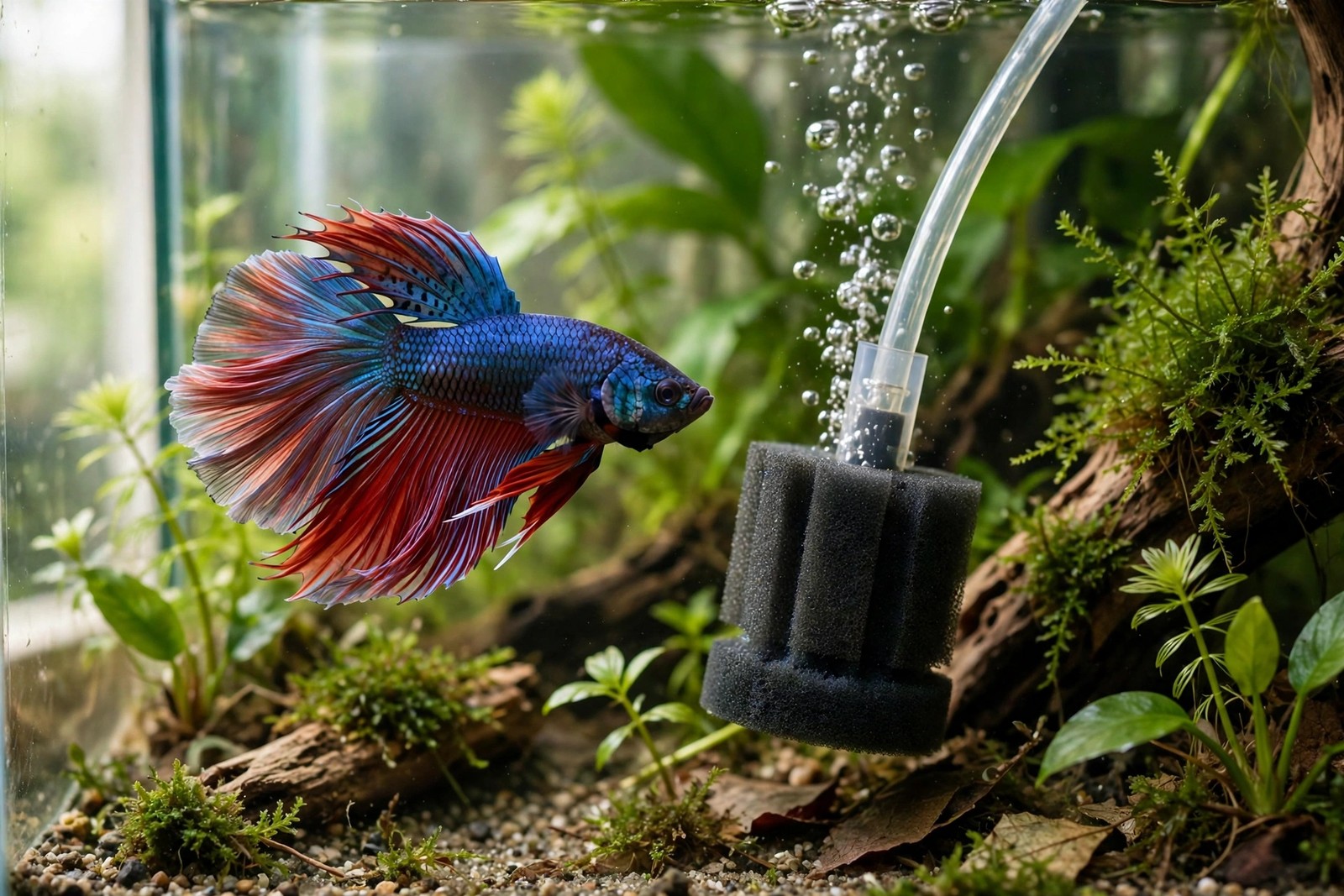
A gentle filter is a much healthier choice than an unfiltered bowl for your betta. The classic fishbowl — tiny, round, with no filtration — looks charming on a desk, but it concentrates waste, offers almost no swimming space, and forces you into constant water changes just to keep ammonia from poisoning your fish. A filtered tank of five gallons or more gives your betta room to explore, dilutes waste between cleanings, and supports the beneficial bacteria that quietly process toxins around the clock. It’s the single biggest upgrade you can make to a betta’s quality of life.
What a Filter Actually Does for Your Betta
A filter performs three jobs at once. Mechanical filtration traps floating debris — uneaten food, plant bits, fish waste — so the water stays visibly clear. Biological filtration is the real hero: beneficial bacteria colonize the filter media and convert toxic ammonia from waste into nitrite, then into far less harmful nitrate, in what’s called the nitrogen cycle. Chemical filtration, like activated carbon, is optional but can polish water and remove odors. In an unfiltered bowl, none of this happens — ammonia simply accumulates until your next water change, which means your betta spends much of its life swimming in its own waste. No fish thrives that way.
Bettas Need Gentle Flow — Here’s How to Get It
Bettas evolved in slow-moving rice paddies and floodplains, and those long, flowing fins make them weak swimmers in strong current. A powerful filter will pin a betta against the glass or exhaust it from fighting the flow all day. The fix is easy: choose a filter designed for small tanks and baffle the output. Sponge filters are a betta keeper’s favorite — they’re cheap, nearly silent, driven by a small air pump, and produce the softest flow of any filter type. Hang-on-back filters work too if you slow the outflow with a pre-filter sponge or a simple water-bottle baffle. Watch your betta for a day after setup: if it swims freely everywhere and builds bubble nests, the flow is right.
The Bowl Myth and What to Do Instead
Pet stores still sell bettas in cups and market decorative bowls as betta homes, so the confusion is understandable — but bowls fail bettas in ways a filter can’t fix. Their curved walls distort a fish’s vision, their small volume means ammonia spikes within hours, and temperature swings are worse in a half-gallon of water than in five. If a bowl is all you have right now, the kindest move is frequent partial water changes with treated, temperature-matched water while you plan the upgrade. A basic five-gallon kit with a sponge filter and heater costs less than most people expect, and it transforms a surviving betta into a thriving one — brighter colors, bigger appetite, more personality.
Care Teams Keep Maintenance on Schedule
Even the best filter doesn’t eliminate water changes — it just makes them less frequent. That’s where KinsLe’s Care Teams shine: you can assign filter checks, media rinses, and partial water changes to different family members, and every completed task gets a timestamp so the whole household can see who did what and when. No more guessing whether the water change happened last Tuesday or last month — the log tells the story, and your betta gets consistent care.
Ready to give your betta the filtered home it deserves? Care Teams inside KinsLe records each sponge-filter rinse against the person assigned to it, leaving a timestamped trail so nobody repeats that job days later.