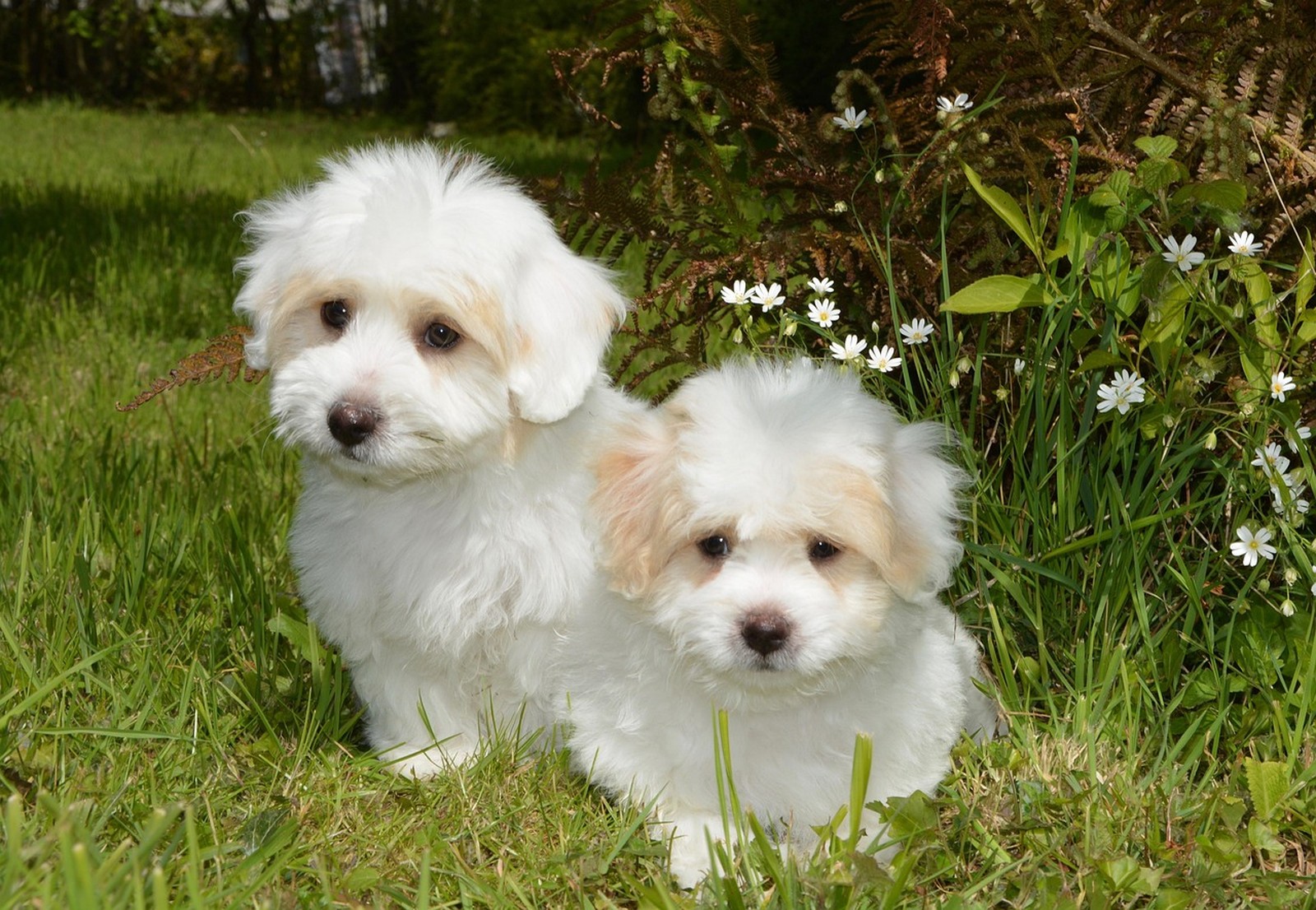
Brushing can be enough, but only the serious kind
A Coton de Tulear does not need regular haircuts in the way a continuously clipped breed does, yet 'just brushing' understates the job considerably. The coat is long, dry, and fluffy with the texture the breed is named for, and it behaves like cotton wool: light, airy, and quick to felt together where friction works on it. A Coton kept in full coat stays comfortable only if someone brushes in layers down to the skin several times a week and follows with a comb. Owners who picture a quick flick over the top while watching television end up, a month later, with a dog whose surface looks cloud-like and whose underlayer has quietly become a pelt.
Why Coton mats form where they do
The pattern is predictable once you know the friction map. Mats start behind the ears, under the collar, in the armpits, along the belly where the hair meets bedding, and at the tops of the legs. The adolescent coat change is the danger season: as the soft puppy coat gives way to adult hair, the two textures tangle into each other and a coat that needed brushing twice a week suddenly needs it almost daily for a stretch. Working through that phase patiently, in short sessions with the hair lifted in sections, is what decides whether the dog keeps its full coat or ends up shaved down to escape a solid mat layer, which nobody wanted.
The honest case for a shorter clip
Choosing a pet clip for a Coton is not neglect; for many households it is the decision that keeps grooming kind. A shorter coat still needs brushing, but a session takes minutes, tangles are visible before they felt, baths dry faster, and the dog spends its evenings playing instead of standing on a table. What a clip must never be is a surprise substitute for months of skipped brushing presented to the groomer as a trim: a coat that has felted to the skin usually cannot be combed out humanely, and the short result is then a welfare decision. If you keep the coat long, budget the time honestly; if you cannot, shorten the coat and keep the dog comfortable.
Bathing a coat that felts when wet
Never put a matted Coton in the bath hoping water will loosen the tangles; it does the opposite, tightening them as they dry. Brush and comb out fully first, wash gently without rough towelling motions that roll the hair together, and dry while separating the coat so air reaches the skin. Keep hair trimmed away from the eyes and the rear for hygiene, and tidy between the paw pads so the dog grips floors properly.
Coat trouble that is not a grooming failure
If your Coton's coat suddenly tangles far faster than it used to, breaks, or thins, or if the skin underneath shows redness, flakes, or sores once you part the hair, book a veterinarian visit rather than simply brushing harder. Constant scratching, ear odour, or chewing at the feet alongside coat change points away from technique and towards something medical. Mention how the coat has changed and over what period, because in a breed where owners see mostly hair, the timeline of coat change is genuinely useful information.
Making several brush-outs a week actually happen
The full Coton coat is a rota problem as much as a technique problem, and rotas work when they are written down: in KinsLe, Care Teams lets you assign this Coton's line-brushing sessions to different family members on different days, and each person marks the session complete with a timestamp, so the coat gets its several sessions a week instead of three people each assuming another did Thursday's.