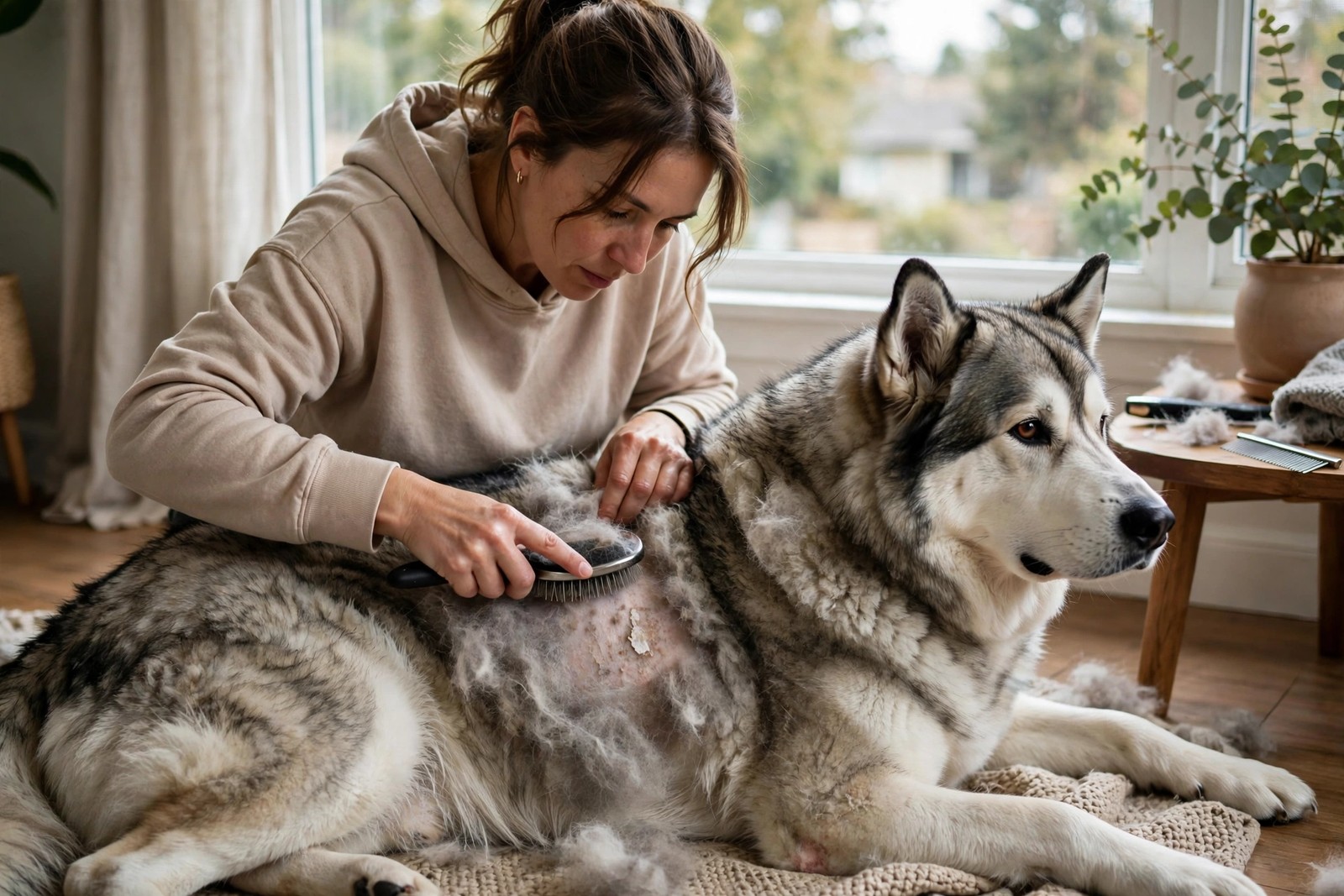
Seasonal shedding follows a pattern an owner can learn to recognise. Hair loosens across the body over days and weeks, grooming removes plenty without exposing bare patches, and new growth underneath feels consistent with the surrounding coat. Skin visible during brushing looks a normal colour for that dog, without soreness, crusting or an unpleasant feel under your fingers.
What Ordinary Shedding Looks Like
Volume alone can mislead. A thick-coated dog may fill a brush repeatedly during a seasonal change yet still show full coverage everywhere. Check symmetry while grooming: both sides should thin at a similar rate, and areas such as the neck, back, tail and hindquarters should not develop sharply defined bald spots. The dog should stay comfortable, rest normally and show no urge to scratch, chew or rub particular places.
Daily life also helps interpretation. Warm indoor heating, changing daylight and normal coat cycles can alter when loose hair appears, so compare today's coat with dated photographs rather than memory. A picture taken monthly in similar light reveals whether thinning is spreading, staying stable or filling in again.
Signs That Move It Beyond Shedding
Loss that arrives in patches, or affects one side more than the other, deserves attention, particularly when edges look inflamed or hair breaks away in clumps. Persistent itching, redness, flakes, scabs, a greasy feel soon after washing, or a smell that keeps returning all suggest the skin itself needs examination. Licking one paw, chewing the base of the tail or rubbing the face repeatedly can also point attention toward specific areas worth reporting.
Wider changes matter as much as visible hair. Note altered energy, weight, appetite, thirst, sleep or tolerance for exercise, even when those shifts seem unrelated to grooming. A vet may consider skin infection, parasites, allergies, hormonal conditions or other underlying causes as possibilities to investigate, and the pattern you describe helps decide which questions to pursue. Owners should not try to name the cause from appearance alone.
Prepare a Useful Record for the Visit
Write down when the change began, where it appeared initially and whether it has spread. Bring dated photos, a note of foods and any recent grooming products, and details about flea prevention, recent illness, medicines and changes at home. Mention whether other pets itch, whether anyone in the household has a rash, and how often scratching interrupts sleep or walks. Facts arranged in order save time during the appointment and reduce reliance on guesswork.
Avoid masking the picture before the visit. Extra bathing, new sprays or borrowed treatments can irritate skin or alter what the vet needs to see, so ask the practice for advice if discomfort is intense. Urgent swelling, pain, open sores, rapid hair loss or a dog who seems unwell should prompt a prompt call rather than waiting for a routine slot.
Compare With Your Dog's Own Baseline
Coat type shapes what ordinary looks like. Double-coated dogs may release a striking quantity of undercoat during a seasonal change, puppies trade a soft early coat for an adult texture, and seniors often thin gradually and symmetrically as years pass. None of those patterns excuses a bald patch, but they explain why volume alone proves little. Keep a rough brushing baseline during normal months, such as how full the brush looks after a standard session, then judge new shedding against that personal measure. Pace matters as well: change that accelerates across a fortnight, or spreads from one site to new areas, carries more weight than a stable pattern photographed a month apart.
A dated note kept beside the grooming rota helps at the appointment, especially when KinsLe shows which helper recorded each observation alongside Care Teams records.