
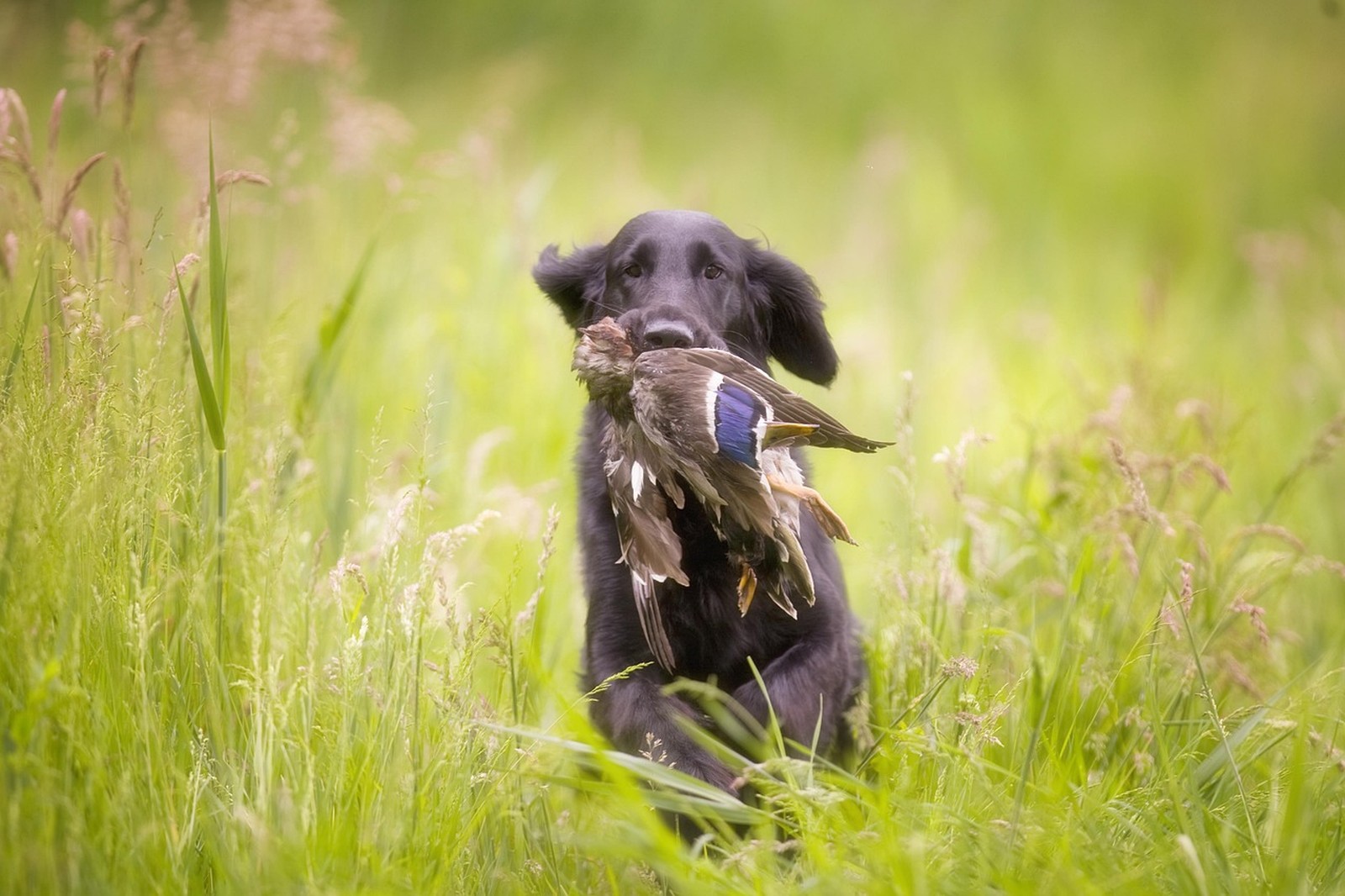
Brushing is the answer for this coat
A Flat-Coated Retriever does not need regular haircuts. The breed's calling card is a long, dense coat that lies flat and close, glossy black or liver, with moderate feathering on the chest, the backs of the legs, the ears, and the tail. It is a functional gundog coat, designed to shed water and brush past cover, and its beauty is in that sleek natural lay rather than in any sculpted outline. Clipping the body coat shortens the guard hairs that give the coat its flat, weather-shedding quality and gains the owner nothing, because a Flat-Coat's upkeep was never in the body hair to begin with; it is in the feathering.
Where the weekly brush should actually go
A weekly brush-through keeps this coat honest. Work through the feathering first, since that is where the breed tangles: behind the ears, under the elbows, through the chest fringe, and in the longer hair on the backs of the thighs and the tail. Follow with a comb in those zones to confirm you reached the skin, then give the smooth body coat a quicker pass to lift loose hair and distribute the natural gloss. After muddy or wet walks, check the feathering for burrs and seeds before they migrate inward; a Flat-Coat returning from cover carries its souvenirs exactly where the hair is longest.
The small tidying that counts as trimming here
If scissors appear at all, their work is minor and specific. Hair between the paw pads is kept level so the feet grip and do not ball up with mud or snow. A few wispy, split ends on the ears or the tip of the tail can be evened so the outline reads clean. Straggly feathering that has grown uneven can be lightly tidied without shortening its overall sweep. That is the full extent of it. Owners booking a groomer should say plainly that this is a neaten, not a cut, because a Flat-Coat taken short by a groomer working on autopilot loses the very look the breed is named for, and the coat takes a long while to lie properly again.
Bathing, drying, and the ever-young retriever
Flat-Coats are famously exuberant around water, so rinsing off mud and pond water will be a recurring event rather than an occasional bath. Rinse with plain water where you can, shampoo when the dog is genuinely dirty or fragrant, and dry the feathering and ears thoroughly afterwards; the long ear hair and chest fringe hold damp against the skin. Use the enforced stillness of drying to check ears, feel along the body for lumps under that dense coat, and look at the skin in the armpits and groin.
Coat and skin changes to raise with a vet
A Flat-Coat whose coat dulls, thins, or sheds heavily outside its normal pattern, or who develops persistent itching, hot spots, or recurring ear trouble, should see a veterinarian rather than getting extra baths or a shorter trim. Note when you first saw the change and whether it followed swimming in a new place, a food change, or a groom, because in a water-loving breed the timeline often points somewhere useful. Lumps deserve particular promptness in retrievers generally: anything new found during a brush-out is worth having checked rather than monitored indefinitely at home.
One weekly job, clearly owned
This breed's grooming is light but weekly without fail, and light weekly jobs are the ones households drop first when life gets busy: on KinsLe, Care Teams lets you assign your Flat-Coated Retriever's brush-out and feathering check to a named person each week, and once that person marks it complete the timestamp shows the whole household the coat was done, which keeps 'someone must have brushed him' from passing as a grooming routine.