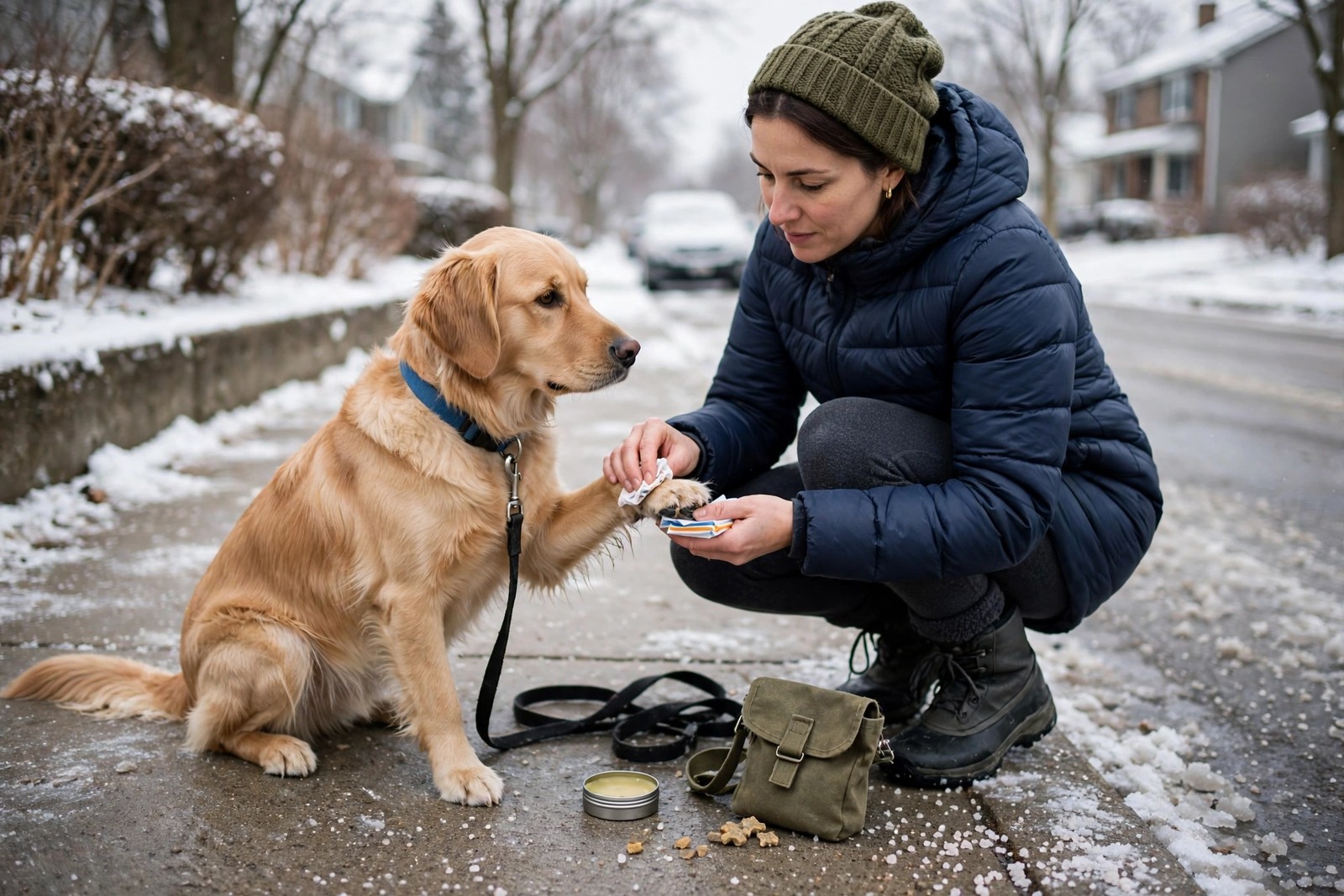
Winter pavements leave two problems on a dog's feet: grit salt that dries and cracks the pads, and moisture that stays trapped between the toes on the way back indoors. Salt dries and cracks pads and irritates dogs who lick it off, so the rinse matters even when paws look clean. Check pads daily in a cold snap for cracks, redness, or anything embedded. Cracked, bleeding, or limped-on paws that do not settle quickly need a veterinary check rather than more home care.
Before the walk: protection that stays on
A paw balm made for dogs, worked into the pads a few minutes before you leave, puts a breathable layer between skin and salt, and it suits dogs who will not tolerate footwear. Boots do the more complete job on heavily gritted routes, but only well-fitted ones: a boot that twists or slips fills with grit and changes how the paw lands. Practise boots indoors for treats first, in short sessions, and check the fit again once she is moving at her normal pace outside. Long hair between the toes is worth a careful trim in icy weather, because it collects the ice balls that make dogs stop and chew at their feet mid-walk.
The winter paw routine, in order
- Apply balm, or fit boots, before leaving — not at the first gritted corner
- Keep to the least salted side of the pavement where you safely can
- Rinse or wipe each paw with lukewarm water as soon as you get home
- Dry thoroughly, including between the toes, before she settles
- Inspect pads and between the toes each evening during a cold snap
Warm water matters: hot water on cold paws is uncomfortable and can worsen cracked skin, while a quick cold rinse leaves salt sitting in the toe webbing. If she licks her paws after walks despite rinsing, that persistence is worth mentioning to your vet rather than answering with stronger products.
Watching pads across the season
Compare her paws with how they felt last week, not with some ideal paw. Winter damage builds gradually — a pad that feels rougher each day, a small crack along one edge, redness between two toes that was not there before — and catching it at that stage usually means rest, shorter routes on softer ground, and protection on every outing. Snow, frozen mud, and de-icer from other people's drives all add their own irritation, so the evening check covers the whole day's surfaces, not just the morning walk.
Sharing the routine through the grit season
The routine only protects her if it happens after every walk, including the ones a partner, teenager, or dog walker brings her back from. KinsLe's Care Teams keeps that winter rota honest across the household: paw duties are assigned pet by pet to a named person, notifications go out, and a finished rinse is stamped with its completion time.