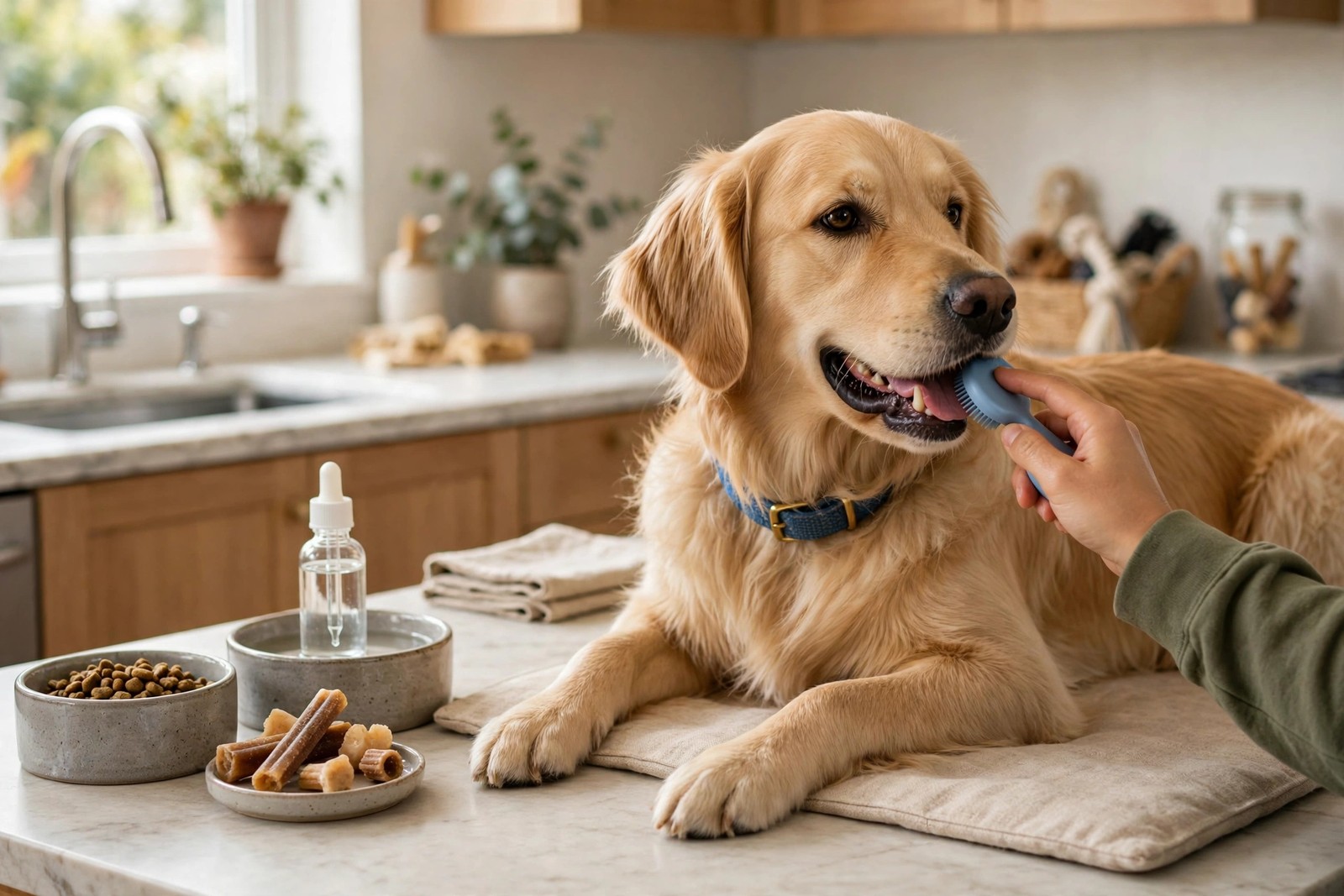
Start with the filter, not the packaging. A chew or additive earns its place alongside brushing when it carries acceptance from the Veterinary Oral Health Council, because that acceptance follows controlled trials showing a real reduction in plaque or tartar. Products without it may still be enjoyed as treats, but they have not demonstrated a dental effect, so price, flavour claims and packet promises are no guide at all.
Why Brushing Still Carries the Routine
Brushing works mechanically: the bristles disrupt the soft plaque film on the tooth surface before it mineralises into tartar, and they clean along the gumline, where early gum disease begins. No chew reproduces that action, because chewing contacts mainly the crowns of the back teeth and lasts seconds per side, and no additive poured into a bowl scrubs anything. That is why accepted products are framed as support for a brushing routine rather than a substitute for one. Even a modest rhythm of brushing on several days each week, done calmly with dog toothpaste and a soft brush or finger brush, delivers more than a daily chew given to a dog whose teeth are never brushed. Build tolerance gradually, starting with a lick of toothpaste and a few teeth at a time, so the habit survives long term.
Choosing a Chew That Helps Rather Than Harms
Within the accepted list, match the chew to the dog in front of you. Size matters: a chew small enough to be swallowed in chunks invites gulping, choking and gut blockage, while one matched to body weight encourages sustained chewing. Supervise every chew, take away the final small piece, and watch how the individual dog chews, because a determined gulper can turn a reasonable product into a hazard. Texture matters just as much. Bones, antlers, hooves and similarly unyielding items are harder than tooth enamel tolerates, and the classic result is a slab fracture of a large upper cheek tooth, where a flake of tooth shears off and exposes pain and infection risk. Very hard or indigestible chews also carry blockage risk if fragments are swallowed. Edible chews are food, not free extras: their calories belong in the day's ration, so reduce the bowl slightly on chew days, particularly for a dog that gains weight readily.
Water Additives, Judged by the Same Standard
Apply the identical filter to the water bowl. An accepted additive has shown a measured effect on plaque or tartar in trials; an unaccepted one is flavoured water with a claim attached. Follow the measured dilution exactly, refresh the bowl daily rather than topping up, and keep a second bowl of plain water available, because a dog that dislikes the taste must never have to choose between drinking and thirst. Additives suit dogs that tolerate only limited brushing, households sharing care where a simple bowl routine is easier to keep consistent, and the weeks after a professional clean, when keeping new plaque down extends the benefit. They do not remove tartar that has already formed, and they do nothing below the gumline, so a mouth with red gums, loose teeth, dropping food or a new smell still needs a veterinary dental assessment rather than a stronger additive.
Fitting It Into Ordinary Days
Pair the chew with an existing anchor, such as the end of the evening walk, keep the brush by the food bowls where it is seen, and record which products your dog actually chews slowly rather than bolts. Review the mouth monthly in good light, lifting the lip to check the back teeth and gumline, and note any change in chewing side, which often signals discomfort worth a vet visit. Shared households keep this routine intact when KinsLe's Care Teams feature turns brushing and chew-giving into named, timestamped duties, so the evening round no longer rests on one person's memory.