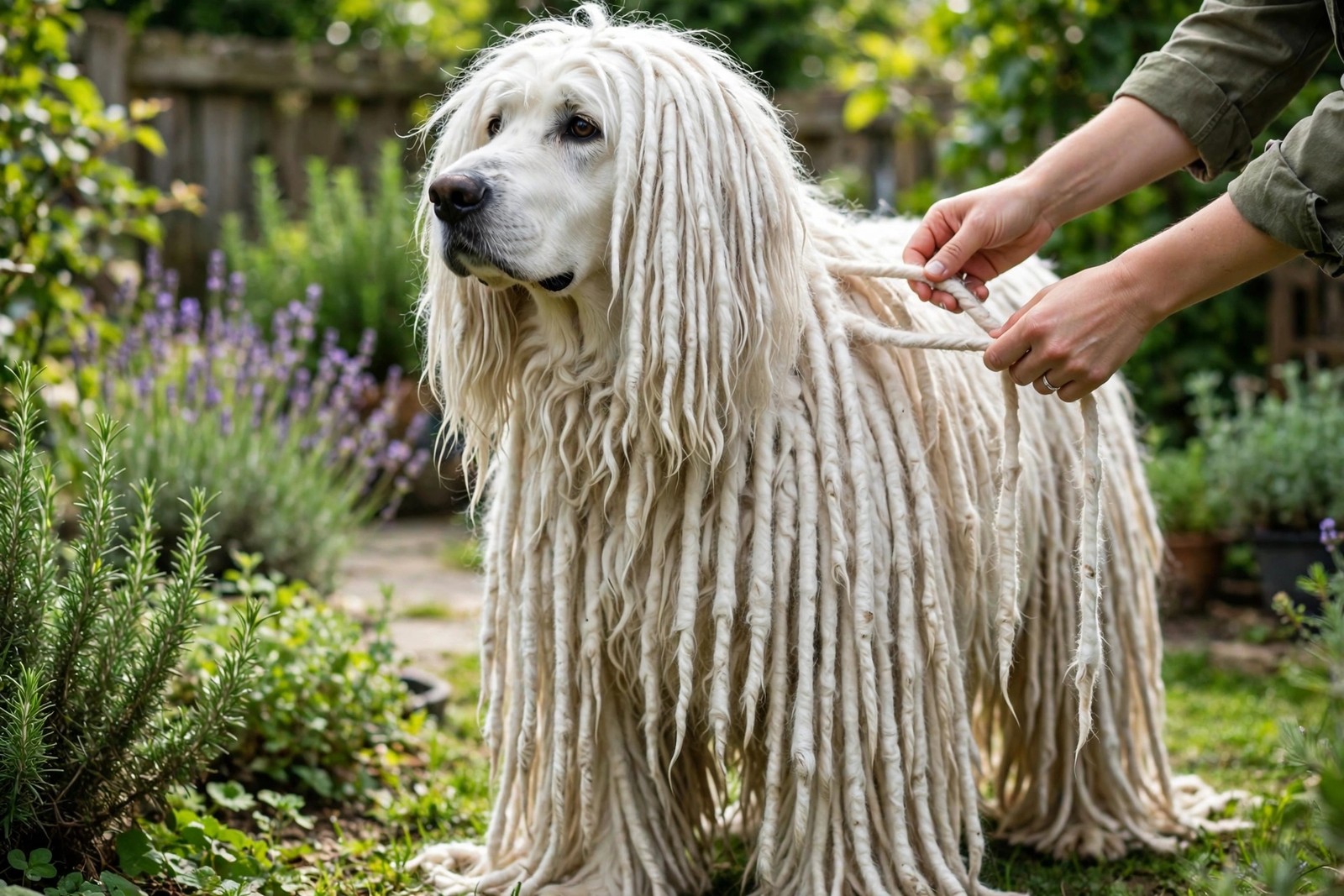
The Short Answer for a Corded Komondor
A mature Komondor does not get haircuts, and you should not brush the adult coat either. This Hungarian livestock guardian grows long cords that hang like the strands of a mop, and those cords are not a style you maintain with clippers — they are the coat itself, formed when the soft undercoat twists together with the coarser outer hair and felts into ropes. Scissoring through them leaves uneven stumps that cannot rejoin, and dragging a brush through them tears the felted strands apart. Either move destroys months of natural formation in a single grooming session, which is why Komondor care looks so different from care for almost any other long-coated breed.
The Real Routine: Separating, Checking and Tidying
Once cords are established, regular care means running your hands through them, separating any cords that are starting to grow together at the roots, and checking the skin underneath for irritation hidden by the dense covering. Cords around the ears, under the legs and along the belly tend to merge fastest because those areas rub as the dog moves. Trimming has a narrow, purely practical place: you can tidy cords that drag through mud or food, neaten the hair around the sanitary areas, and remove a damaged cord end. That is housekeeping at the margins, not a haircut. The length of the cords themselves is left alone, and a Komondor in full cord is never shaved down for summer, because the cords insulate and shade the skin as well as looking extraordinary.
Bathing a Komondor Is the Hard Part
Washing this breed is a project, not a quick shower. The cords soak up water and shampoo like rope, so each one needs thorough rinsing until no residue remains trapped inside, because soap left in a cord can irritate the skin and leave the coat smelling sour. Drying matters even more. Thick cords can stay damp at the core for a very long time, and a cord that never fully dries can develop a musty odour and irritate the skin beneath it. Owners typically blot and squeeze cords section by section, then use moving air and plenty of time until every cord feels dry right through. After a bath, re-check that cords have not clumped together while wet, and separate any that have.
Signs the Cords Need a Closer Look
Because the coat hides so much, build a habit of parting cords and looking at the skin itself during your separating sessions. Persistent scratching in one spot, a sour or mildewy smell coming from a particular cord, redness where cords have merged into a tight mat, or a cord that feels hot or damp long after the rest have dried all deserve attention. Free a merged mat gently with your fingers rather than cutting it out, and if the skin underneath looks sore, broken or does not settle once the area is clean and dry, have your veterinarian examine it rather than working stronger products into the cords. Catching a hidden skin problem early matters more in this breed than in a short-coated dog, simply because you cannot see the surface at a glance.
Keeping Every Helper on the Same Page
The biggest grooming risk for a Komondor is often a well-meaning person applying ordinary dog habits — a sitter who brushes the cords while you are away, or a groomer who assumes a trim is overdue. Write the rules down where anyone helping can see them: fingers only, no clippers on the cords, bath days are all-day drying commitments. With KinsLe, Care Teams turns that understanding into assigned duties with timestamps, so cord separating, skin checks and post-bath drying are each claimed and marked done by whoever handled your Komondor.