Brushing Alone Is the Whole Haircut Answer
A Kuvasz never needs a regular haircut. The breed's medium-length white double coat is designed to finish at its natural length: a weather-resistant outer layer over a dense, soft undercoat that insulates this Hungarian flock guardian in both cold winters and hot sun. Clipping that coat short does not make a Kuvasz cooler or cleaner. It strips away the outer guard hairs that shed dirt and water, exposes pale skin to sunburn, and often grows back with a patchy, cottony texture that mats more readily than the original coat. Apart from tidying stray hair on the feet or around the sanitary area for hygiene, scissors and clippers have no routine place in Kuvasz care.
How to Brush a Coat This Thick
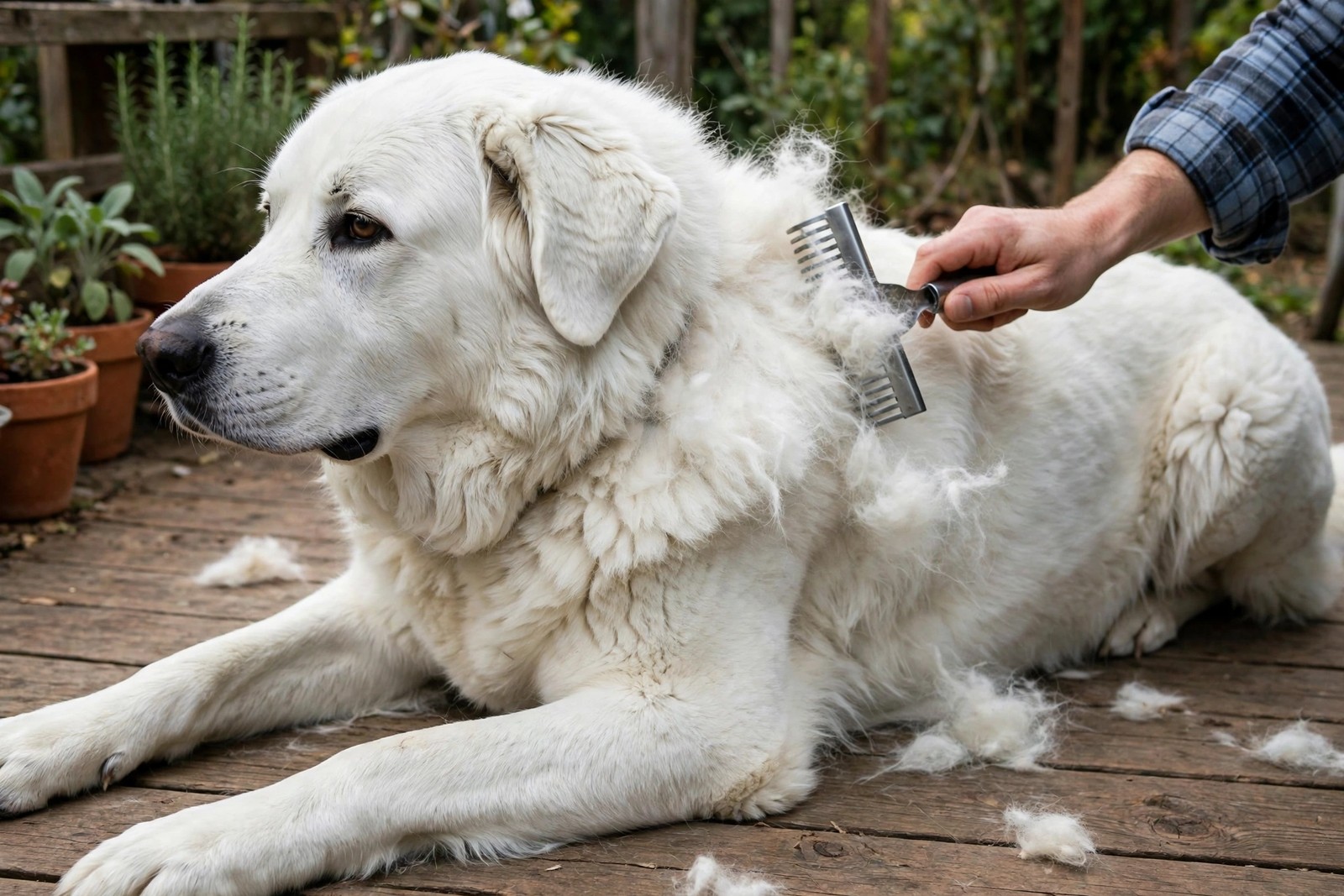
A weekly brush-out in quiet times keeps the coat in order, but technique matters more than speed. Start with a slicker brush or pin brush on the outer coat, then follow with an undercoat rake or comb, working in sections so you actually reach the skin rather than skimming the surface. The heaviest growth sits in the mane-like ruff around the neck, the feathering on the backs of the legs and the thick breeches on the hindquarters, and those are exactly the places where loose undercoat packs down into mats if sessions are rushed. Brush in the direction of growth first, then gently against it to lift out dead undercoat, and finish by combing through to check your work — if the comb snags, that section is not done.
Shedding Season Changes the Schedule
Twice a year the Kuvasz sheds its undercoat in earnest, and the volume surprises first-time owners of the breed. Loose white hair comes away in clumps, drifts into corners and coats clothing and furniture despite your best efforts. During these weeks, short brushing sessions most days achieve far more than one marathon session, because you remove hair before it weaves itself into the remaining coat. A bath partway through a heavy shed can help loosen undercoat that is ready to release, provided you brush thoroughly before the bath — wetting packed undercoat first can tighten it into felt. Dry the coat fully afterwards, then brush again once it is dry, when the loosened hair slides out most easily.
Skin and Coat Changes Worth Noting
A coat this dense can hide problems, so let your fingers do surveillance while you brush. Part the coat and look at the skin on the belly, in the armpits and along the back. Flaking that is new, bald patches, a greasy feel to the undercoat, a strong odour, or a Kuvasz that scratches, chews its feet or shakes its head repeatedly are all reasons to look closer. Mats pulled tight against the skin should be worked out patiently with fingers and a comb rather than ripped through with a brush. If you find sore, broken or weeping skin, or shedding that leaves visibly thin areas outside the normal seasonal pattern, book a veterinary visit and describe when the change started and how the coat has behaved since.
Sharing a Big Brushing Job Fairly
Keeping up with a Kuvasz coat is genuinely easier as a household project: one person can take the weekly maintenance brush, another the shedding-season sessions, and whoever bathes the dog owns the long drying and re-brushing that follows. Recording who did what stops both duplicated effort and the opposite problem, where everyone assumes someone else brushed this week. KinsLe supports that rhythm through Care Teams, where each Kuvasz brush-out, bath and skin check can be assigned to a named helper and marked complete with a timestamp once it is finished.