A Coat That Never Needs Cutting
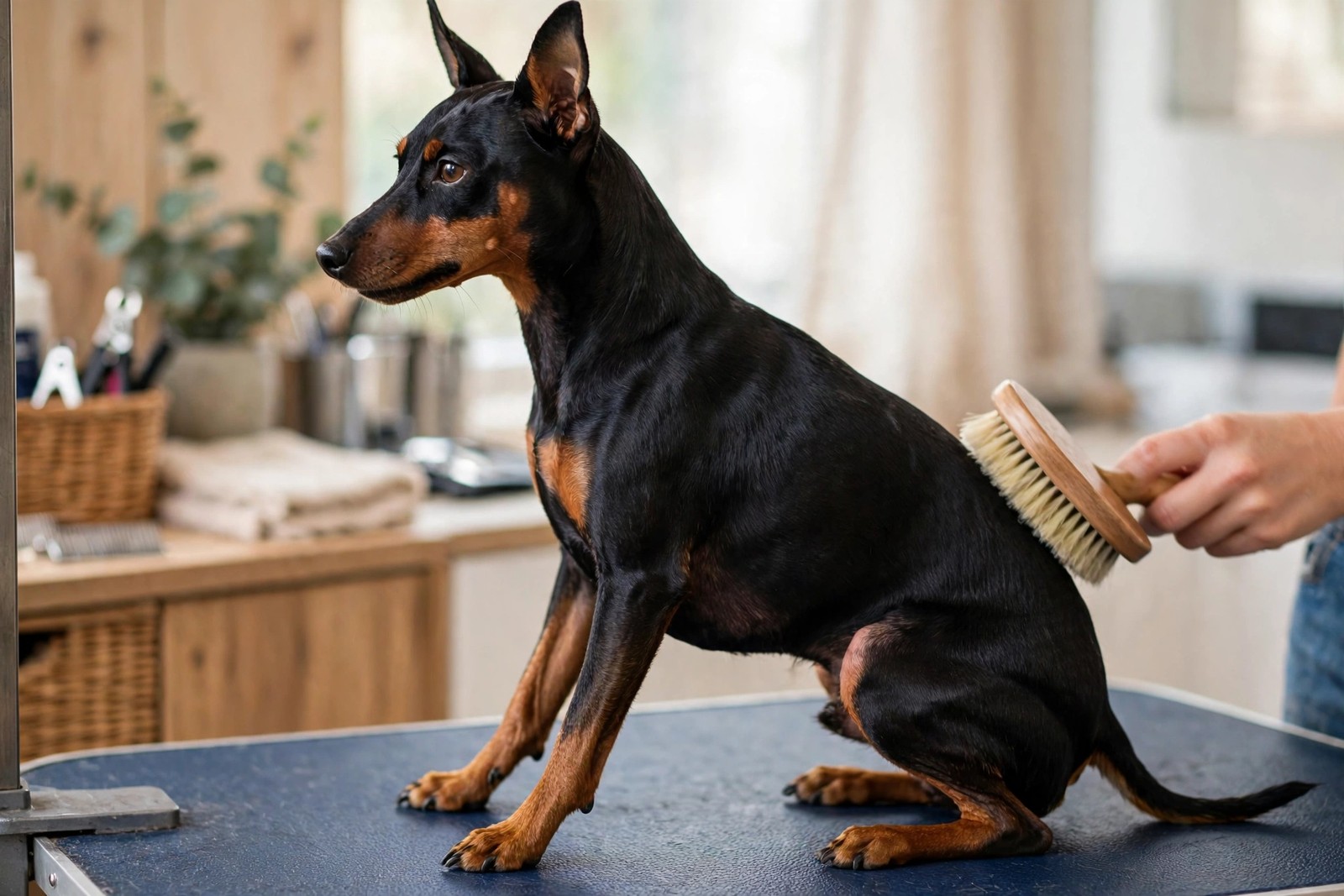
A Manchester Terrier is about as close to a wash-and-wear dog as the terrier group gets. The coat is a single, very short layer that lies tight and glossy against the body, with the black-and-tan markings showing through crisp and clear. It does not lengthen, curl or tangle, so there is nothing for a haircut to do — no groomer would clip a Manchester, and shaving would only damage the sleek finish and expose the skin. Brushing is the whole coat story, and even that is light work. Both the standard and toy varieties of the breed share the same coat and the same simple answer, which makes the Manchester an appealing choice for anyone who wants terrier character without a terrier grooming bill.
The Weekly Mitt Session, Done Properly
Once a week, spend a few minutes going over the dog with a rubber grooming mitt, a hound glove or a very soft bristle brush. Short coats still shed — fine black hairs work their way into upholstery year-round — and the mitt lifts them off before they migrate. Use the session for more than hair removal: run your palms over the ribs, shoulders and hips to feel for lumps or ticks, look at the skin where the coat parts along the back, and check the tan points on the legs for scrapes or dryness.
Where Manchester Grooming Time Actually Goes
With coat care taking minutes, the breed's real grooming budget belongs elsewhere. Nails grow continuously and short-coated, active terriers still often need them trimmed regularly, since you will hear clicking on hard floors long before the nails look long. Ears should be checked weekly for wax and redness — the Manchester's upright ears in the standard variety and naturally neat ears in the toy both stay fairly clean, but a quick look costs nothing. Teeth benefit from regular brushing or dental chews worked into the routine, and the toy variety in particular rewards early dental habits. None of this needs a grooming salon; it needs consistency at home, ideally built into the same weekly slot as the mitt session so one habit carries the others.
Skin Signs Visible at a Glance
The Manchester's short coat is a diagnostic gift: skin changes cannot hide. Watch for flaking along the back, thinning hair on the chest or behind the ears, redness in the groin or armpits, or a dog that starts scratching, licking its paws or rubbing along furniture. Check for fleas in the thin-haired areas where they are easiest to spot. A sleek coat that turns dull, patchy or flaky over a few weeks despite unchanged grooming is information worth acting on — start with a vet visit rather than a new shampoo if the change persists, especially if it arrives alongside lower energy or appetite changes. Fresh scrapes from terrier adventures in undergrowth should be kept clean and watched; anything swollen, hot or slow to heal deserves professional eyes.
Keeping a Tiny Routine From Sliding
Manchester grooming fails through neglect of the small things: nails that quietly overgrow, ears nobody has looked into for a month, the mitt session skipped because the dog 'looks fine'. The fix is simply to schedule the handful of jobs rather than relying on noticing. KinsLe helps through Care Teams, where your Manchester Terrier's weekly brush-over, nail trim and ear check can sit as assigned duties with timestamps when done — a light structure that matches a light-coated breed but keeps every small job accounted for.