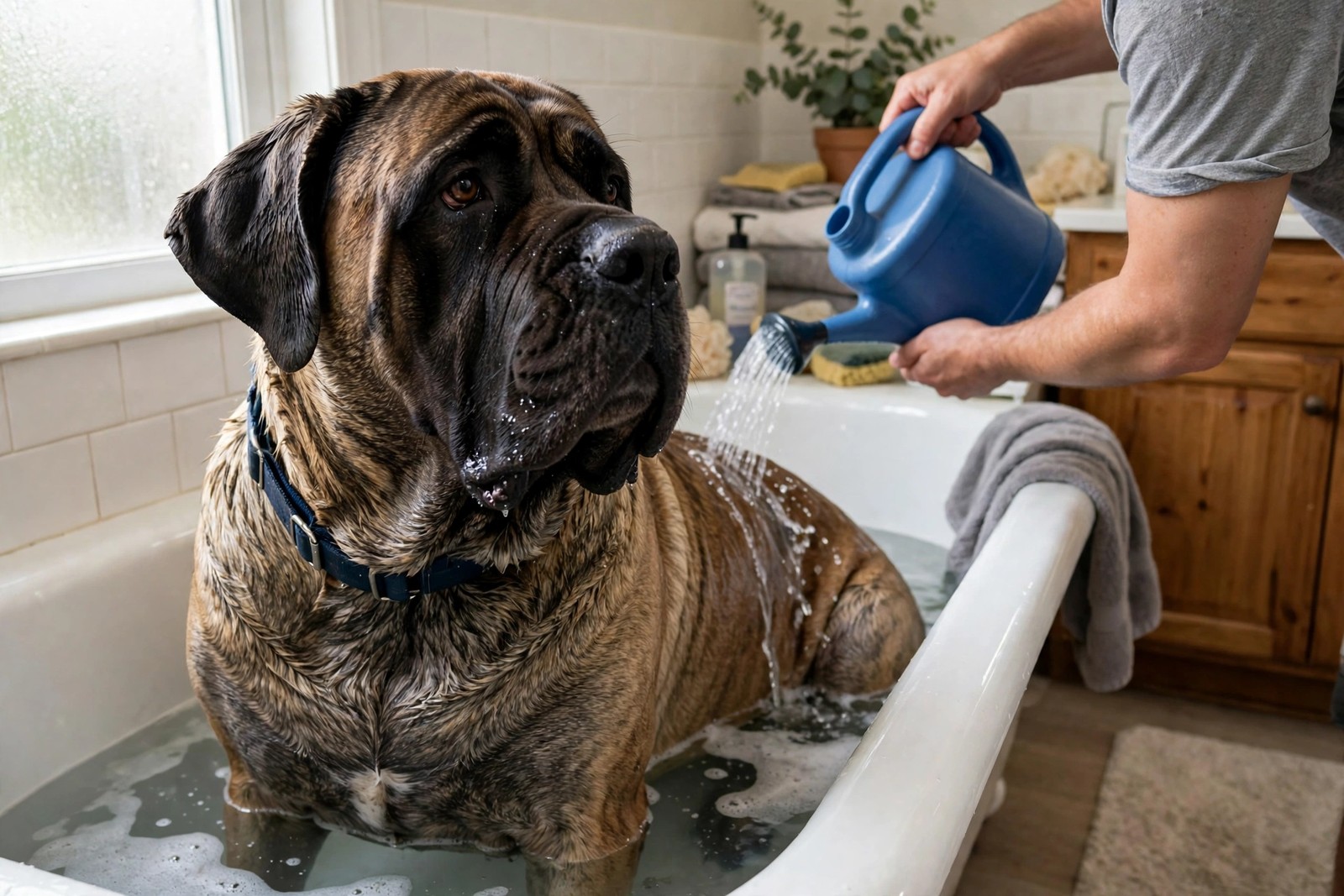
A very large dog does not need a walk-in shower, and nobody needs to lift a heavy and wet dog into a tub. The workable home method keeps the dog standing on the floor, uses buckets and jugs of lukewarm water, and washes one section at a time. Poured water also respects the second condition in the question, since a jug feels gentle and predictable to a dog who dislikes the garden hose, with no spray, no pressure and no cold shock.
Preparation: Build the Wash Station Before the Dog Arrives
Choose the bathroom or another room with a washable floor and a drain or a floor you can mop. Lay a large non-slip mat where the dog will stand, and add a second mat or old towels along the likely splash zone and the route to the door. Fill one bucket with lukewarm wash water and a second bucket with clean lukewarm rinse water, place a jug in each bucket, and raise both buckets on a low stool or a sturdy box so you bend less. Set dog shampoo, a sponge or a cloth, a brush and a stack of towels within arm's reach of the standing spot. Place a kneeling pad for yourself, close doors that lead to carpeted rooms, and warm the room before inviting the dog in. Offer a toilet break and a short walk first, since a settled dog stands better, and keep a pot of treats at the station for pauses. A second person, when available, can refill buckets and hold the treat pot, and that helper should stay on the dog's calmer side.
The Wash, Section by Section
Lead the dog onto the mat and reward standing still before any water appears. Pour jug water over the back and one side until the coat wets through, then work shampoo into that section with your hands or a sponge, following the coat down the leg on the same side. Rinse the section with clean jug water from the rinse bucket until the water running off looks clear and the coat feels free of slipperiness, since shampoo left in a deep coat can irritate the skin later. Move to the other side in the same order, wetting, washing and rinsing before you start the chest, the belly and the rear. Wash the head last and with a damp cloth rather than poured water, keeping water and shampoo away from the eyes and out of the ears. Refill the rinse bucket whenever the water turns cloudy, and pause between sections for a treat and a shake, ideally over the mat rather than across the room. Short breaks protect the dog's joints during a long stand and protect your back during the bending and reaching that a large frame demands.
Drying, Cleanup and When to Use a Self-Wash Instead
Towel the dog in stages where he stands, pressing towels through the coat section by section and swapping in dry towels as each towel saturates. A dryer on a cool setting can follow if the dog accepts the sound and airflow, introduced slowly and stopped at any sign of stress. Brush the coat once the fur feels mostly dry, and check the skin as you brush for redness, lumps or sore spots that a bath can reveal. Let the dog leave the room only when the coat no longer drips, and mop the floor before anyone walks through in socks. Clear hair from the mat and the drain area, wash the towels, and note how long the full wash took so the next bath can plan buckets and time. A groomer's self-wash station remains a sound alternative for a dog who travels happily, since raised tubs and warm water suit some owners' backs better, and choosing that option does not make the home method a failure. In KinsLe, Care Teams can hold bath day as a shared duty with named roles for washing, rinsing and drying, and the completed duty gives the household a record of when the last full wash happened.