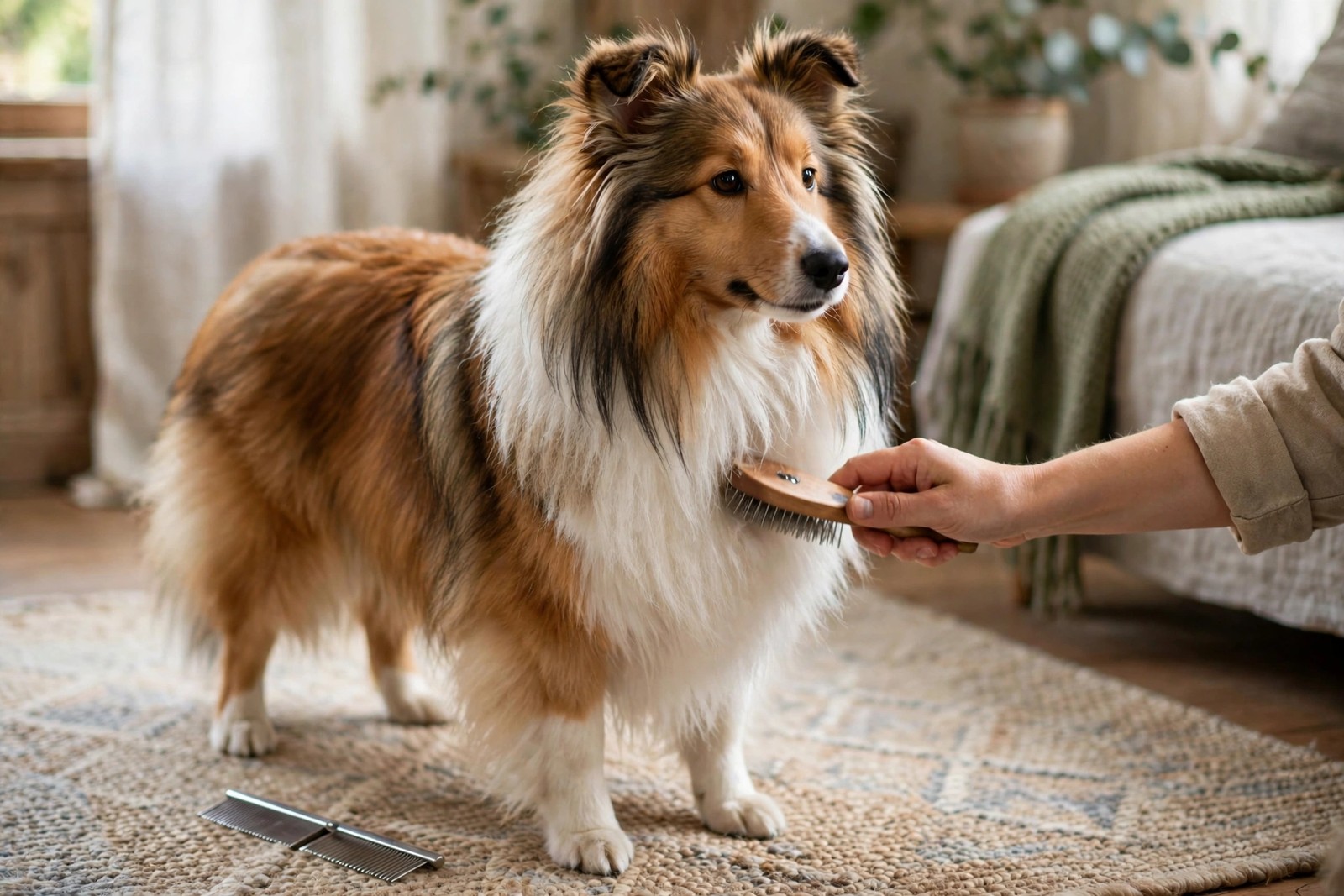
A Shetland Sheepdog carries two coats doing two jobs: a soft, dense undercoat that insulates and sheds in volume, and a longer, harsher guard coat that sheds weather and gives the silhouette. Tools suit this coat when they move loose undercoat out without cutting or snapping the guard hairs, and the test of any session is whether you reached the skin, not how glossy the surface looks.
The Four Tools and What Each One Does
The pin brush is the workhorse: rounded pins on a cushion base, worked through the coat in sections, lifts and separates without the static and breakage a bristle brush causes in this length of hair. The undercoat rake, used gently and only where the coat is genuinely loose, draws out shed undercoat from the neck, breeches and behind the ears, the zones where packing begins; let the teeth glide rather than digging, and stop when they start coming through cleanly. The slicker is a specialist here, reserved for the feathering on the backs of the legs, the tail and the pants, where finer hair tangles readily and short strokes tease knots apart. The metal comb is not a styling tool at all but the examiner: run it through a brushed section at skin level, and any snag tells you the brush polished the top while a mat is forming underneath. A comb that passes everywhere is the only honest finish line.
Line Brushing: The Method That Reaches the Skin
Work the coat in layers. With one hand, lift and hold a section of coat up and back, exposing a line of skin at its base, then brush the layer beneath it downward in short strokes from root to tip. Let the held coat fall in stages, brushing each newly exposed layer, and move across the body in bands: one side, then the other, then chest, neck ruff, breeches and tail. This line or layer method is slower than surface brushing and is precisely why it works on a Sheltie, because the undercoat that mats lives at the base, invisible from above. Mist the coat very lightly if it is flying with static, brush a dry coat rather than a wet packed one, and check trouble spots with fingers as you go: behind the ears, armpits, the collar line and where the harness sits. During a coat blow, expect the rake and brush sessions to run more often, every couple of days, until the shed undercoat is out.
What to Leave Out of the Kit
Blade-style deshedding tools drag a cutting edge through the coat and can slice guard hairs along with the loose undercoat, leaving the coat broken, fuzzy and uneven as it regrows, so they have no place in this kit despite the satisfying pile they produce. Drag is the failure mode to avoid in general: any tool that pulls hard at attached coat is removing coat the dog still needs. Stiff slickers used over the whole body snap guard hairs, and raking with force tears at skin beneath packed areas, so pressure stays light and packed spots get finger work first. And never shave the double coat: it insulates in cold and heat, protects the skin from sun and scrapes, and regrows slowly and unevenly, sometimes with a changed texture, while the undercoat returns faster than the guard coat and mats all the more readily.
A Rhythm the Coat Can Live With
Brush weekly in ordinary times, more often while the coat is blowing, and finish every session with the comb test in the known trouble zones. Puppies graduate from a soft brush and brief handling to the full kit as the adult coat arrives, in sessions short enough to stay pleasant. Households sharing a Sheltie keep the rhythm when Care Teams in KinsLe assigns the weekly brush-through and the heavier blow-season sessions as named duties, each marked done with a timestamp, so the coat's care is a kept appointment rather than a good intention.