Neither Clippers nor a Brush
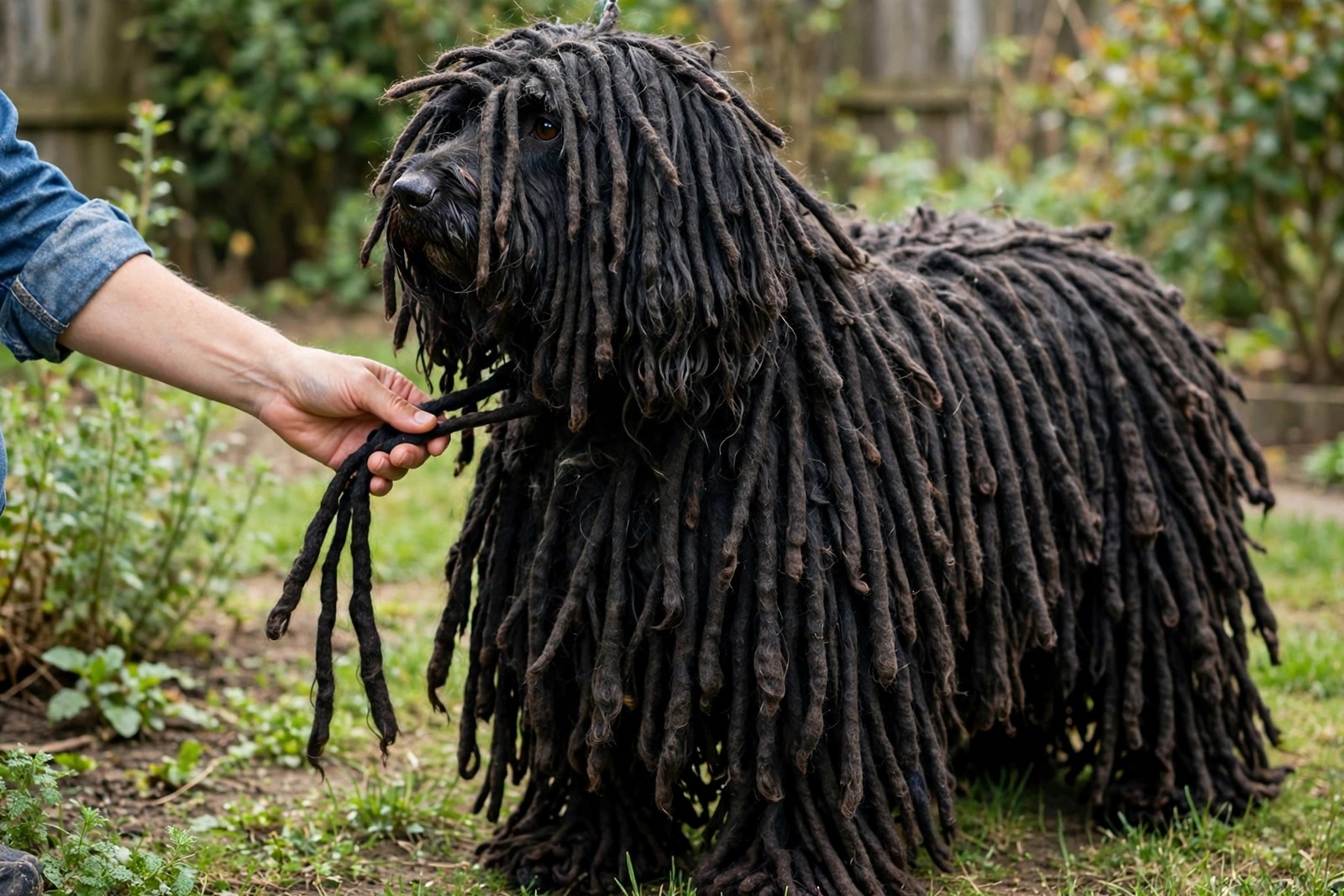
Ask what a Puli needs and the honest answer surprises most people: neither haircuts nor brushing. The breed's hallmark is a fully corded coat, in which the dense, woolly undercoat and the wavy outer coat twist together into natural cords that hang like heavy rope. Brushing would shred that structure, and a haircut removes the cords entirely. Some owners do clip a Puli down — the coat will grow back and can be re-corded — but that is a lifestyle reset, not routine grooming, and most Puli homes commit to the cords.
How Cords Form, and Your Part in It
Cording is not something you simply allow to happen. As a young Puli's adult coat comes in, the hair begins clumping into flat mats. Your job, over months, is to split those clumps by hand into cords of roughly even thickness, tearing them gently apart down toward the skin so each cord forms cleanly instead of merging into one solid plate. This splitting stage is the most labor-intensive period of Puli ownership, and skipping it produces matted sheets that trap moisture against the skin and eventually have to be cut off.
Once cords are established, maintenance settles into regular checks: run your fingers along each cord to its base, separate any cords that are fusing together, and pick out debris — Pulik pick up twigs, leaves, and seeds that work deep into the coat on walks.
Bathing a Corded Coat Is Its Own Project
Bathing a Puli is measured in hours. The cords absorb an enormous amount of water and shampoo, so washing means soaking and squeezing section by section, then rinsing far longer than feels necessary, because soap residue left in a cord dulls it and irritates skin. Drying is the longest stage of all: cords can hold moisture for a very long time, and a Puli put away damp will smell musty and can develop mildew within the cords. Owners use fans and squeeze cords repeatedly with towels, and many schedule bath day when they can supervise drying for most of it.
Between baths, spot-clean what the dog brings home, and keep the hair around the eyes, mouth, feet, and rear tidy — small trims in those areas are hygiene, not a haircut, and even devoted cord keepers make them.
Skin and Comfort Under the Cords
A corded coat hides the skin completely, which makes deliberate checks essential. Part cords regularly to look at the skin beneath, especially after wet weather, and investigate any persistent scratching, odor that survives a proper bath, or a cord that feels hot or swollen at its base. Fleas and skin irritation can advance a long way under that coverage before they become visible. If a section of coat becomes badly matted to the skin or a skin problem needs treatment access, clipping that area on veterinary advice is sensible care, not failure.
The Real Cost Is Time, Shared Fairly
Puli grooming fails most often not from lack of knowledge but from one person carrying every cord-splitting session and marathon bath alone until they fall behind. In KinsLe, Care Teams turns cord checks, debris patrols after walks, and bath-day drying shifts into assigned duties that helpers can mark complete, keeping the schedule visible before cords fuse or a bath gets postponed again.