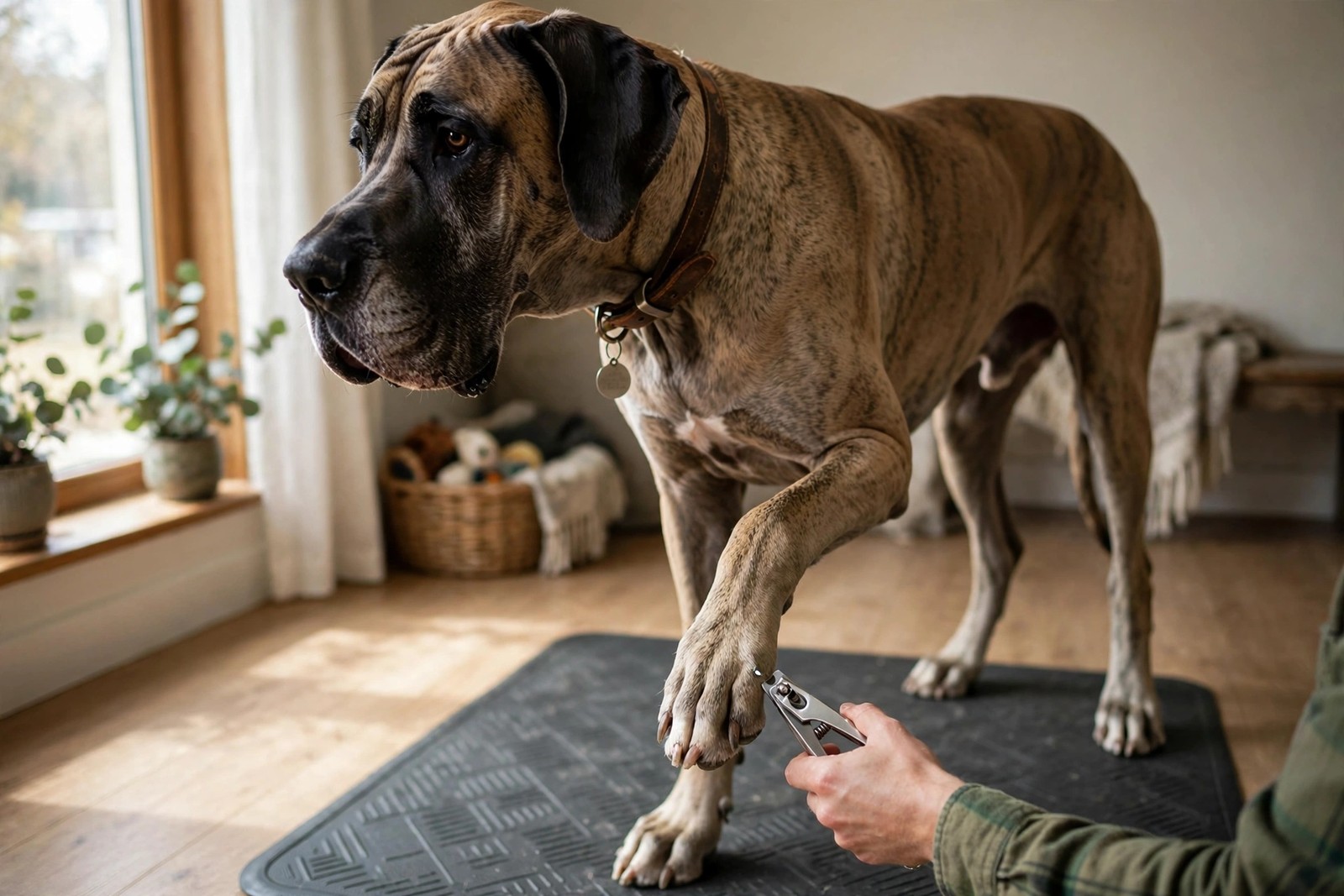
A giant breed does not carry a little extra nail length the way a small dog might. Every step puts the dog's whole mass through four feet, so a nail that has grown too long meets the ground early, pushes the toe back, and changes how the foot lands. Over weeks that altered landing strains toes and the joints above them, and the dog shifts its weight in ways that can make standing and walking quietly sore. Nail care for this size of dog is therefore not cosmetic tidying. It is load management, done little and often.
Why Short and Frequent Beats Rare and Deep
The living quick inside each nail grows out with the nail, so a dog whose nails have been left for months cannot simply be cut back to a short length in one sitting without cutting into that quick. Small trims taken frequently solve the problem from the other direction: each trim removes only the tip, and between trims the quick recedes gradually toward the toe, so the nail can become shorter over time without pain or bleeding. For a giant breed this patient route is also the safer handling route. A heavy dog that decides a session is over is hard to argue with, so keep sessions short, trim one or two paws, and finish while the dog is still settled rather than pushing for all four feet at once.
Setting Up a Session the Dog Can Stand
Work on a non-slip surface, because a giant dog that slides while a foot is lifted will brace, pull, and lose trust in the whole routine. A mat on a hard floor, or a patch of ground the dog already stands on calmly, both work better than a slippery table. Have the clippers or grinder, a towel, and something to reward with ready before you lift a foot, so the dog is not held waiting while you search drawers. Press each toe pad gently to extend the nail, look for the quick in pale nails, and on dark nails take thin slices until the centre of the nail starts to look different, then stop. Short sessions repeated weekly teach the dog that nail care is brief and uneventful, which matters far more with a dog too strong to restrain than with one you can simply hold.
The Weekly Check, Dewclaws Included
Build the check into a fixed weekly moment and run through every nail, not only the ones that look long. Weight-bearing nails wear a little on hard ground, but dewclaws, set higher on the leg, touch nothing and wear not at all, so they keep growing and can curl round toward the pad if nobody looks at them. Feel each foot as you go: heat, swelling, a nail that has split or torn, or a dog that flinches from one toe tells you more than length alone. Note which nails were trimmed and which were left, because on a big dog with dark nails the honest record of last time is what makes this time quicker and calmer.
When Feet Need a Vet Instead
Sore feet are not a grooming problem to push through. A dog that starts limping, licking one foot persistently, shifting its weight off a leg at rest, or walking differently after trims needs a veterinarian to look at the feet and gait, since nail length may be only part of what is going on in a joint carrying this much load. The same applies if a nail tears, bleeds and will not settle, or a toe looks swollen or infected. Keeping nails short still matters for that dog, but the vet visit comes first and the trimming plan follows what the vet finds.
KinsLe keeps that rota from living in one person's memory, because Care Teams duties for this dog record who trimmed, who checked the dewclaws, and when each job was done.