
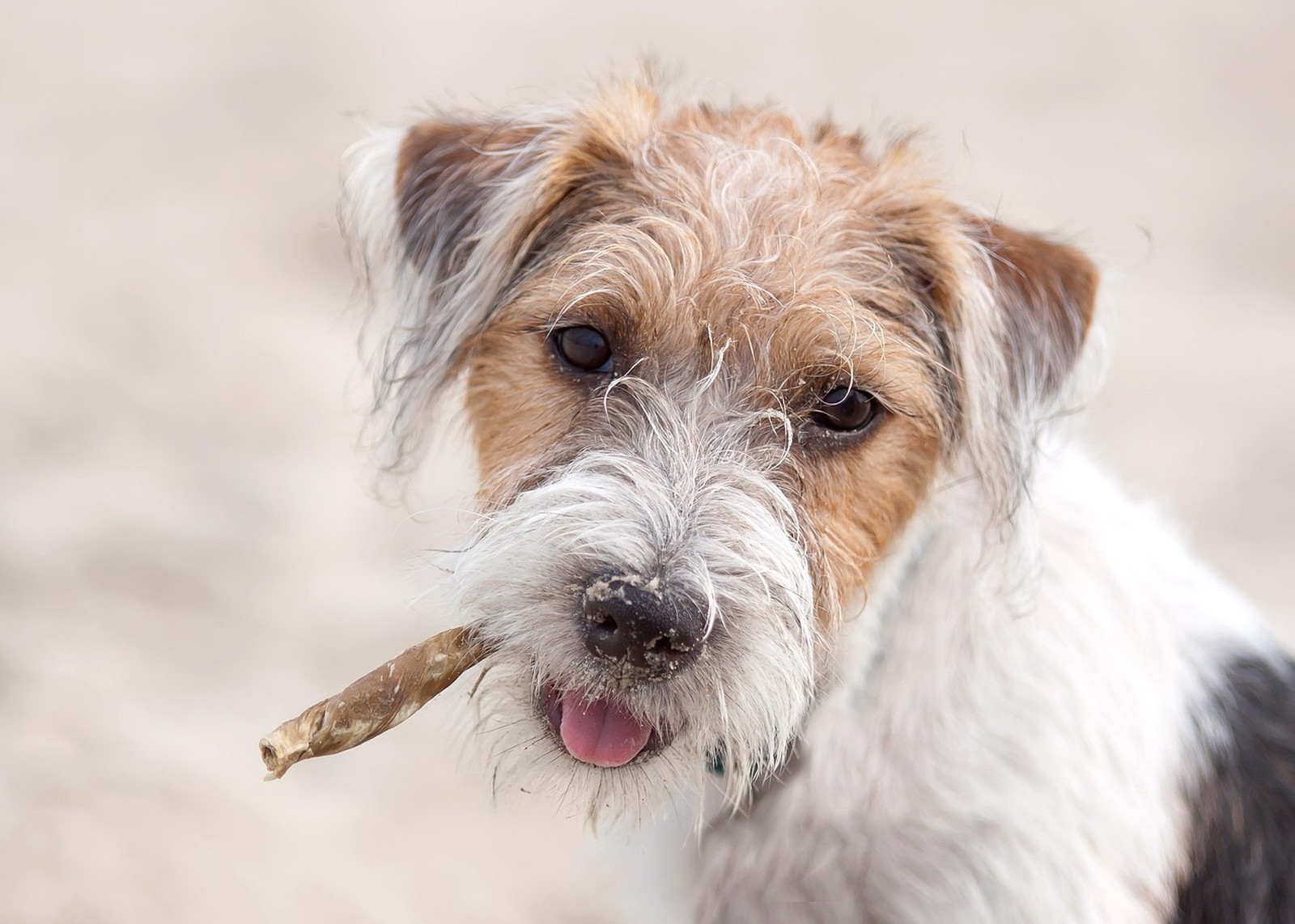
Start With Which Russell Coat You Have
The Russell Terrier comes in three coats — smooth, broken, and rough — and the right answer to the haircut question depends on which one is standing in front of you. All three are double coats bred to be hard, dense, and weatherproof enough for a working terrier following hounds and going to ground. None of them needs clipping as routine care. What changes by type is how the dead coat comes out: brushed away in the smooth, or pulled by hand-stripping in the broken and rough.
Smooth Coats: The Simple Case
A smooth Russell needs a weekly brush-down with a rubber grooming mitt or a soft bristle brush, which lifts loose hair, spreads coat oils, and keeps the short coat lying glossy and flat. Shedding is year-round but modest, and a quick extra mitt session during seasonal peaks handles it. Bathing stays occasional — this coat sheds dirt well — and there is nothing to trim beyond nails and a check of the ears. If your Russell is smooth, brushing truly is the whole grooming program.
Broken and Rough Coats: Why Stripping Replaces Cutting
A broken coat has a mix of smooth and longer wiry areas; a rough coat is longer and harsher all over. In both, the wiry topcoat dies in place and must be removed so new harsh hair can grow through. Hand-stripping — gripping small sections of dead hair and pulling them out, by hand or with a stripping tool — does that job and preserves texture and rich color. Clipping does the opposite: it cuts the dead hair off at the surface, leaving the soft undercoat to dominate, and over repeated clips the coat turns cottony, faded, and poor at shedding weather. Pet owners sometimes choose clipping for convenience, but they should know it is a one-way change in coat quality.
Stripping is typically done in sessions a few times a year, or rolled gradually a little at a time. The beard, leg furnishings, and the hair around the ears on rough dogs also benefit from finger-plucking stray long hairs to keep the outline tidy.
Weekly Care Shared by All Three Types
Whatever the coat, give a Russell a weekly brush and comb-through, check the furnishings on broken and rough dogs for small tangles behind the ears and in the armpits, and tidy the hair between the paw pads. This is also the moment to run hands over a very athletic little dog for the thorn pricks, scrapes, and grass seeds that terrier adventures collect, and to notice skin redness under the coat before it spreads.
When the Coat Itself Is the Symptom
Contact your veterinarian if a Russell's coat thins symmetrically, the skin darkens or flakes heavily, or shedding turns into bald patches rather than the normal seasonal looseness. A wiry coat that suddenly grows soft and sparse without any clipping is also worth raising at a check-up, because in a breed defined by that hard jacket, texture change can be an early clue that something internal has shifted.
Scheduling Two Different Kinds of Grooming
Russell care runs on two clocks — weekly brushing and stripping a few times a year — and the slower clock is the one households forget. In KinsLe, Care Teams lets you set both as recurring duties with different rhythms, each marked complete with a timestamp, so the rough coat gets stripped on time instead of drifting into a clip of convenience.