
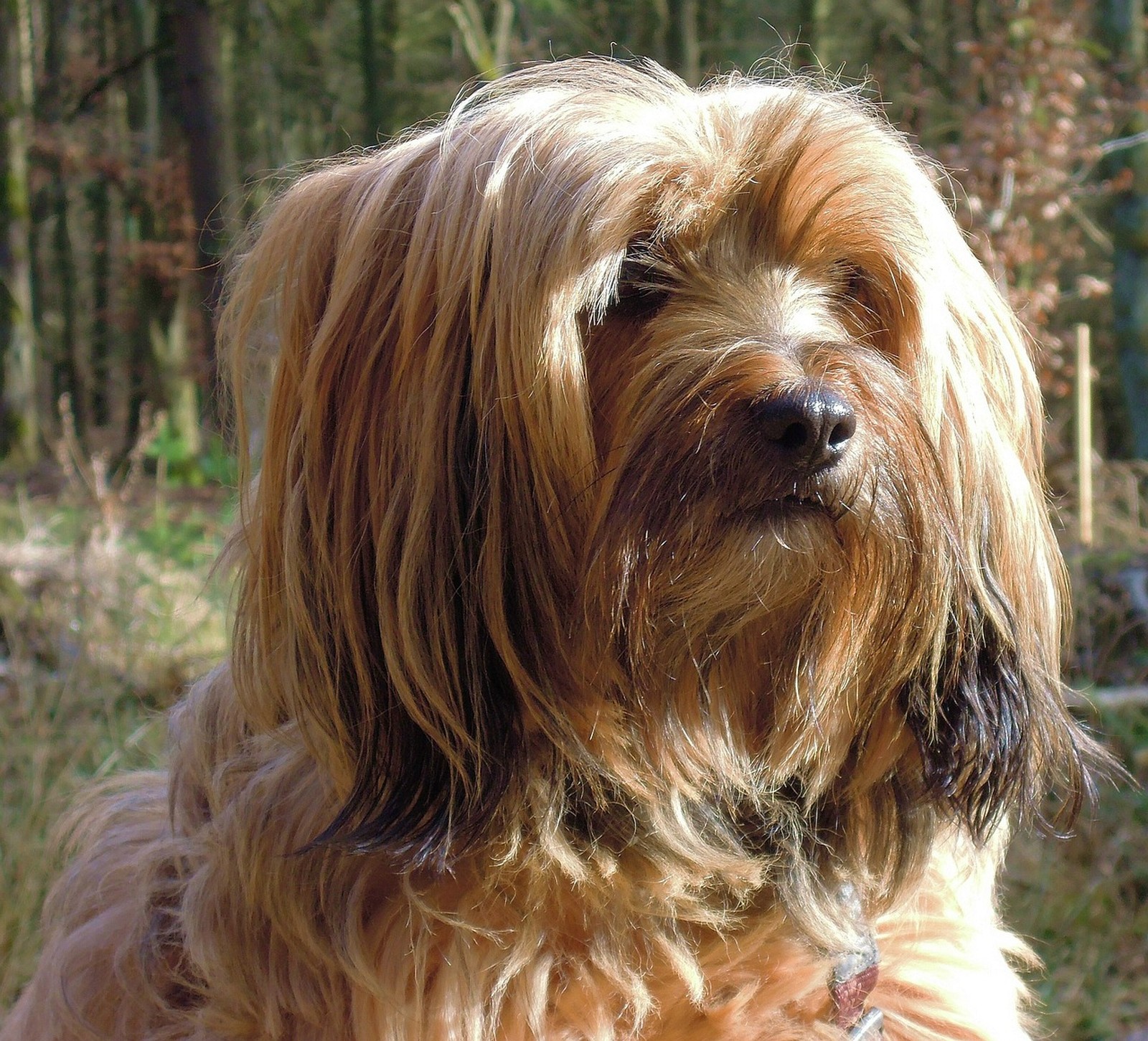
Two coats in one, and both need the brush
Despite the name, the Tibetan Terrier is not a terrier at all, but a sturdy mountain companion whose double coat — a fine, profuse outer layer over a soft woolly undercoat — evolved for Himalayan weather. In a modern home that coat is a serious grooming commitment. Brushing every other day is the realistic floor for a Tibetan kept in full coat; leave it a week and you will spend the next session unpicking mats instead of maintaining hair.
Work in layers with a pin brush, misting lightly as you go, then prove each section with a comb passed down to the skin. Lying the dog on its side and working a small area at a time is how groomers keep both dog and owner calm through a long session. The reward for the discipline is a coat that rarely needs cutting and sheds surprisingly little into the house.
The coat-change months are the crisis point
Most Tibetan Terrier owners are ambushed by adolescence. As the puppy coat gives way to the adult one, the soft young hair tangles into the incoming coat and mats form almost daily, no matter how well you brushed the week before. This is the stage where many full coats are lost to the clippers — not because the owners failed, but because nobody warned them the workload would briefly double.
Shorten the sessions and raise the frequency: ten minutes daily through the change beats an hour on Sunday. Tease mats apart with fingers and a splitter rather than cutting them out, keep the armpits, behind-ear and breeching areas nearly mat-free by checking them every session, and know that the crisis passes — the settled adult coat is more predictable than the changing one.
Bathing, eyes and feet
Detangle completely before any bath, because water tightens knots into felt. Tibetan Terriers in full coat are usually bathed every few weeks depending on how dirty their lives are; work shampoo through in sections, rinse exhaustively, and dry while brushing so the coat falls smoothly. A dog dried without brushing will mat as it dries, undoing the bath entirely.
Lift the fall of hair and check the eyes at every session — the coat hides discharge and irritation. Keep the hair between the paw pads trimmed, watch nails every few weeks, and wipe the beard after meals. Keep your tools matched to the job — a pin brush for the layers, a steel comb for proofing, and a detangling spray used sparingly — because dragging the wrong brush through this coat breaks hair, and broken hair tangles faster than whole hair, quietly raising next week's workload. Owners who keep the coat shorter in a pet trim can stretch brushing intervals somewhat, but the undercoat still needs the comb test regularly.
Near-daily care is a team job
No breed on this list makes the case for sharing grooming more plainly: a coat that needs attention every other day will eventually miss sessions if it belongs to one person alone.
KinsLe Care Teams lets a Tibetan Terrier's household divide those brush-outs across the week as assigned duties with timestamps, so the coat gets its every-other-day rhythm even when individual people are busy, travelling or unwell.