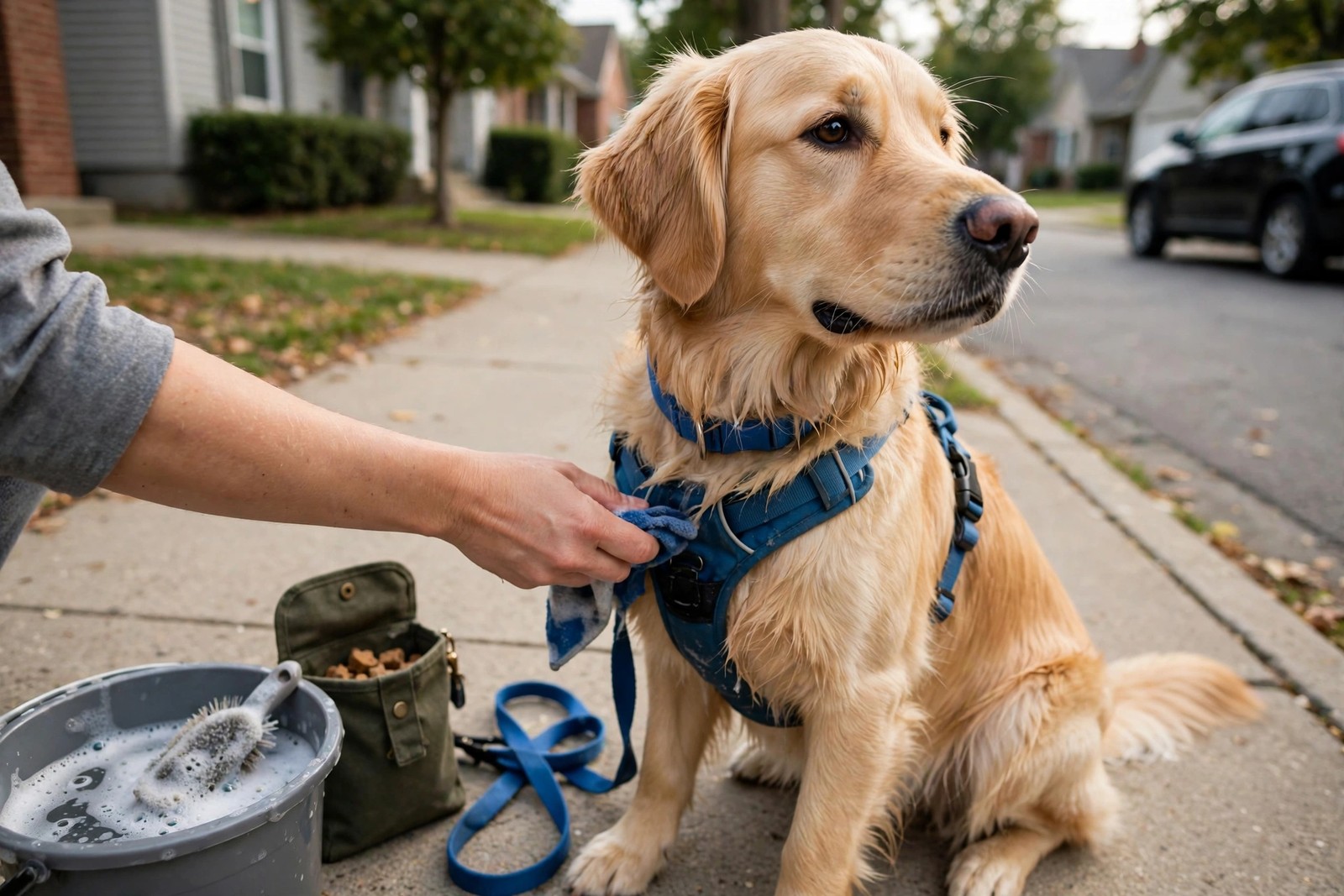
Straps that looked clean a fortnight ago can hold a surprising amount of grime: salt from winter pavements, algae from lake swims, and everyday skin oils all build up where harness padding and collar webbing press into the coat. Left alone, that build-up smells, stiffens the fabric, and can leave the skin underneath itchy, so a regular washing rhythm matters as much as the method you choose.
How Often Each Piece Needs Washing
A collar worn daily is the hardest-working item and usually wants washing every two weeks. Harnesses follow the same cycle if they are worn for most walks, while a lead that mostly stays dry and off the ground can sometimes go a little longer — though its handle, wrapped in your hand and dropped on wet grass, rarely stays as clean as it looks. Any piece that has been through mud, seawater, or a skin flare-up should be washed the same day rather than waiting for the scheduled round, and gear belonging to a dog with a skin condition should follow whatever interval your veterinarian suggests.
The Method, Step by Step
Work through the wash in this order:
- Soak nylon harnesses, collars, and leads in warm water with mild soap for fifteen minutes
- Lift dirt from webbing and padding with a soft brush, especially around adjustment holes
- Rinse under clean running water until no soapiness remains in the straps
- Hang the set in moving air and let it dry completely before your dog wears it again
- Clean leather with a barely damp cloth, then condition it once fully dry
Drying deserves patience. A harness put back on while its padding is still damp traps moisture against the chest and can rub within a single walk, so allow an overnight dry for thick padding and keep a plain spare collar for the gap. Metal clasps and D-rings should be dried by hand rather than left wet, which slows rust and keeps swivel clips moving freely.
Turning a Chore Into a Checked Habit
Washing day doubles as your safety audit: stitching pulled at a stress point, a buckle tongue bent out of line, or webbing nicked by chewing all show up while the gear is in your hands, long before a failure on a walk. Replace anything doubtful — a collar or harness is inexpensive compared with the consequences of one giving way near traffic. Households sharing dog care can end the guesswork about whether the set was washed by checking KinsLe, where Care Teams marks each completed duty with a timestamp for the dog it belongs to.