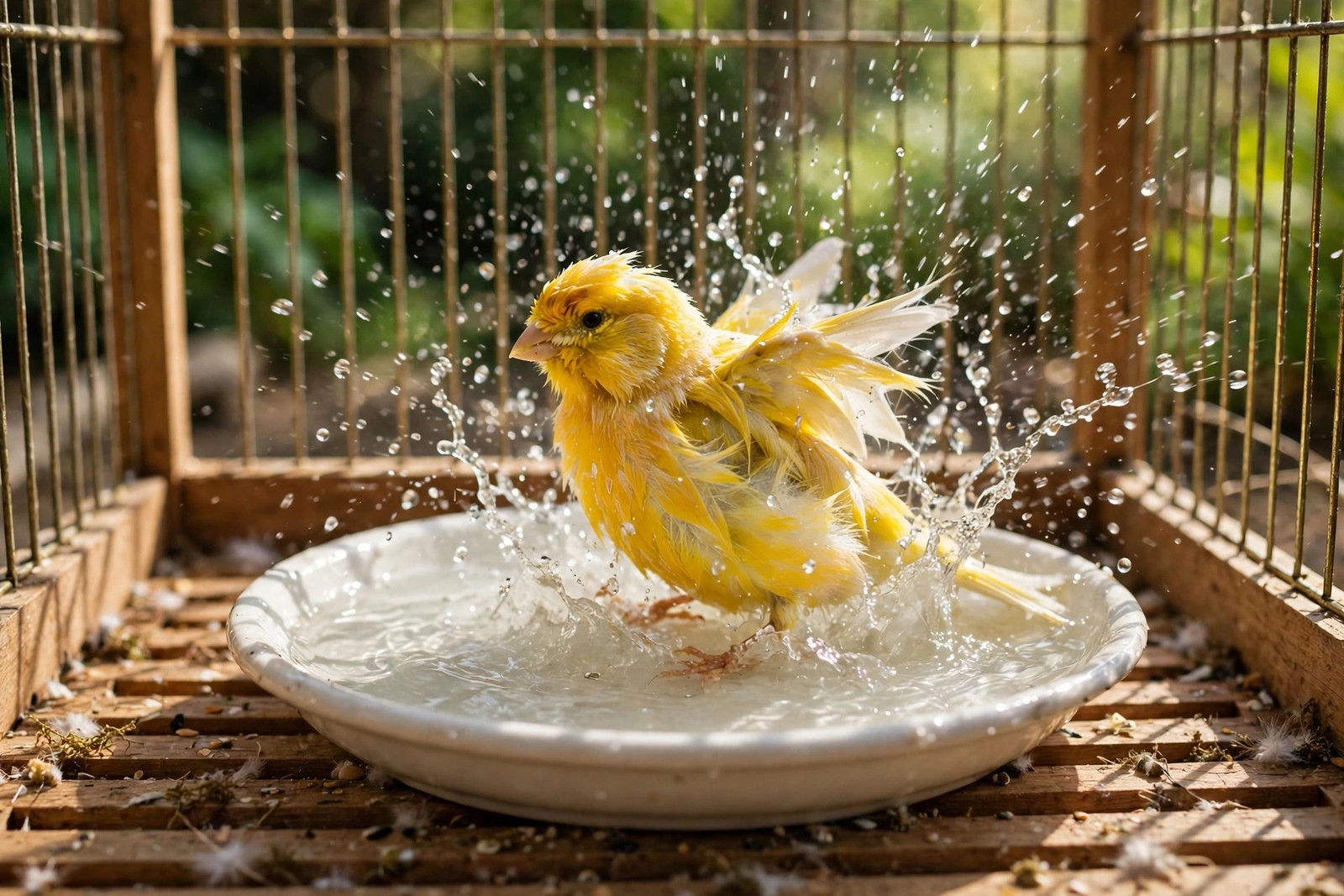
Yes. Most canaries actively love bathing, and a bath dish is basic equipment rather than an extra. A canary in a bath is unmistakable: quick dips of the head and breast, wings fluttering water over the back, then a shake and a spell of preening on a perch. That routine keeps plumage clean and well aligned, washes away dust and loose feather debris, and during a moult it softens the waxy sheaths around new pin feathers so they open more comfortably. A bird offered water regularly will usually bathe on its own schedule; a bird never offered it is missing a normal behaviour, not staying cleaner.
Setting Up the Bath
Use a shallow, heavy dish that will not tip, or a clip-on bath that fits the cage door, and fill it with roughly one to two centimetres (about half an inch to three quarters of an inch) of clean water. Canaries bathe by wading and splashing, not swimming, so the water should reach the belly at most and the bird must be able to stand securely. Room-temperature water is right; cold water from the tap can chill a very small bird, and warm water is unnecessary. Some canaries prefer a wide, low dish on the cage floor, while shyer birds take a day or two to investigate a new bath at all, so leave it in place for the full session even if the first offers are ignored.
Timing and Frequency
Morning is the natural slot: it matches the active start of a canary's day and leaves the whole afternoon for feathers to dry fully before the cooler, quieter evening and roosting. Offer the bath for an hour or two, several times a week under normal conditions. Daily offers make sense during a moult and in warm weather, when most birds use the dish eagerly. Remove it after the session rather than leaving it all day, because water full of seed husks, droppings, and feather dust quickly becomes water a canary will also drink from if no better option catches its eye at that moment.
Hygiene That Keeps Bathing Healthy
- Wash the dish every time it is used, with hot water and a thorough rinse, because a slimy film builds up fast in a shallow, warm dish.
- Never add soap, disinfectant, oils, or feather sprays to the bath water itself.
- Give bathing and drinking water as separate offerings, and refresh drinking water after a bath session if the bird has been splashing nearby.
- Skip the bath, or offer it later in the day, if the room is cold or draughty, and never place a wet bird near an open window.
- Watch new birds at first: a healthy canary bathes and then preens and sings, while a bird that sits soaked, fluffed, and silent afterwards needs a warm, quiet cage and a vet's advice if it does not quickly recover.
A canary who bathes keenly, dries into sleek feathers, and returns to singing is showing you the routine is working. KinsLe Care Teams helps keep that rhythm by assigning bath mornings and dish washing to a named helper with a timestamped tick-off, so the dish appears on the right days instead of whenever somebody happens to remember.