
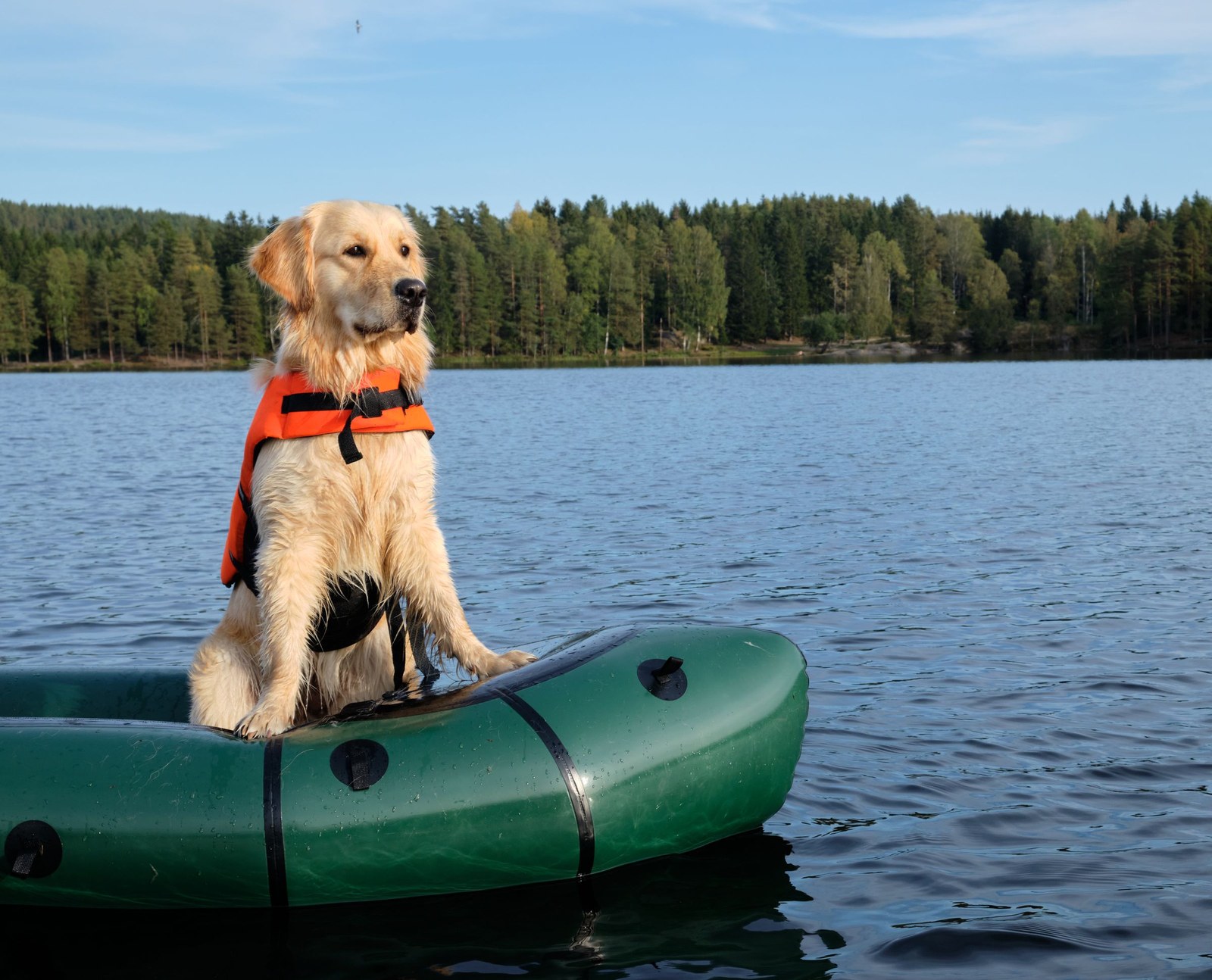
Yes — for boats, paddleboards, kayaks, docks, and open lake water, a properly fitted life jacket is a smart safety choice for most dogs, including dogs who swim well. Strong swimmers still tire, panic, cramp, or get caught by a current, and a dog who falls off a boat unexpectedly may be disoriented before they ever start paddling. A jacket buys buoyancy, visibility, and time, and that combination is what turns a frightening moment into a simple lift back aboard.
Why "good swimmer" is not enough protection
Swimming in a calm backyard pool is nothing like open water. Lakes have drop-offs, hidden debris, choppy waves from passing boats, and cold water that saps energy faster than owners expect. Rivers add current. Even athletic breeds like retrievers can overdo it chasing a ball, because many dogs will keep swimming long past the point of exhaustion rather than quit a game. Brachycephalic breeds, short-legged dogs, seniors, and heavy-chested dogs are at even higher risk because their body shape makes staying afloat hard work from the first stroke.
A jacket also helps in the seconds right after a fall. A startled dog often thrashes instead of swimming, and bright flotation keeps the head higher and makes the dog far easier for people on the boat to spot against dark water.
Choosing and fitting a jacket
Look for these features before you buy:
- A sturdy grab handle on top, so you can lift or guide your dog back onto a dock or boat.
- Adjustable straps around the chest and belly, plus a secure buckle or fastening that will not pop loose when wet.
- Bright colors or reflective trim for visibility in waves and low light.
- A fit matched to your dog's weight and chest measurement, not just their breed or a guess at size.
The jacket should be snug without restricting breathing or the front legs' paddling motion. You should be able to slide two fingers under the straps, and the jacket should not twist sideways when your dog moves. Recheck the fit through the season — growing puppies, weight changes, and thick coats all alter how a jacket sits.
Practice before the real outing
Do not let the first wear be the day of the boat trip. Put the jacket on at home for short, treat-filled sessions, then move to shallow, calm water where your dog can walk in and out on their own terms. Let them discover that the jacket changes their buoyancy while you are right there. Practice lifting gently by the handle in the shallows too, so the sensation is familiar rather than alarming if you ever need to do it for real.
Once on the boat, the jacket stays on whenever the dog is on deck, near an edge, or swimming — not just during the "risky parts," because falls rarely announce themselves.
Keep ID current for water days
Water adventures usually happen away from home, at marinas, rentals, and unfamiliar lakesides where a loose dog is harder to recover. That is where your dog's KinsLe profile earns its keep: every pet profile carries a unique QR ID, so the identification attached to your dog is specific to them rather than a generic tag. Keeping their profile details current before a trip means the dog heading out on the water is the dog anyone who finds them can identify. Pair the jacket, a secure collar, and up-to-date identification, and you have covered the realistic risks of a lake day. Verified QR ID Pet Profiles give that identification a working job on the water: a scan by marina staff or a fellow boater pulls up their details and your contact route, on KinsLe, before a loose dog becomes a lost one.