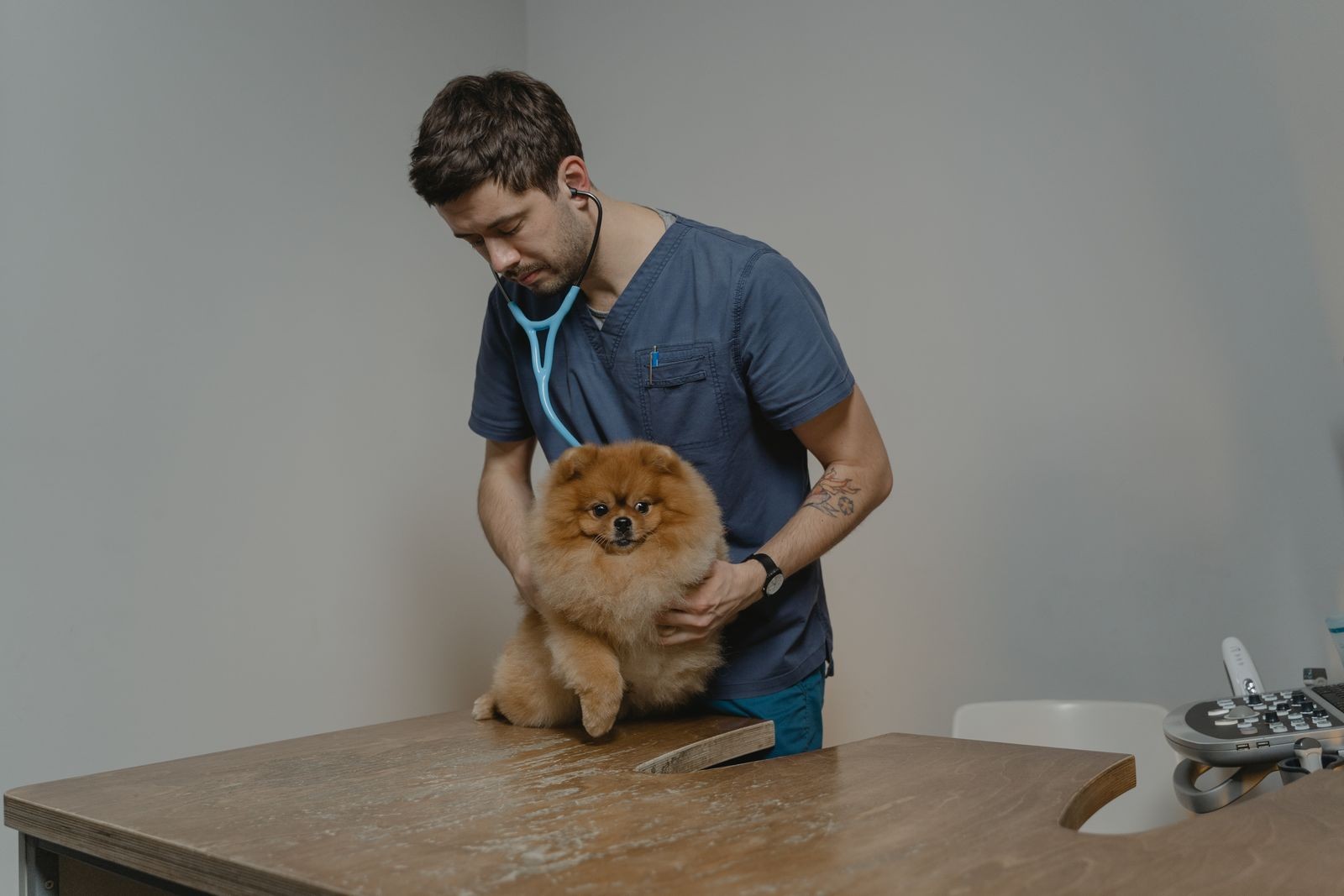
Yes — a dog who seems perfectly healthy still needs a yearly checkup. Dogs age far faster than people do, so a year between visits can cover the equivalent of several years of change in a human body. Annual exams routinely catch dental disease, gradual weight gain, heart murmurs, ear problems, and new lumps long before any of them are obvious at home, when they are cheapest and easiest to address.
What the vet is actually checking
A good wellness exam is a head-to-tail audit, not a quick glance. Your veterinarian listens to the heart and lungs, feels the abdomen and lymph nodes, checks joints and muscle condition, looks in the ears and mouth, and assesses eyes, skin, and coat. The mouth alone justifies the visit: dental disease is extremely common in adult dogs, hides below the gumline, and can progress painfully while a dog keeps eating enthusiastically.
Weight is the other quiet one. A few extra pounds creep on so gradually that the person who sees the dog daily is the last to notice; the scale at the clinic, compared against last year's number, tells the truth. The visit also keeps core vaccines and parasite prevention current and gives you space to mention the small things — a new gray patch, slightly stiffer mornings, drinking a bit more — that might be nothing or might be the start of something worth watching.
The value of a healthy baseline
Perhaps the most underrated reason to go is the baseline itself. Normal bloodwork, a normal heart sound, and a recorded healthy weight from the good years become the comparison that makes an abnormal result meaningful later. When a senior dog's values shift, your vet is not guessing what 'normal for him' looks like — they have years of it on file. Skipping the healthy years leaves gaps exactly where that context should be.
How often, by life stage
- Adult dogs: once a year is the standard rhythm.
- Puppies: several visits in the first months for vaccine series and growth checks.
- Senior dogs: many vets recommend twice a year, since age-related changes move faster.
- Dogs managing a condition: as often as your vet advises for monitoring.
Breed plays a role too. A giant breed like a Great Dane is a senior years before a terrier is, and some breeds carry known risks — heart issues in Cavalier King Charles Spaniels, for instance — that make regular screening especially worthwhile. Ask your vet what schedule fits your dog rather than assuming the calendar is one-size-fits-all.
Between visits, stay observant
The annual exam works best paired with everyday attention at home. Weigh-ins at the pet store scale, a monthly hands-on check for lumps while grooming, and a quick look at teeth and gums keep you familiar with his normal. If something changes mid-year — appetite, thirst, energy, bathroom habits — do not wait for the annual slot; that is what the in-between visits are for.
Never letting the date slip
The most common reason healthy dogs miss checkups is simply that life gets busy and the year quietly doubles. Kinny, KinsLe's built-in AI assistant, can remind you when the annual checkup is coming due and send helpful nudges, so the appointment gets booked while there is still flexibility in your vet's schedule — and in yours. Pair the reminder with your dog's profile, where his first pet profile is free, and the habit sustains itself.
Kinny on KinsLe can handle follow-up questions between visits — what a murmur recheck involves, why seniors shift to twice-yearly exams — with replies taken from the Answers library there for dog health.