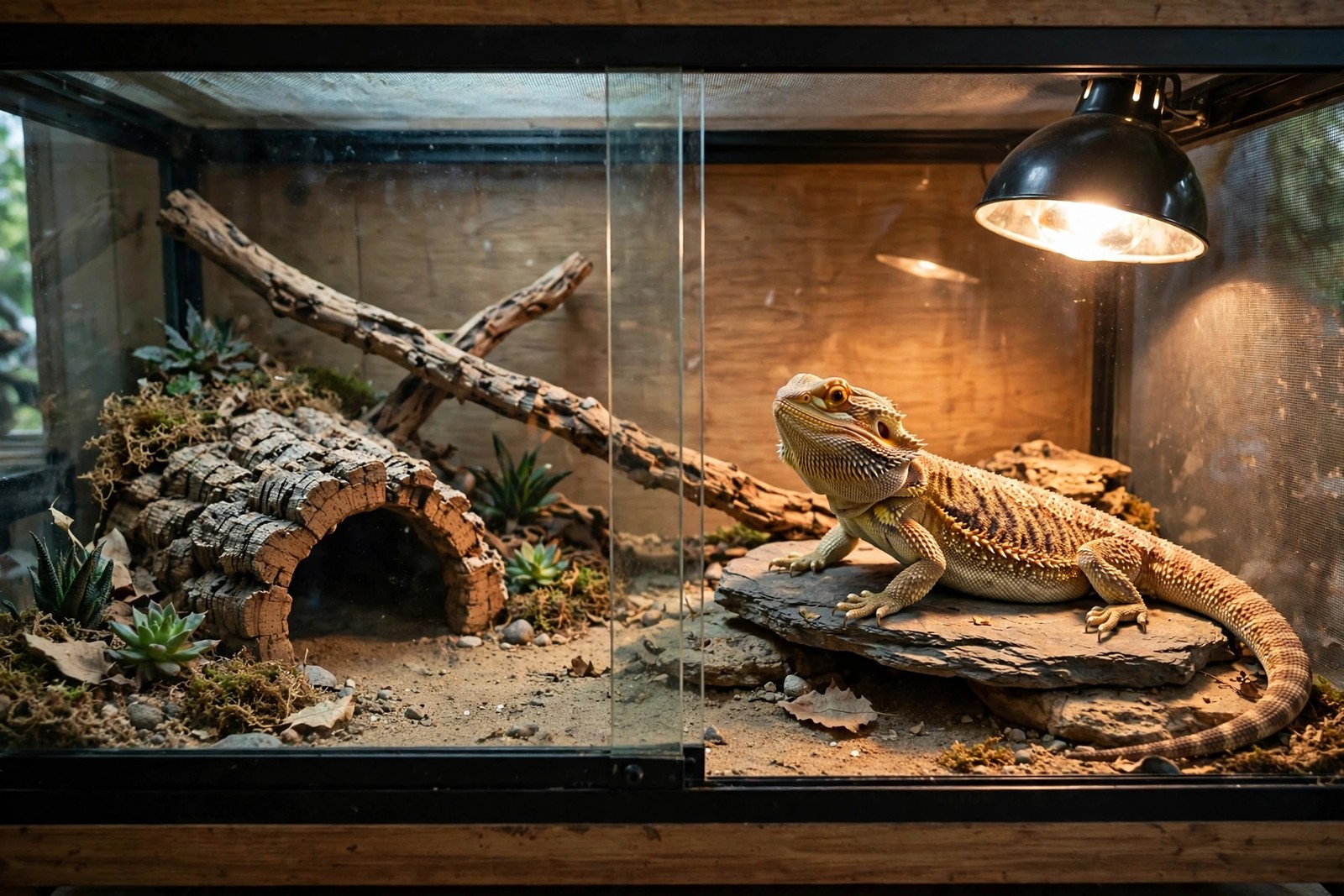
Plan on an enclosure measuring at least 4 feet long, 2 feet deep, and 2 feet tall for an adult bearded dragon — about 120 gallons in volume. That figure is a floor, not a target to trim: many keepers who move up to a 5-foot enclosure notice their dragon patrolling, climbing, and using the whole space within days. If you are buying once, buy the adult size.
Why Length Comes First
A grown bearded dragon commonly measures 18 to 24 inches from nose to tail tip, so a 4-foot enclosure is only about twice its own body length. In anything shorter, turning around becomes a shuffle, exercise shrinks to a few steps between walls, and the dragon spends its day parked rather than moving. Floor space, not height, is the measurement that counts most, because this is a ground-dwelling lizard that forages, digs, and thermoregulates by walking between warm and cool ground. The 2-foot height still earns its place: it gives room for a raised basking platform and a sturdy low branch, lets the lighting sit at a safe distance above the dragon's back, and keeps the air layer above the floor from overheating.
The Temperature Gradient Is the Real Reason
Bearded dragons cannot regulate their own body temperature, so they do it by moving. One end of the enclosure holds the basking area, the other end stays distinctly cooler with a hide, and the dragon shuttles between the two all day. Squeezing that layout into a short tank collapses the gradient: the basking heat spills across the whole floor, the cool end stops being cool, and the dragon has nowhere to retreat. In a 4-foot enclosure the warm and cool zones can sit far enough apart to stay stable, which is why enclosure length is a health requirement rather than a luxury. Check both ends with reliable thermometers at dragon height, not just the reading on the basking spot.
What About a Baby Dragon?
A hatchling looks lost in a 4-foot enclosure, and some owners start youngsters in something smaller. It can work, but it means buying and setting up two enclosures, and small volumes are actually harder to keep at steady temperatures. Going straight to the adult enclosure, filled out with several hides, a feeding station in a fixed place, and visual cover so the youngster never feels exposed, suits many households better and removes the upgrade deadline that arrives faster than most people expect — a healthy juvenile can approach adult length within its first year or so.
Fitting the Enclosure Out Without Wasting the Space
Put the basking platform at one end and a cool hide at the other, with a second hide at the warm end so shelter does not force a temperature choice. Add a low, wide climbing branch angled between the zones, a shallow water dish at the cool end, and open floor in the middle where the dragon actually walks and where live food is hunted. Front-opening doors are worth choosing at this size: reaching in from above mimics a predator arriving overhead, while front access keeps handling calm and makes spot-cleaning a two-minute job instead of a lid-lifting project.
However the enclosure is furnished, its daily temperature checks, feeding, and cleaning land more reliably when they are shared jobs, and KinsLe's Care Teams lets you assign those bearded dragon duties to named household members with each completed task marked off.