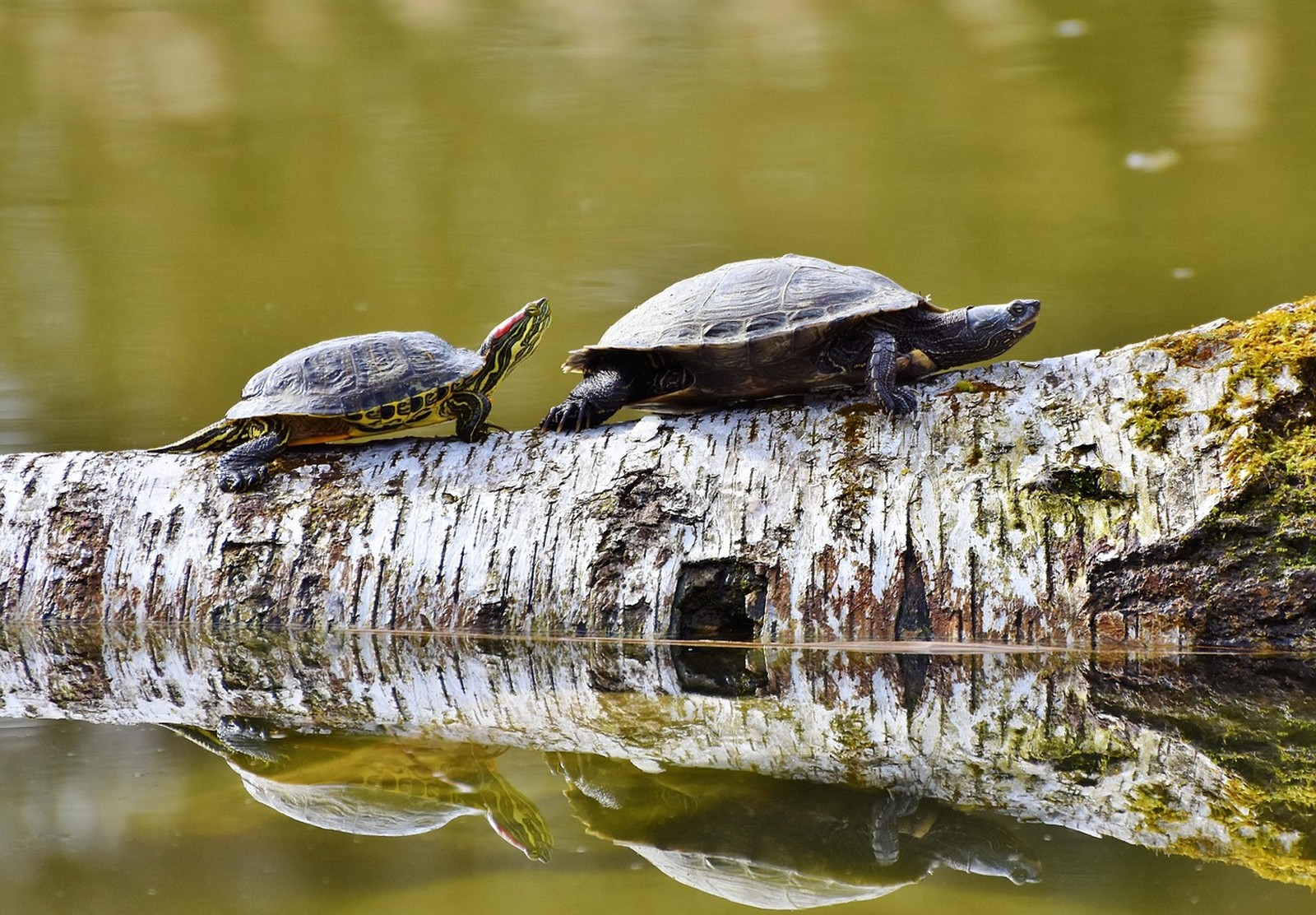
Fully grown, a red-eared slider spans roughly a foot from the front of its top shell to the back, or 25 cm to 30 cm end to end rather than following the curve. That size surprises many owners, because sliders are usually sold as hatchlings only an inch or two long, bright green, and small enough to sit on a coin. The hatchling stage lasts months. The adult stage lasts decades, and the enclosure, the filtration, and the household budget all need to be planned for the adult.
Females Grow Larger Than Males
Sex changes the final size. Females reach the top of the range and develop a deeper, broader body, because they must carry eggs. Males stay at the smaller end, and as they mature they grow noticeably longer front claws and a longer, thicker tail. Young sliders cannot be sexed reliably by eye, so a keeper who buys a hatchling should plan for the larger outcome and house for a female-sized adult. If the adult turns out male, the extra room is a benefit, never a problem.
Growth is rapid in the first years and then slows, yet shell length keeps creeping upward for a long time. Warm water, generous feeding, and suitable lighting support growth, while cramped, dirty, or cold conditions stunt it. A stunted slider is not a conveniently small slider; stunting comes with a misshapen shell and poorer health, and the animal may still grow once conditions improve.
What That Size Means for Housing
A useful planning guide is roughly 10 gallons of water capacity for each inch of shell length, so an adult of 10 to 12 inches needs housing in the region of 100 to 120 gallons. That guide gives swimming depth and room to turn, dive, and exercise. Alongside the water, an adult needs:
- A dry basking platform it can climb onto fully, supporting its whole weight out of the water
- A basking lamp and suitable ultraviolet light over that platform
- Filtration built for a heavy waste load, because an adult slider produces far more waste than a hatchling
- A secure lid or barrier, since a strong adult can climb and can push against weak covers
- Water deep enough for swimming and righting itself, with no sharp fittings at adult body width
Upgrading in stages, from a small starter tank to a mid-sized tank to a final adult setup, costs more in total than buying or building the adult-sized home once. Where indoor space cannot hold that volume, a secure outdoor pond in a suitable climate is the other honest option, with protection from predators and from escape.
Feeding and Care at Adult Size
An adult slider eats differently from a hatchling. Youngsters take protein-rich food readily and grow fast on it, while adults do well with a larger share of leafy greens and aquatic plants alongside their prepared food, offered on a steadier rhythm rather than at every begging display at the glass. Overfeeding an adult in a heated indoor tank encourages obesity and shell problems, so measure portions and note body condition as the shell grows. Weigh and measure your slider a few times a year, record both figures, and compare them with last season rather than with the hatchling you remember.
Measure Your Own Slider Honestly
Place a ruler along the top shell and read the straight-line length from the front edge to the back edge, without following the curve. Record the date and the measurement together. Two keepers guessing by eye routinely disagree by inches, and enclosure decisions, filter sizing, and even whether a pond barrier is tall enough all depend on the real figure rather than on an impression.
Since sliders live for decades and several people often share their feeding and cleaning, the grandparents or adult children you select can open the slider's profile themselves through KinsLe's Family Sharing.