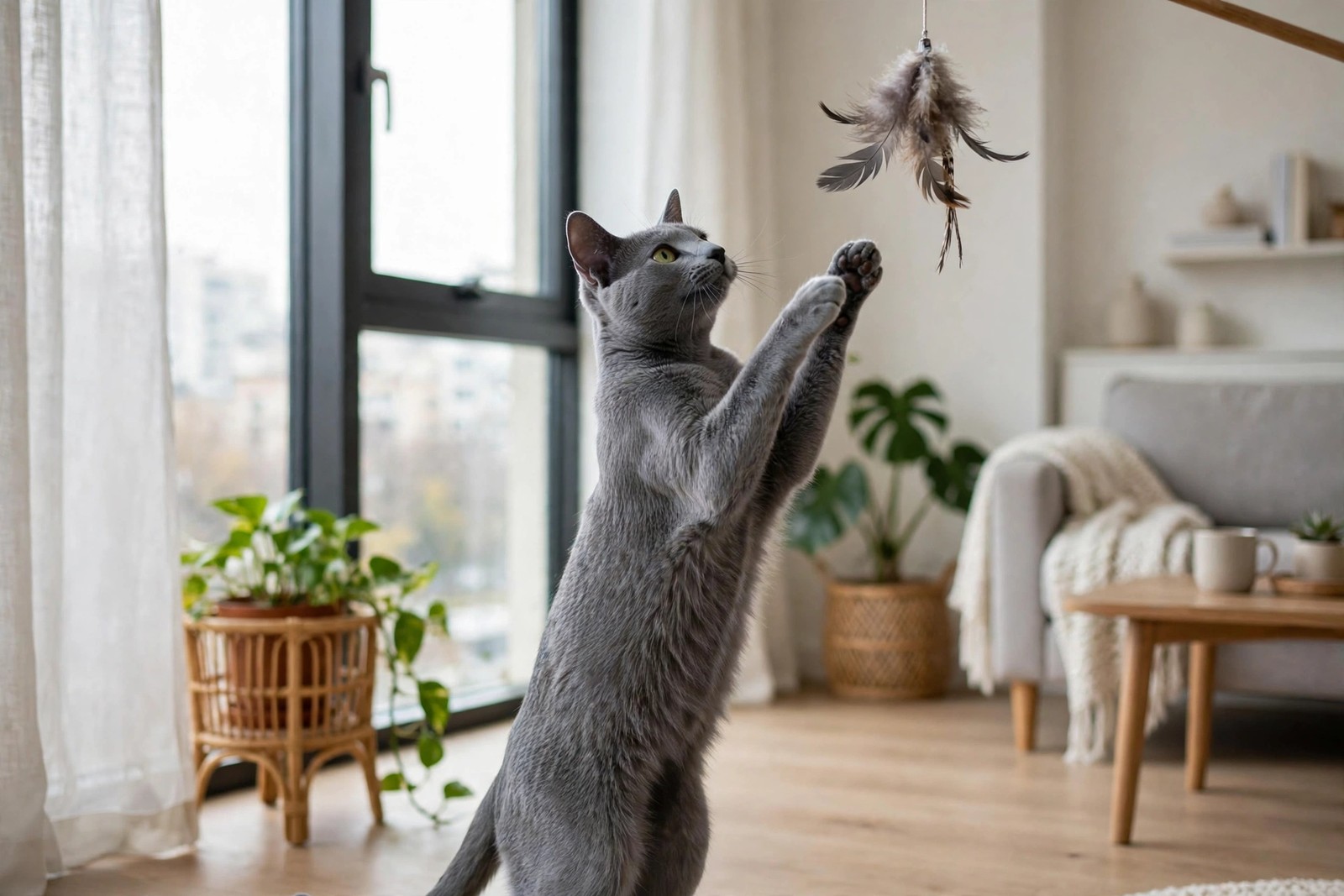
Most Russian Blues weigh between 7 and 15 pounds as adults. That is a wide range for one breed, and it mostly reflects the difference between sexes and bloodlines: females commonly sit between 7 and 10 pounds, while males more often weigh 10 to 12 pounds, with the occasional large male beyond that. Height is moderate, roughly 9 to 11 inches at the shoulder, but the proportions — long legs, a long neck, and a lean, fine-boned frame — make the cat read as taller and more delicate than the numbers suggest.
Fine Bone, Real Muscle
The Russian Blue's elegance is structural. The bone is fine, the body is long and graceful, yet under the plush double coat there is genuine muscle; this is an athletic cat that jumps accurately and lands lightly. The coat itself is distinctive — short but so dense it stands out from the body — and it adds a soft outline that can make a lean cat look pleasantly rounded from certain angles. As with every coated breed, condition is a hands-on judgment: ribs easy to feel, a waist visible from above, and no rounding at the belly.
Growth and Maturity
Russian Blues grow at a fairly standard pace compared with the giant breeds. Most reach close to adult height and length by around twelve months, then fill in muscle and coat density into their second year. Kittens of this breed are leggy and angular for months, which is normal development rather than thinness — your veterinarian can reassure you at kitten visits if the growth curve is steady. Appetite is the thing to watch in adulthood: Russian Blues are widely known for loving their food, and a sedentary indoor adult can drift upward in weight quietly, a few ounces at a time.
Why the Wide Range Matters When You Shop
Because individuals vary so much, buy for your cat, not the breed average:
- Weigh your cat before choosing a carrier; a 9-pound female and a 14-pound male need different boxes
- Standard cat trees are fine structurally, but choose perches your cat can actually curl into
- Set food portions by your cat's own weight and condition, not by the bag's generic cat column alone, and adjust with your vet's guidance
- Recheck weight every month or two in the first adult years, when post-growth weight creep typically begins
A Note on Look-Alikes
Many blue-coated cats are described as Russian Blues, but mixes and other breeds vary far more in size than a pedigreed Russian Blue does. If your blue cat ends up well outside the 7-to-15-pound span as a lean adult, it may simply reflect mixed ancestry — which changes nothing about the cat, only about which expectations apply.
Elegant cats can hide slow weight changes under a plush outline as well as any other breed. Keeping each weigh-in in KinsLe's Pet Passport turns your Russian Blue's condition into a visible trend, easy to review with your vet before small gains become a project.