
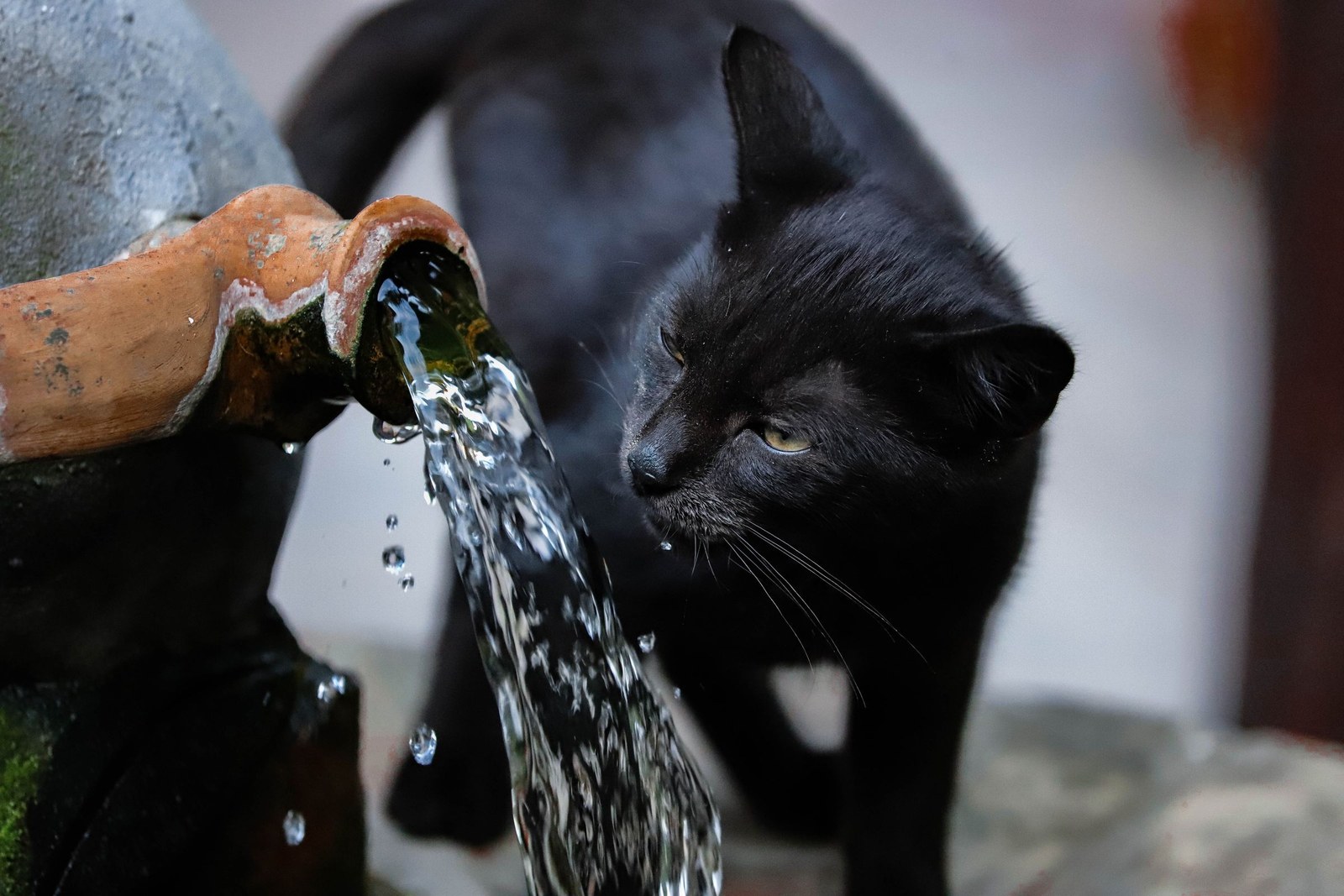
You can encourage most cats to drink more by offering fresh water in several wide, shallow bowls placed well away from their meals, refreshing each bowl daily, trying a circulating fountain, and adding moisture through wet food. Cats are famously picky about water — its location, freshness, and even the shape of the bowl matter more than most owners expect.
Set up water the way cats prefer
Place water in more than one location, especially in multi-story or multi-cat homes, so drinking never requires a long trip or passing a rival cat. Many cats dislike bowls that press on their whiskers, so wide, shallow dishes are often better accepted than deep, narrow ones. Stainless steel, ceramic, or glass are easy to clean thoroughly; plastic can hold odors and should be scrubbed or replaced if it smells stale.
Keep at least some bowls away from food. In the wild, cats tend to avoid water near a kill because it may be contaminated, and many domestic cats retain a preference for separation. Also keep water away from litter boxes, noisy appliances, and busy doorways. Refresh water at least once a daily — twice is better — and wash bowls with soap regularly, not just top them up, because a slimy film puts cats off quickly.
Make moving water an option
A pet fountain provides circulating, filtered water that many cats find more appealing than a still bowl, and the sound can draw them in. If you try one, clean it and change filters on the manufacturer's schedule; a dirty fountain is worse than a clean bowl. Keep a regular bowl available too while your cat decides — some cats love fountains, others ignore them completely and prefer a dripping tap or a glass of water on a counter.
Feeding wet food is one of the easiest ways to raise overall moisture intake, because wet food is mostly water. You can also add a small amount of water to wet meals to make a soupy texture many cats accept, as long as it does not put them off eating. Always ensure food with added water is eaten promptly and not left sitting out.
Watch intake without obsessing
You do not need to measure every sip, but do notice big changes. A cat who suddenly drinks much more, camps by the bowl, or urinates much larger amounts should see a veterinarian — increased thirst can be a sign of health issues that need checking, not just encouragement to drink more. Likewise, a cat who stops drinking, refuses food, hides, or has not urinated should be seen promptly.
Kittens, seniors, and cats on dry-only diets deserve extra attention to water access, particularly in warm weather. Ice cubes made from water can be a playful extra for some cats, but they are a bonus, never a replacement for fresh bowls.
A household job, not a one-person job
Fresh water fails when everyone assumes someone else did it, and KinsLe's Family Sharing helps on the family side of that problem: you can share your cat's profile with the relatives you pick. Agree on the stations and the rhythm — morning and evening refresh, for example — and stick to it. Through KinsLe Family Sharing, those chosen relatives can view that profile for themselves, from the fountain upstairs to the wide bowl in the quiet corner.