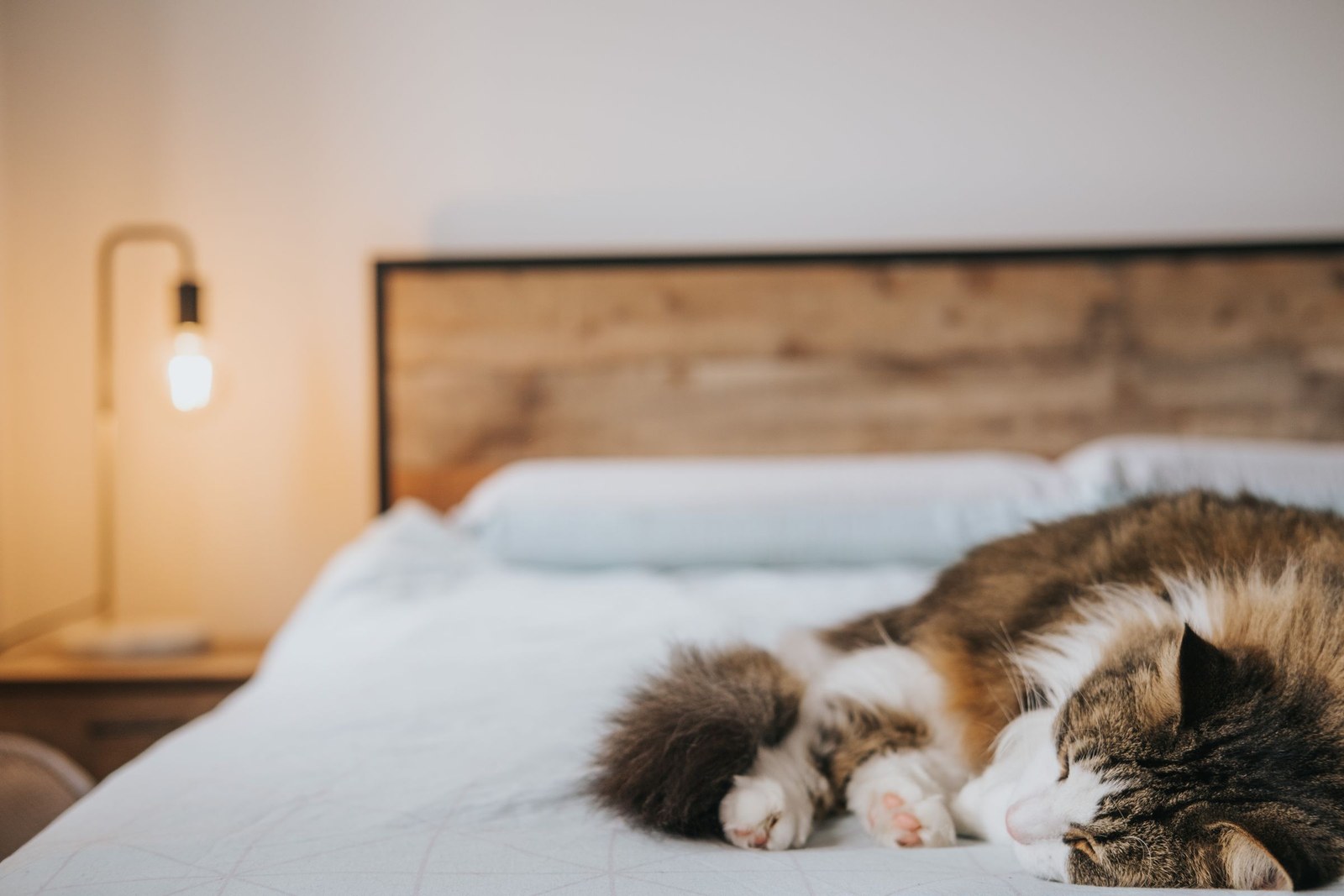
Help your senior cat by taking over the grooming she can no longer do herself: brush her gently and more often, in short sessions with a soft brush, concentrating on the back, hips, and hindquarters she can no longer reach comfortably. Older cats groom less because of stiffness and sore joints, so loose fur, dander, and small tangles build up exactly where her tongue used to handle them — and your brush becomes her comfort, not just her cosmetics.
Why Grooming Fades With Age
A young cat is essentially a contortionist, washing every inch daily. Arthritis and general stiffness quietly edit that routine: twisting to reach the middle of the back hurts, balancing on three legs to wash the fourth gets wobbly, and energy goes to naps instead. Weight changes can add to the problem, and a senior coat often turns drier and thinner-skinned underneath. The result is a cat who still wants to be clean — she may groom her face and chest faithfully — while her rear half slowly looks unkempt. That is a request for help, not laziness.
A Gentle Routine That Respects Old Joints
Keep sessions short — five unhurried minutes beats a thorough twenty-minute overhaul. Use a soft bristle brush, a silicone grooming mitt, or a wide-tooth comb rather than anything that tugs. Practical habits:
- Brush in the direction the fur grows, with light pressure; senior skin tears and bruises more easily than young skin
- Support her body rather than pressing her down, and let her stay in her favorite resting spot — bring the grooming to her bed or sunny patch
- Work the back, hips, and base of the tail especially, since those are the zones she skips
- Pause if she shifts away, flattens her ears, or flicks her tail hard, and finish another day
- Wipe her gently with a warm, damp cloth if she enjoys it, for a freshening between brushings
End with whatever she loves: a chin rub, a lickable treat, quiet company.
What to Watch While Your Hands Are on Her
Grooming sessions double as gentle health checks. Run your palm slowly over her body and mention anything new at her senior vet checkups: lumps, sore spots she flinches from, flaky or thinning patches, scabs, or mats forming despite your help. Notice whether she is losing weight under that fur — older cats can look fine in a fluffy coat while getting thin. You are not diagnosing anything; you are simply the person best placed to notice change early and report it to your veterinarian.
Nails deserve a look too: seniors wear them down less, and thickened claws can curl toward the pad. If nail trims are beyond her tolerance or yours, ask your vet or a groomer to handle them.
Sharing the Routine When Someone Else Helps
Senior care often involves more hands — a family member stopping by, a sitter during a trip. With KinsLe, Care Pass lets you share your senior cat's grooming routine through a temporary, scoped link, so a trusted helper can see how often she is brushed, which brush she tolerates, and where to be gentle — and the recipient needs no account or app to view it. That means her comfort routine survives your absence intact. Care Pass on KinsLe lets a covering helper read how lightly to brush her hips and hindquarters, in a link that expires when the sitting window ends.