
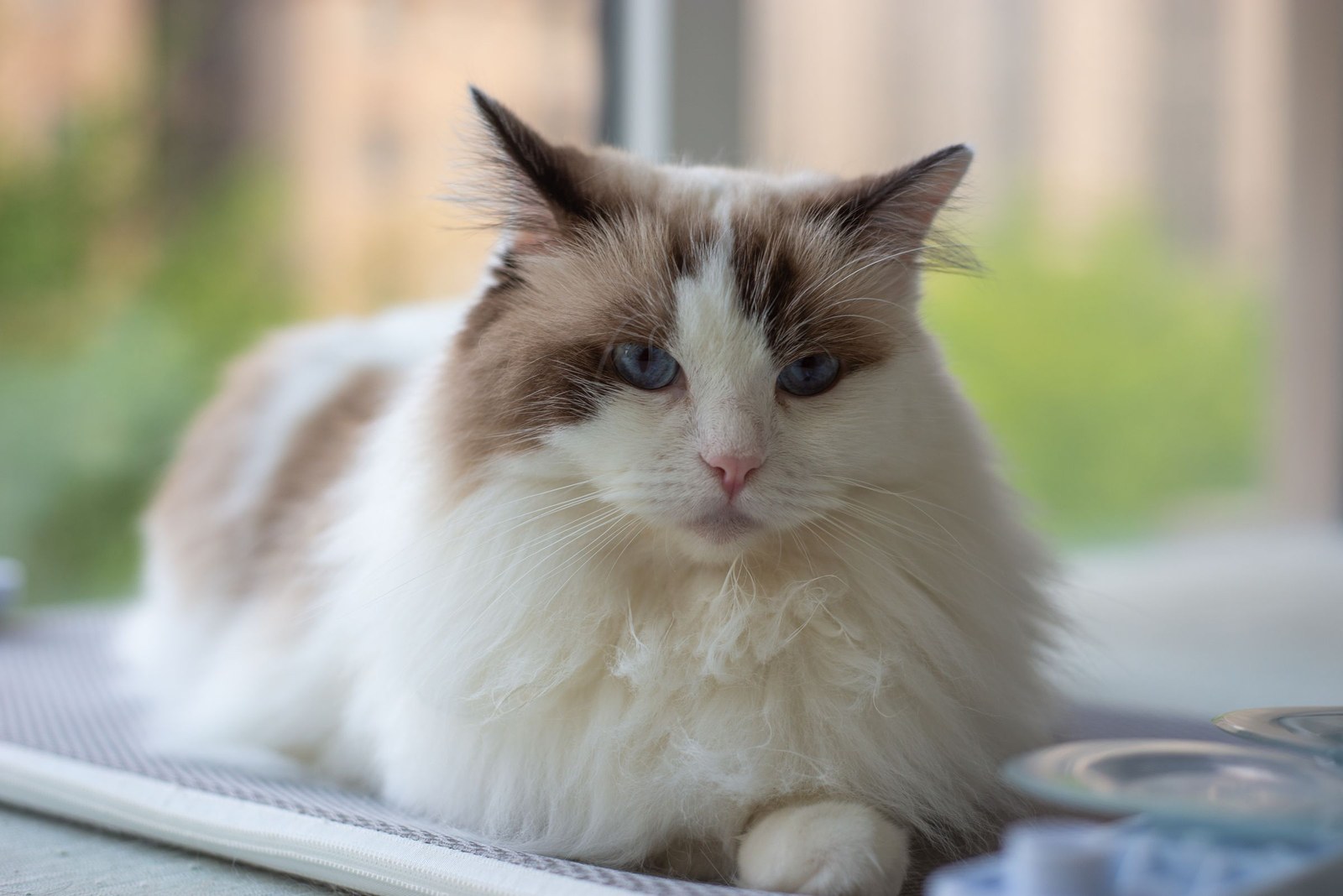
Keeping a senior cat comfortable day to day comes down to three words: warm, soft and predictable. She does not need expensive equipment or a remodelled house. She needs a padded place to rest that her joints trust, easy access to food, water and the litter box without jumping or travelling far, gentle attention in short doses, and a routine that stays recognisably the same from one day to the next. Small comforts, repeated daily, matter more at this stage than any single big gesture.
Warmth, bedding and a resting spot she chooses
Older cats lose muscle and padding, so hard floors and thin blankets feel colder and less forgiving. Offer a thick, washable bed with a low side she can step over, placed away from drafts and direct blasts of heating or air conditioning. Many seniors love a bed near — but not in the middle of — family life: close enough to watch you cook or read, quiet enough to actually sleep.
Let her vote. If she consistently chooses the sunny corner over the expensive new bed, move the bed there. Keep a familiar-smelling blanket in the spot, wash bedding on a gentle cycle so it stays soft, and check that she can get up without her back legs sliding on smooth flooring. A non-slip mat under the bed helps more than owners expect.
Gentle play, grooming and company in short bursts
Play does not retire just because she has. Try five-minute sessions with a slow wand toy dragged along the floor, a soft ball, or a puzzle feeder she can solve lying down. Stop while she is still interested rather than exhausted, and let her 'win' often. Short, successful play supports muscle, appetite and mood without stressing sore joints.
Build in calm contact she can control: brushing sessions if she enjoys them, a lap she can leave freely, or simply sitting nearby while you work. Watch for overstimulation signals — tail flicking, skin twitching, ears turning back — and end petting before she has to ask with a swat. Senior cats often want more company and less handling, and respecting that difference keeps trust intact.
Routine, access and small daily checks
Feed at consistent times, keep water fresh and reachable on the floor she lives on, and avoid abruptly rearranging furniture, changing litter or moving her bed. When change is necessary, introduce it one piece at a time. Each day, run a quiet comfort check: Is she eating and drinking normally? Using the box? Moving about as usual? Accepting her normal petting? A 'no' that repeats for two days is worth a call to your veterinarian.
Keep nails trimmed so they do not catch in bedding, wipe sleepy eyes gently if your vet advises it, and keep household hazards — dangling cords, hot stovetops, open washing machines — behind the same sensible barriers you would use for a kitten, because an unsteady senior is less able to recover from a scare or fall.
Learning from other senior cat owners in the Circle of Love
No checklist replaces the inventiveness of people living the same stage. KinsLe's Circle of Love is the community of members connected through their pets' profiles, and it is full of senior cat owners swapping comfort ideas that actually worked in real homes — the ramp a cat accepted, the bed warmer that helped, the play routine that revived a withdrawn fifteen-year-old. Those lived details often solve the exact frustration you are facing tonight.
Circle of Love on KinsLe connects you with people caring for older cats whose lived experience with ramps, warmers, and short play sessions can help you solve tonight's comfort problem.