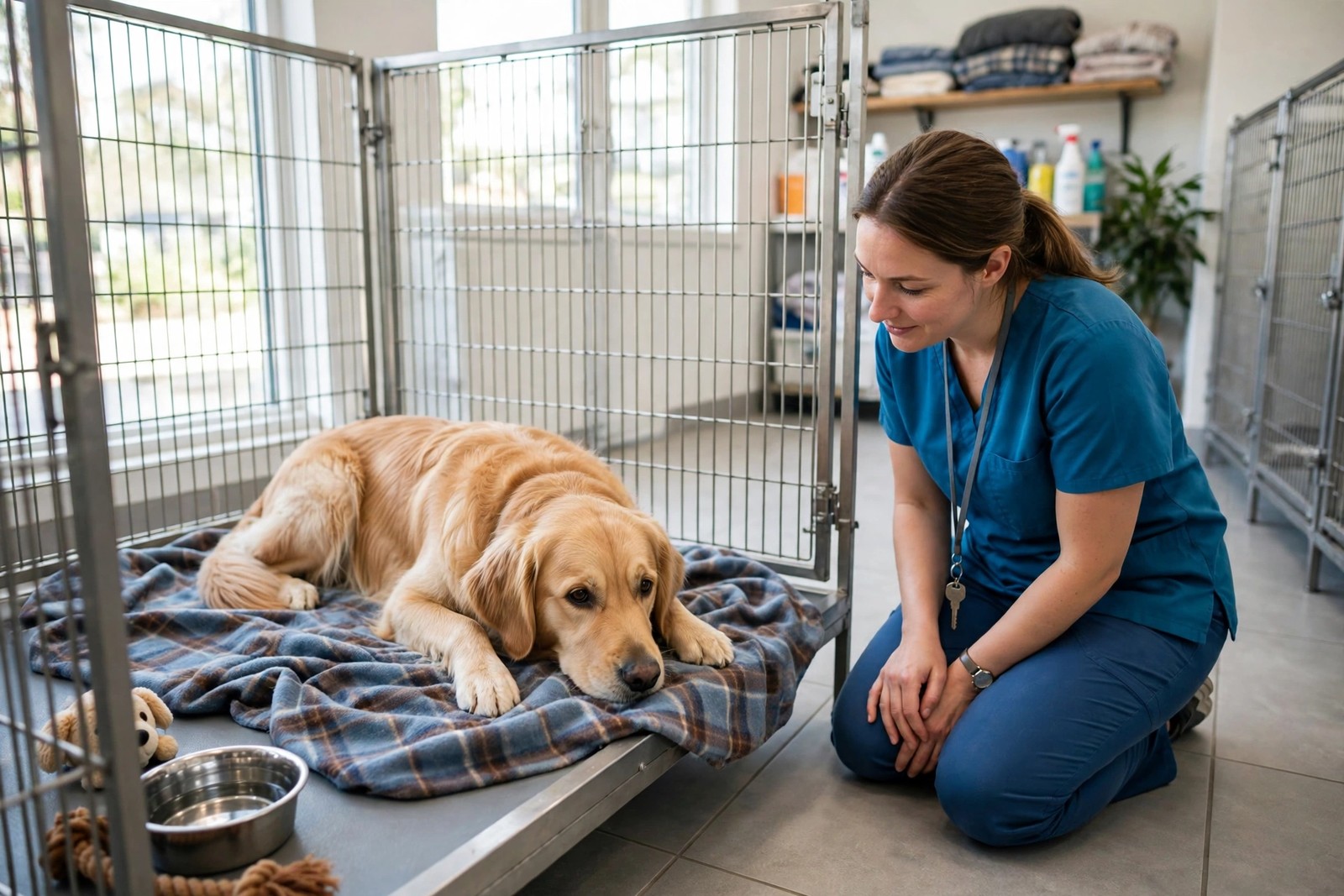
Boarding is less stressful for most dogs when three things line up: a facility you have toured and trust, as much of their normal routine preserved as possible, and something that smells like home in their kennel. Add a calm, brief goodbye from you — dogs take their emotional cues from their owners — and most dogs settle far better than their owners fear.
Choose and prepare the facility early
Tour before you book, ideally when dogs are active rather than during a quiet cleaning hour. Look for clean, dry bedding areas, secure fencing with no gaps a digger could exploit, sensible separation of large and small or boisterous and shy dogs, and staff who ask you detailed questions about your dog — vaccination status, temperament, medication, fears. A facility that asks nothing is telling you something.
Ask directly about the daily rhythm: how many walks or play sessions, how much rest time, what the overnight setup is, and whether anyone is on site at night. Then match those answers against your dog's actual needs. A young, social Border Collie may thrive on group play all day; a senior dog with arthritis needs short, gentle outings and long, undisturbed rest, and will be miserable in a high-energy yard however kind the staff are.
Book a short trial — a day of daycare or a single overnight — before a long stay, so the real trip is a return to somewhere familiar rather than a first experience stacked on top of your absence.
Send home with your dog
Pack a blanket, bedding, or a worn t-shirt that smells like you and your house. Familiar scent is powerful comfort in a place that smells of other dogs and cleaning products. Send your dog's own food, portioned, rather than letting the facility switch them to a house food — a digestive upset on top of a new environment compounds stress and can look like illness. Include medications with written instructions, one favorite durable toy if the facility allows it, and clear notes on the quirks that help staff help your dog: fear of thunder, a dislike of being approached while eating, the scratch spot that wins them over.
Keep the notes honest and specific. Staff who know in advance that your dog guards high-value chews will simply not offer one in a group setting — information prevents incidents.
Manage the goodbye — yours and theirs
On drop-off day, exercise your dog beforehand so they arrive pleasantly tired, keep your own energy matter-of-fact, hand over the leash, say a short cheerful goodbye, and leave. Long, emotional farewells and repeated returns to the door teach your dog that this place warrants alarm. Most dogs who fuss at drop-off are playing or resting within the hour; ask the facility for an update later that day rather than hovering.
When you collect your dog, expect tiredness — boarding is stimulating even when it is happy — and let them sleep it off at home before judging how it went.
Sharing the routine with Care Pass
The facility can only preserve your dog's routine if they actually have it, and that is what KinsLe's Care Pass is for. Care Pass is a temporary, scoped link you share with the boarder — the recipient needs no account or app — carrying your dog's feeding routine, comforts, quirks, medication details, and vet information in one clear place. No crumpled form lost at check-in, no critical detail buried in an email thread. The staff get the full picture and your dog gets care that feels familiar. Planning a trip of your own? Staff can rely on the feeding times, familiar-blanket note, and medication details you set out for that stay through the Care Pass on KinsLe, a scoped link time-boxed for the boarder.