
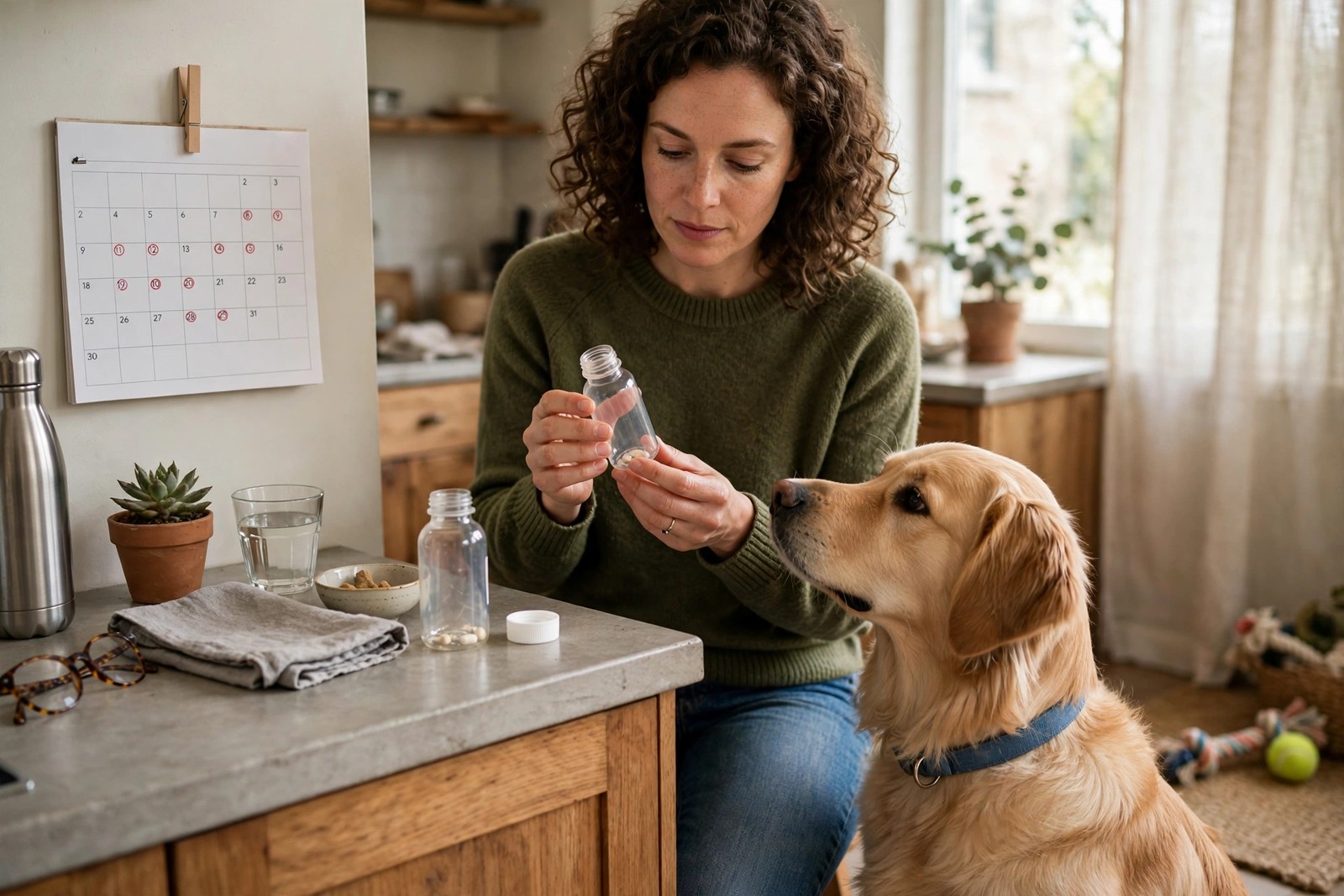
The system that works is built on day one of a new supply, not in a scramble at the end of it: count the doses, work out when roughly a week of medication will remain, and write that reorder date where the bottle lives. Waiting until the bottle is empty is the failure mode — build the reminder at the start, when there is still time to act.
Count Backwards From the Last Dose
When a new supply arrives, do a quick count. If there are 30 tablets and your dog takes one a day, the last dose falls about a month from now — but the refill needs ordering well before that day. Set your reminder for when roughly a week's supply remains, not when one tablet is left. That buffer covers a vet needing to authorize the refill, a pharmacy being out of stock, a delivery delay, or a weekend in between. For medication your dog cannot safely miss, treat the buffer as non-negotiable and consider keeping the reorder conversation with your vet's office early — many clinics can flag auto-refill or repeat options for long-term medications.
Note the date physically on a calendar or list where the medication is stored. Digital reminders fail when phones change; a date written at the scene rarely does.
Make Low Supplies Visible
Keep all of your dog's medications together in one designated spot, out of your dog's reach but where you pass daily. A single shelf or box makes a dwindling supply obvious in a way that bottles scattered between a bathroom cabinet and a kitchen drawer never will. A simple habit helps: each time you give a dose in the final two weeks of a supply, glance at what remains. For a small dog on half-tablets or a large dog on several tablets a day, supplies deplete at very different rates — count your own dog's actual usage rather than assuming the bottle lasts "about a month."
If more than one person gives medication, agree who owns refills. Shared responsibility without a named owner is how a heart medication quietly runs out on a Sunday night.
Safety Around Refills and Repeats
Never stretch a medication by skipping doses or splitting doses differently to make it last longer, and do not substitute a similar-looking medication, another pet's prescription, or an old leftover supply unless your veterinarian has explicitly said to. If you realize a supply has run out or a dose will be missed, call your vet's office for advice — for some medications a short gap is manageable, for others it is not, and only the prescribing vet can judge which. Order refills from the source your vet recommends, check the new supply matches the previous label when it arrives, and if anything looks different — name, strength, appearance — confirm with the clinic or pharmacy before giving it.
Keep a note of when each medication started and any review or blood-test dates tied to it, since long-term prescriptions often come with monitoring your vet will want kept on schedule.
When a Refill Question Comes Up
Some refill questions are not calendar questions at all. A new supply that looks different from the last one, a prescription that needs a blood test before it can repeat, or a dose missed while you waited for delivery — each of those deserves a clear answer before you guess. Your own system still does the heavy lifting: a visible home for the medication, a reorder date written where you store it, and a buffer week built in from the start. Put a follow-up question to KinsLe's Kinny; he answers using the KinsLe Answers library.