
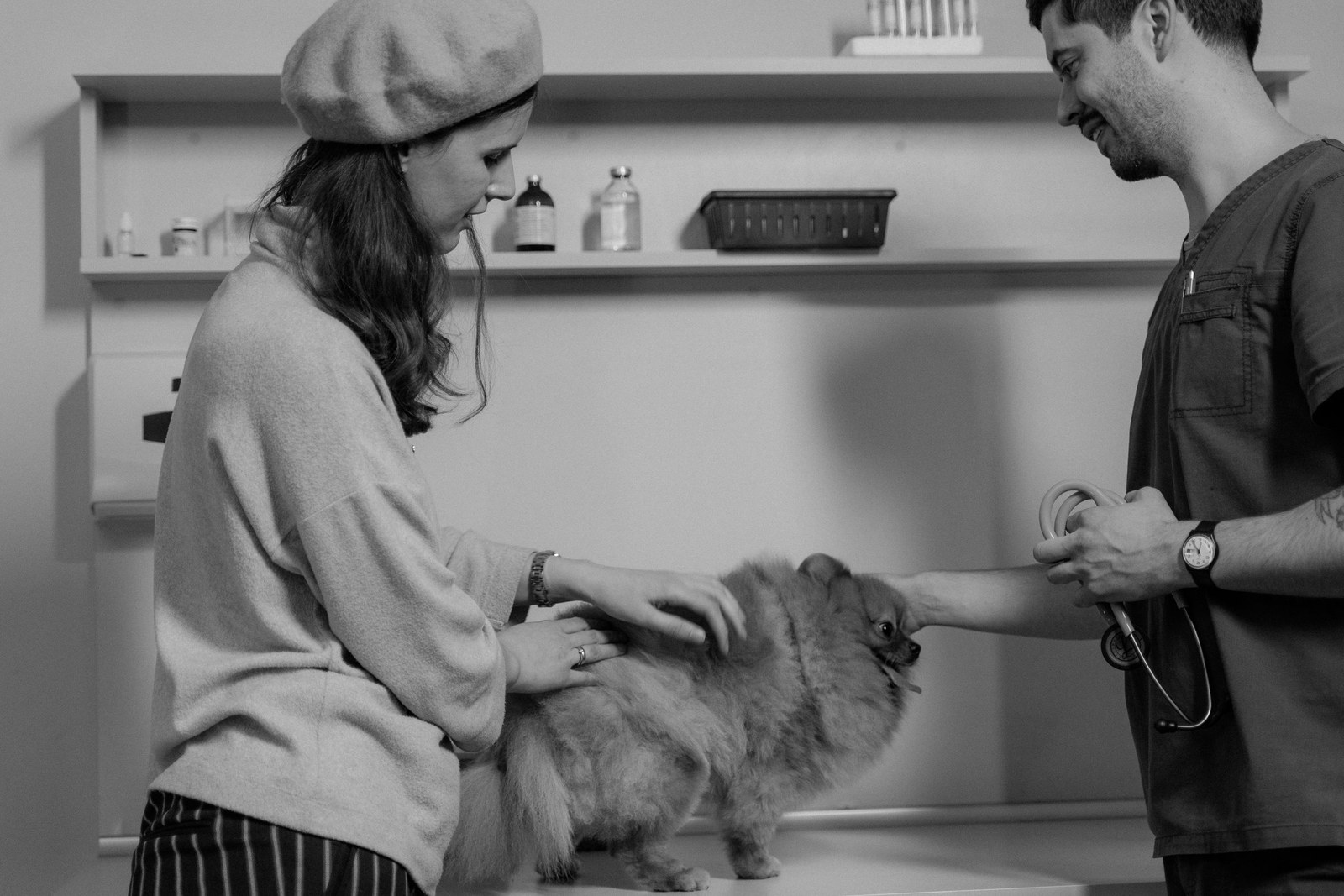
You can get a good first read on your dog's weight at home: from above there should be a visible waist behind the ribs, from the side the belly should tuck up slightly, and you should be able to feel the ribs easily under a thin layer of fat without pressing hard. If the waist has disappeared, the belly hangs level or sags, or ribs are hard to find, your dog is likely carrying extra weight — and your veterinarian can confirm it with a body condition score.
The hands-on check, step by step
Stand your relaxed dog in normal light and look before you touch. From above, compare shoulders, ribs, waist, and hips — there should be a gentle hourglass narrowing. From the side, the line from chest to hind legs should rise, not run straight or droop.
Then run your hands lightly along the ribcage. Ribs should feel like the backs of your fingers under skin, not buried and not sharp. Feel the base of the tail and the spine as well; thick padding there is another clue. Long or fluffy coats — think Golden Retrievers, Pomeranians, or Old English Sheepdogs — can hide a lot, which is why hands matter more than eyes for coated breeds.
The bathroom scale helps too. Weigh yourself holding your dog, then without, if size allows, or ask your clinic to weigh larger dogs. A trend over months tells you more than any single number.
Why breed and build change the picture
There is no single ideal weight for "dogs" — only a healthy shape for your dog. A lean Greyhound will show more rib than a sturdy English Bulldog, and a deep-chested German Shepherd looks different from a compact French Bulldog. Puppies, pregnant dogs, and very muscular working dogs also break simple rules.
That is why veterinarians use a body condition score, usually on a nine-point scale, alongside weight. Ask for the score at every visit, write it down, and ask what target range suits your dog's breed, age, and health. Photos from the side and above, taken monthly in the same spot, make slow change easier to see than memory does.
What to do if the check is worrying
Do not crash-diet a dog or cut food drastically on a guess. Sudden changes can miss the real issue and, for some dogs, create new problems. Instead, measure current food precisely for a week, list every treat, chew, topper, and scrap honestly, and note activity. Bring that record to your veterinarian, who can rule out medical causes, set a safe target, and suggest how much to adjust.
Small, steady loss is the goal when weight needs to come down. Re-check shape every two to three weeks, keep exercise appropriate for joints, and celebrate non-food rewards — play, sniff walks, and attention.
When to get a vet opinion sooner
Book promptly if weight changes quickly without a diet change, if your dog is lethargic, thirsty, panting heavily, struggling with stairs, or if you cannot feel ribs at all. Puppies who look pot-bellied, seniors losing muscle, and dogs on long-term medication also deserve an individual check rather than home guesswork.
Keeping records together with KinsLe's Pet Passport
Weight only makes sense as a story over time. KinsLe's Pet Passport is the records packet for your dog — vaccines, medications, allergies, documents, and vet notes in one place, including those weight checks and body condition scores. You can share the packet at each visit, so a new clinician or an emergency clinic sees the same history you do, not a reconstruction from memory. Month by month, adding scale readings and body condition scores to the Pet Passport file on KinsLe builds the long weight story a veterinarian needs at a checkup.