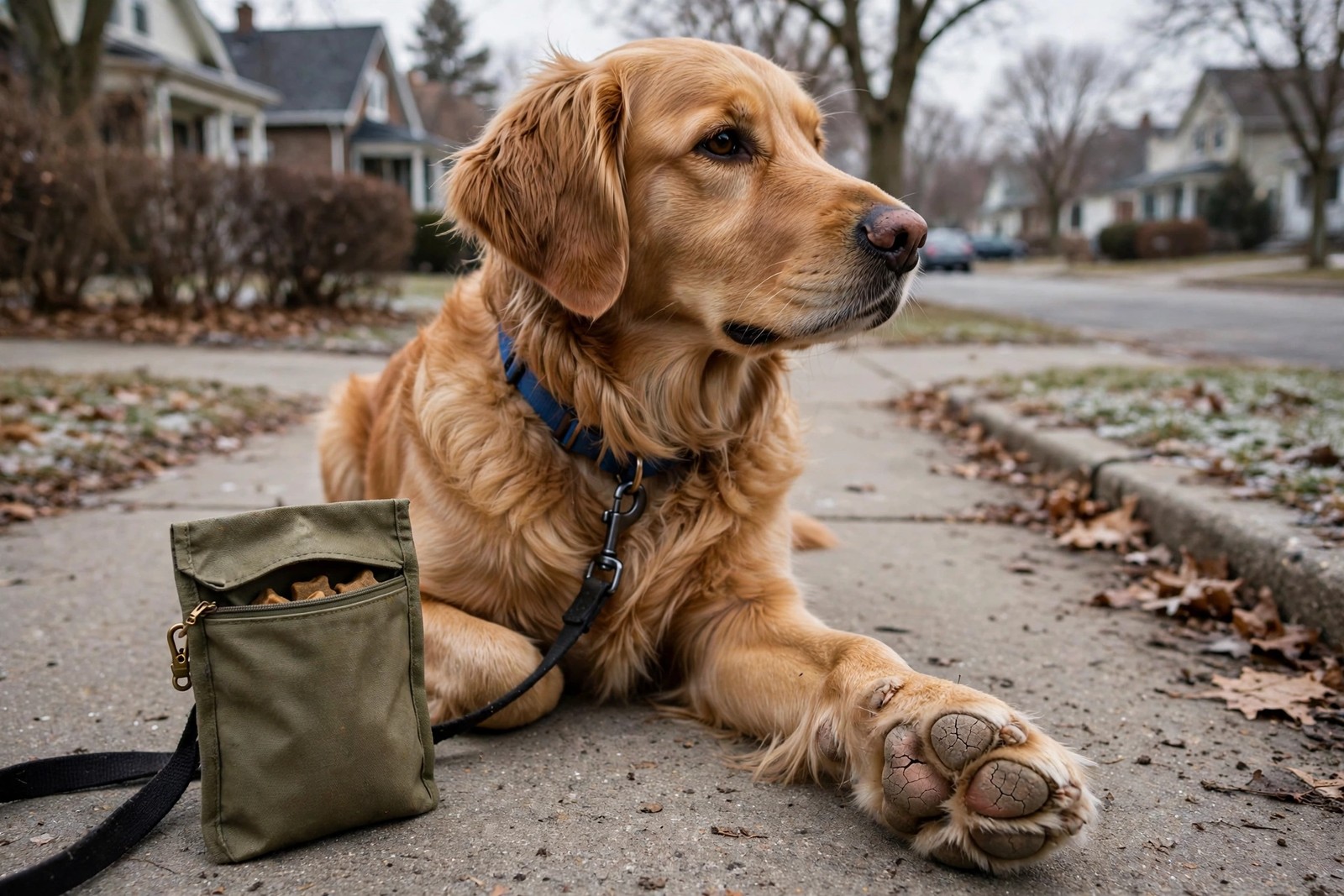
Paw pads take the full force of winter. Pavement salt and grit work into the surface, frozen ground is abrasive, and heated rooms dry the skin between walks. Shallow cracking in that setting is common and usually responds to steady home care. Deeper damage is a different matter, and knowing where home care ends matters as much as the care itself.
Daily Care After Walks
Rinse all four feet in clean lukewarm water when you come in, washing away salt and grit before they sit in the cracks. A shallow bowl by the door makes this a thirty-second habit rather than a chore. Pat the pads dry with a soft towel, including between the toes, because damp skin left in a warm house softens and splits more easily. While the feet are clean, look closely in good light. Check each crack for embedded grit or tiny stones, and check between the toes for redness or matted hair holding moisture.
Trim long hair between the pads carefully if it traps ice balls or grit, or ask a groomer to do it if your dog fidgets. Shorter pad hair also makes your daily inspection faster and more reliable.
Protecting Pads Outdoors and Indoors
Reduce the insult while the skin recovers. Choose grass or softer ground over salted pavements where you can, and shorten walks on the harshest days rather than skipping exercise entirely. Boots protect well once a dog accepts them, so introduce boots indoors with praise and short sessions before expecting a full walk in them. A pad balm made for dogs, suggested by your vet or groomer, can add a protective layer before walks and moisture care in the evening. Use only products intended for dogs, and stop anything that increases licking, since a dog worrying at treated feet undoes the benefit.
Indoors, wipe feet again after garden trips on frosty ground, and place a mat by the door so the rinse-and-dry routine survives busy evenings.
Reading the Cracks Closely
Shallow surface lines that do not bleed, do not make your dog flinch, and gradually look smoother across a week of care fit the home-care pattern. Note the date you first saw the cracking and photograph the cracked pad beside a coin for scale. A dated photo series shows improvement your memory might miss, and it shows stalling just as honestly. Recheck at the same time each day, ideally after the post-walk rinse when the pads are clean and the light is consistent.
When Cracking Becomes a Medical Issue
Book a vet appointment when a crack bleeds, splits deeply, or shows swelling, heat, discharge, or a smell. Limping, reluctance to walk, or constant licking of one foot also moves the problem out of home care, as does cracking that looks no better after about a week of gentle protection. Dogs keep walking on damaged feet, so visible toughness is not proof that a pad is fine. A vet can check for foreign material lodged in a deep split, look for infection, and judge whether the wider skin picture suggests something beyond winter wear. Bring your dated notes and photos, because the timeline helps the vet separate a slow-healing injury from an ongoing cause.
Building a Winter Routine That Holds
Across the season, consistency protects pads better than any single product. Rinse, dry, inspect, and note, tied to the last walk of the day. Note which routes are heavily salted and which weeks brought the deepest cracking, since that pattern tells you where to use boots next winter and when to start protective care earlier.
Keeping that seasonal paw record inside KinsLe's Pet Passport, alongside vaccination dates and past visit summaries, turns one winter of cracked pads into useful history your vet can scan before the next cold spell arrives.