
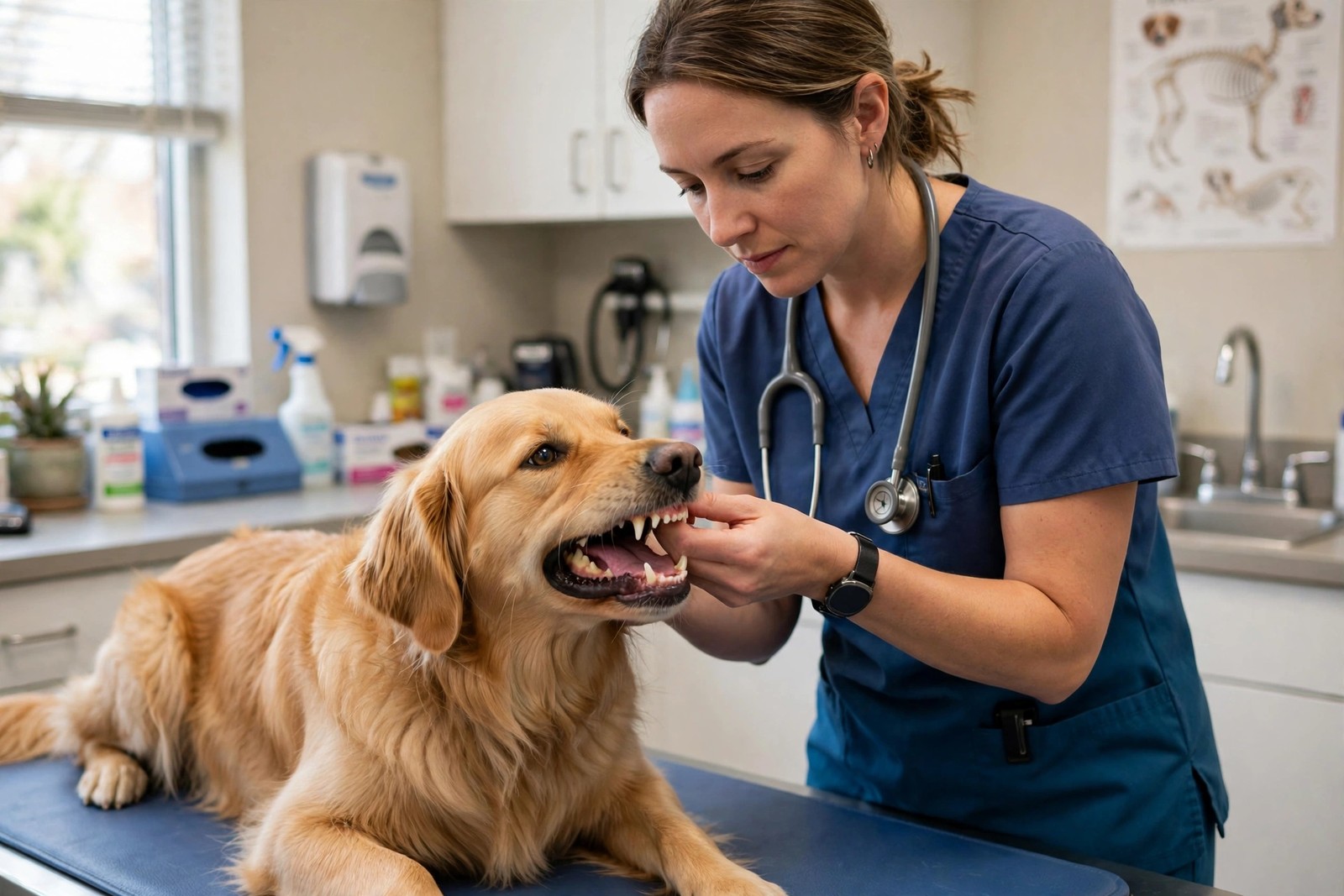
Book a vet check if your dog has bad breath that knocks you back, red or bleeding gums, brown tartar buildup, pawing at the mouth, dropping food, or chewing on one side — dogs hide dental pain well, so do not wait until your dog stops eating.
The Signs Owners Notice First
Healthy dog breath is not minty, but it should not smell sour, rotten, or unusually strong. A sudden change in breath is often the earliest clue that bacteria are building up along the gumline. Look inside your dog's mouth in good light once a month: healthy gums are pink and firm, teeth are mostly white, and there should be no thick brown or yellow crust, especially on the upper back teeth.
Behavior tells a story too. Watch for:
- Dropping kibble, chewing slowly, or preferring soft food suddenly
- Pawing or rubbing at the mouth and face
- Drooling more than usual, sometimes with traces of blood
- Irritability when the head or mouth is touched, or withdrawing from chew toys
Small breeds such as Yorkies, Maltese, and Cavalier King Charles Spaniels are especially prone to dental disease because their teeth are crowded, but large breeds crack teeth on hard chews and develop gum problems as well.
Why Early Checks Matter
Dental disease starts as plaque, hardens into tartar, and allows bacteria to work below the gumline. That process can loosen teeth and cause ongoing pain that dogs mask by simply eating less enthusiastically or sleeping more. Owners often assume an older dog is just slowing down, when sore teeth are part of the picture.
A veterinary examination can assess each tooth, check for pockets, loose teeth, and oral growths, and advise whether a professional cleaning or further investigation is needed. Only your veterinarian can judge what treatment, if any, is appropriate — home remedies, online antibiotics, and scraping tartar off with household tools are unsafe and can damage enamel and gums.
What to Do Before and After the Visit
Write down when you first noticed the smell, appetite change, or pawing, and note any hard chews, bones, or dental products your dog uses. Take a clear photo of the buildup if your dog tolerates it calmly; it can help when you call to describe the problem. Do not delay the appointment because your dog still eats — eating through pain is exactly what many dogs do.
After the visit, follow your vet's home-care advice, start or restart gentle brushing gradually once your vet says it is safe, and schedule rechecks as recommended rather than waiting for symptoms to return.
Keeping Vet Communication in One Place
Dental follow-ups are easy to lose among texts, emails, and family group chats. KinsLe Messenger is the per-pet communications hub on KinsLe, keeping vet questions, updates, and follow-ups organized around your dog's own profile instead of scattered across apps. Everyone caring for your dog can see the same thread and the same next step, which means recheck dates and care instructions stop slipping through the cracks. KinsLe Messenger gathers recheck timing, aftercare steps, and questions for the clinic in a single thread tied to your dog, so everyone involved works from identical instructions.