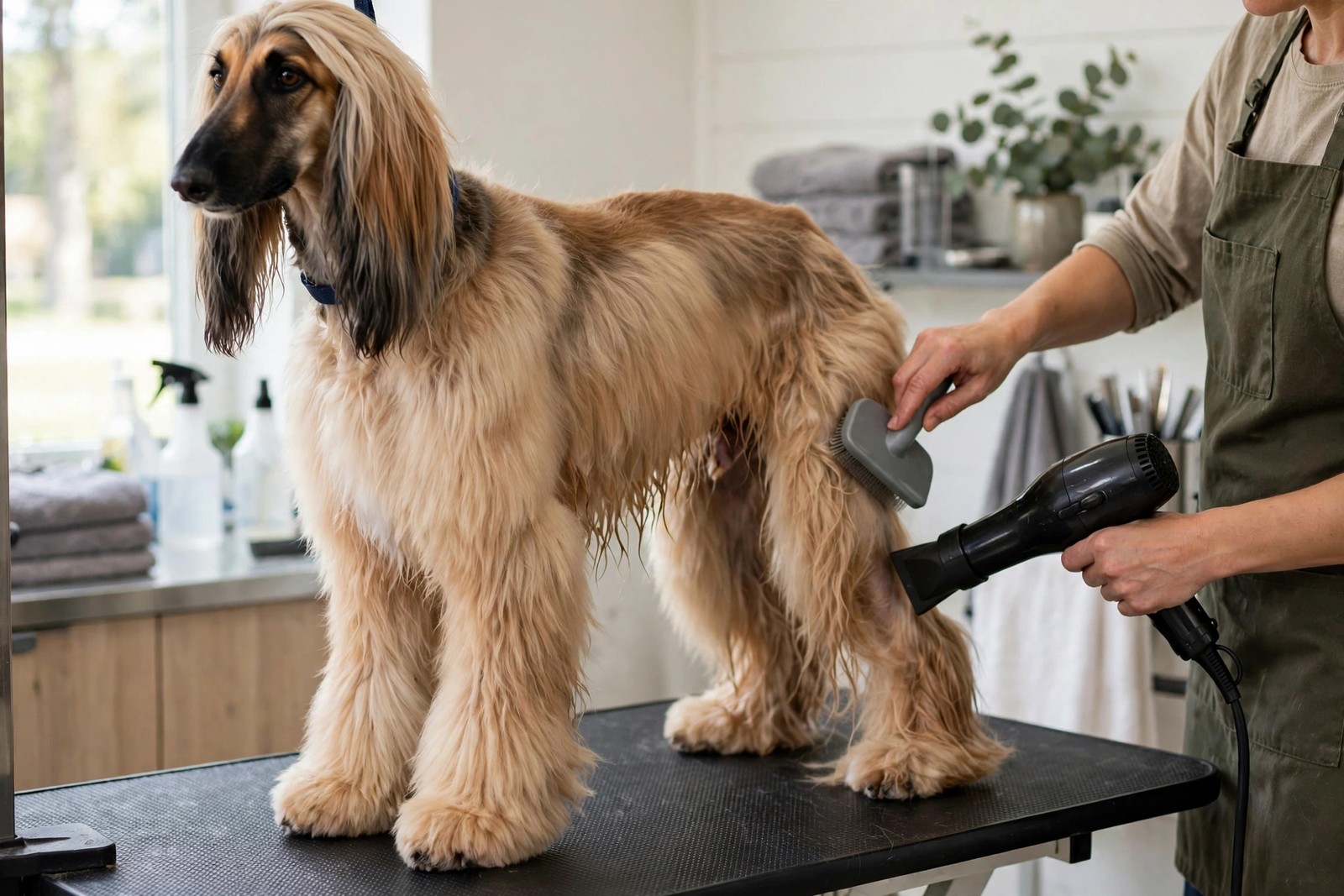
A long coat does not dry like a short one. Water sits inside layered hair that can hang past the hand, and hair left to dry in a clump dries as a clump: strands cross, tighten, and begin the felted knots that owners later meet with a brush and a guilty conscience. Drying a long coat properly is really a detangling operation performed with warm air, done in the only order that works — separated first, dry second.
Towel Without Tangling
Start the moment the bath ends. Lift sections of coat and press a towel around them, squeezing water out along the length, then move on. Resist the vigorous rub that a short coat shrugs off; rubbing rolls wet strands around each other, and every twist you create now becomes a snarl you must undo later at skin level. Pay the pressing treatment to the longest hair first: the skirt along the belly, the feathering behind each leg, the tail, and the chest mane, because those lengths hold the most water and drip onto already-dried areas if they are left until last. A second dry towel halfway through helps more than a longer squeeze with a saturated one.
Dry in Sections, Brushing as You Go
Divide the dog into a working map and finish each area completely before moving on: one side, then the other, then chest, belly skirt, legs, and tail. Use a dryer on a cool or warm setting, held moving and at a distance your own inner wrist finds comfortable, and part the coat with your fingers so air reaches down the hair shaft to the skin rather than skating across the top layer. Brush each section through as it dries, working from the ends of the hair toward the skin in short strokes, holding the base of the hair with your other hand so any pull is absorbed by your fingers instead of the dog. A section is finished when a comb slides from skin to tip without catching and the hair falls separately instead of travelling as a sheet.
Feathering deserves its own patience. The long hair behind the front legs and along the hindquarters dries into stringy ropes if it is blown from a distance, and those ropes knot at their bases within the hour. Comb feathering downward while the air follows the comb, and check behind the ears and under the collar line, where fine, silky hair mats faster than anywhere else on the dog.
Watch the Clock and the Dog
Section work is slow, and a long-coated dog may stand through the better part of an hour of drying on a full bath day. Build in standing breaks: water, a short wander, a chance to shake. Keep the dryer noise introduced gradually for a dog who dislikes it, with the machine running at a distance and treats arriving while it sounds, rather than debuting it at full blast beside a wet ear. Never leave a dog unattended with a dryer running, and stop for the day if the coat still holds damp patches in a dog who has plainly finished cooperating; a second short session beats a wrestling match that poisons the next bath.
The Final Pass
When every section combs clean, run your hands against the lie of the coat and feel for the small, tight beginnings of mats at the skin, especially in armpits, groin, and the friction lines under harness or collar areas. Tease a fresh tangle apart with fingers while the hair is warm and separated; the same knot found next week may need cutting out. Let the dog move around the room and watch the coat fall: long hair that swings and separates as the dog walks has dried as individual strands, while hair that moves in panels is still holding moisture or a hidden web of tangles underneath. Care Teams via KinsLe also spaces the next bath sensibly, giving the coat a rest instead of stacking washes whenever the feathering looks dull.