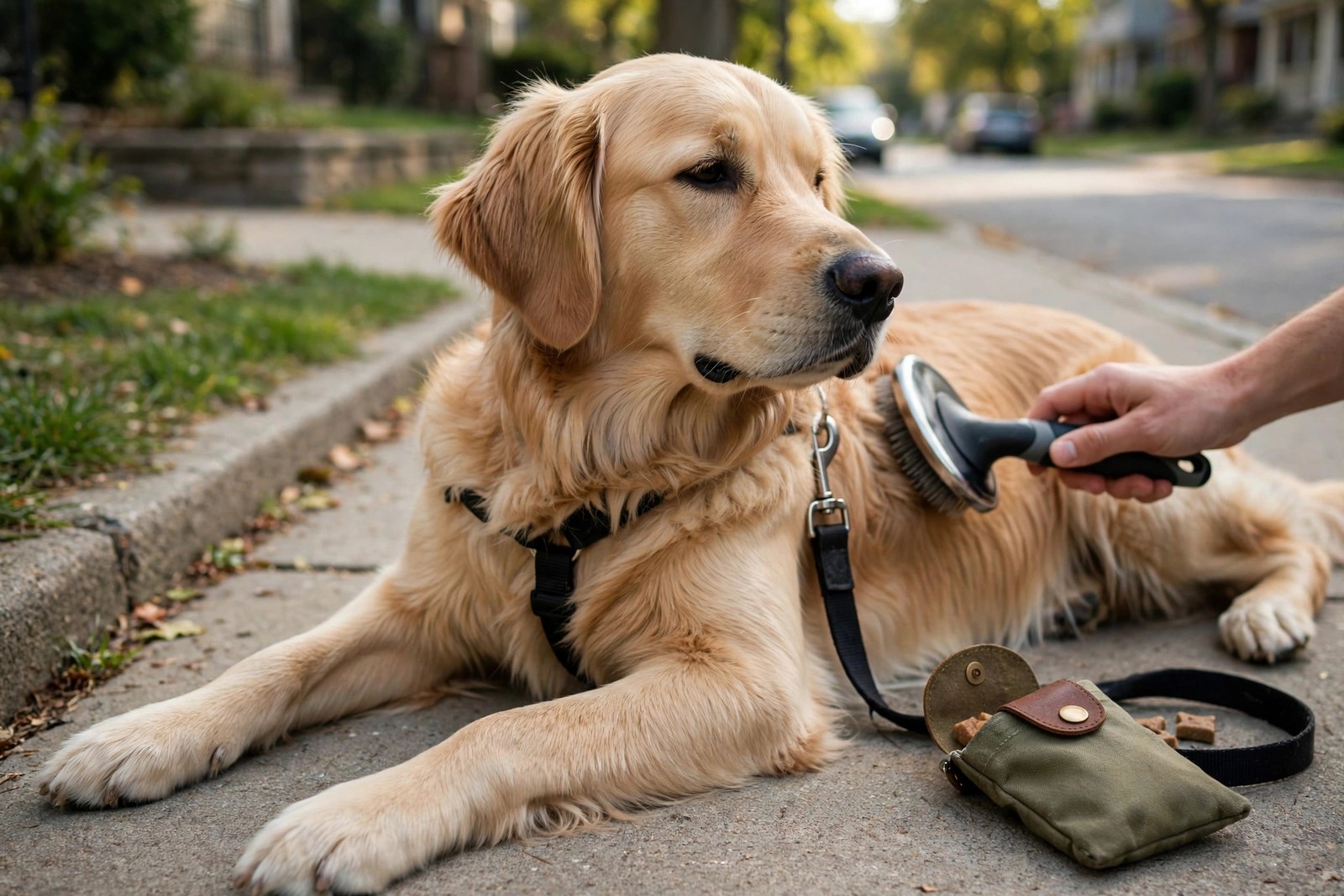
A dog who rolls away when the brush appears is communicating, not misbehaving. Rolling can dodge an unpleasant sensation, escape handling around a sore or sensitive area, or avoid a repeat of a tangle pull that hurt during an earlier session. The fix changes the bargain around the brush: tiny sessions, high-value payment, and freedom to leave at any moment. A dog who may leave and chooses to stay learns faster than a dog who gets cornered.
Preparation: Tools, Timing and the First Association
Set up before calling the dog. Choose a soft brush or a grooming mitt for the early work, even when the coat will later need firmer tools, and place pea-sized pieces of a food your dog loves in a pot beside your seat. Pick a time when your dog already feels sleepy, such as after a walk and a meal, and sit on the floor or a low seat so your dog can approach and retreat without jumping. Begin without brushing at all: let your dog see the brush on the floor, reward any look or step toward the brush, and put the brush away after a minute. Repeat that pairing across a few sessions until the brush predicts food and nothing demanding. Check the coat and skin with your hands during calm stroking too, since a dog who flinches or rolls away from one specific spot may be guarding soreness, a mat pulling at the skin or a lump that a veterinarian should examine before grooming continues around that area.
The Session Sequence, in Order
Start each session the same way so the routine itself becomes reassuring. Place a lick mat with a soft spread on the floor when your dog enjoys one, and let licking begin before the brush moves. Stroke once or twice with your hand on a spot your dog already enjoys, often the chest or the shoulder, then give two or three gentle brush strokes over that same spot. Pay with a high-value treat straight after the strokes, lower the brush, and let your dog move away freely without calling her back for more. A dog who stays receives another round of two or three strokes and another payment, and a dog who leaves ends the session with goodwill intact. Build across sessions in a deliberate order: more strokes on the easy spot first, then a new area for two or three strokes, then longer contact with the brush, and only later the sensitive zones such as legs, belly, tail and behind the ears. Work tangles by holding the base of the hair and easing from the ends, and cut out a painful mat rather than pulling through the knot that taught the dog to dodge.
Keeping Progress Without Slipping Back
Hold several tiny sessions across a day rather than one long session in a week, and end each session while your dog still feels relaxed. Track the accepted stroke count and the areas covered in a simple note, since progress in this training looks like two strokes becoming ten and a shoulder becoming a full side. Keep every helper on the same rules: the same brush, the same payment, the same freedom to leave, and no grooming grabs from above or from behind. A setback after a painful tangle or a rushed session calls for a return to the brush-on-the-floor stage for a day or two, not for firmer handling. Puppies need even shorter sessions with longer play between rounds, and senior dogs may need a softer brush and support for standing, with grooming done lying down when standing tires them. A dog whose avoidance grows, who snaps at the brush or who guards one area of the body needs a veterinarian to check for pain before training continues. In KinsLe, a Care Teams duty for the daily brushing practice can record the stroke count, the area covered and the tool used, and the next person continues from the recorded point instead of restarting the negotiation.