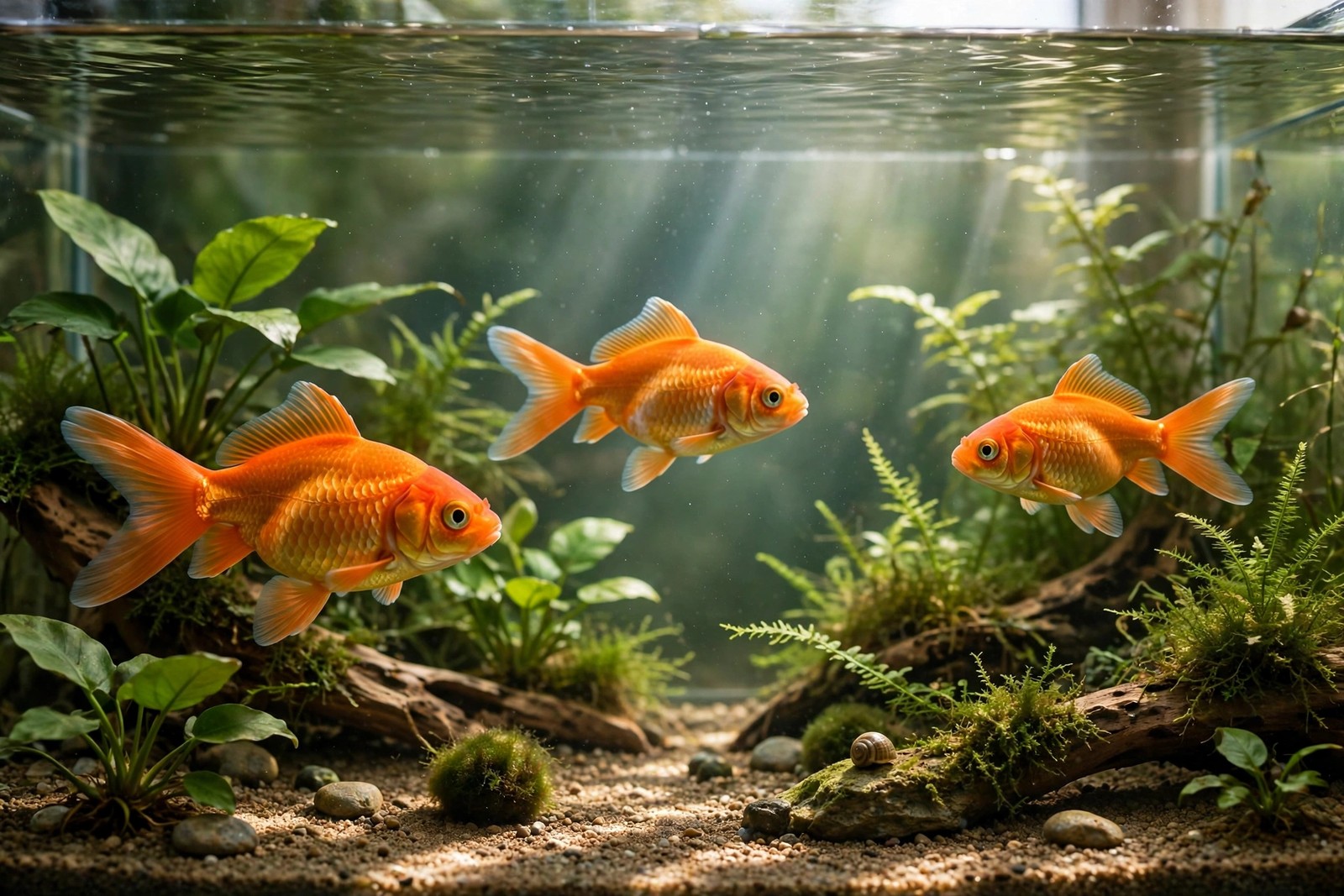
A healthy goldfish is active and curious, swims level and effortlessly through all levels of the tank, holds its fins open rather than clamped, and eats with enthusiasm. The body should be smooth and unmarked — no white spots, fuzzy patches, red streaks, ulcers, or lumps — the eyes clear and not bulging, the gills a healthy red inside with a normal, not frantic, breathing rate, and the belly rounded without the pinecone look of raised scales. Stringy white droppings trailing from the fish, gasping at the surface, flashing (rubbing against objects), or isolating in a corner are each early 'something is wrong' signs in an otherwise bright fish.
Judge the Fish and the Water Together
In fish keeping, the water is half the patient: a 'sick-looking' goldfish in a healthy tank is a fish problem, while several fish looking off, or one fish off the day after a change, sends you to the test kit first — ammonia and nitrite should read zero, and nitrate controlled, before any other conclusion. Learn your fish's normal across a few weeks of watching: who eats first, who rests where, what the breathing rate looks like at rest, because deviation from individual normal is the earliest diagnostic you own. Test water weekly, keep partial changes on schedule, and never add medication to the main tank on a guess — fish medicine without a diagnosis often stresses fish and bacteria filters alike. Move a sick fish to a quarantine setup if you have one, both to treat it properly and to protect the rest.
Working With Your Vet
With a goldfish, bring the water readings to the appointment alongside the fish's symptoms. Write down when you first noticed a change — clamped fins, a white spot, a fish sitting on the gravel — what the ammonia, nitrite and nitrate tests showed that day, and whether anything in the tank had recently changed, from a new fish to a larger water change than usual. A veterinarian makes the diagnosis, and goldfish-specific details such as breathing rate, appetite over the past few days, and a short phone video of the swimming pattern give that diagnosis far better material than a general description of a fish looking unwell.
A goldfish who is gasping at the surface, lying on the bottom, refusing food across two days, or showing spots, fungus or raised scales needs water tests straight away and prompt advice from an aquatic vet or an experienced fish shop, because in fish the water is so often part of the illness itself.
Keeping a Goldfish Health Log
A short dated log turns vague worry into usable evidence. After each weekly test, jot down the readings, how much the fish ate, whether it swam through all levels of the tank or stayed in one corner, and anything visible on its body, fins or gills. Photograph the same side of the fish in the same light once a month; a slowly growing lump or a gradually thinning tail is almost impossible to judge from memory, yet obvious across three dated pictures. Note water changes and new additions too, since a symptom that began two days after a change points the investigation in a very different direction from one that arrived out of nowhere. Put those dated notes into KinsLe's Pet Passport and the packet travels with your goldfish, giving the next vet the water results and symptom timeline without relying on memory.