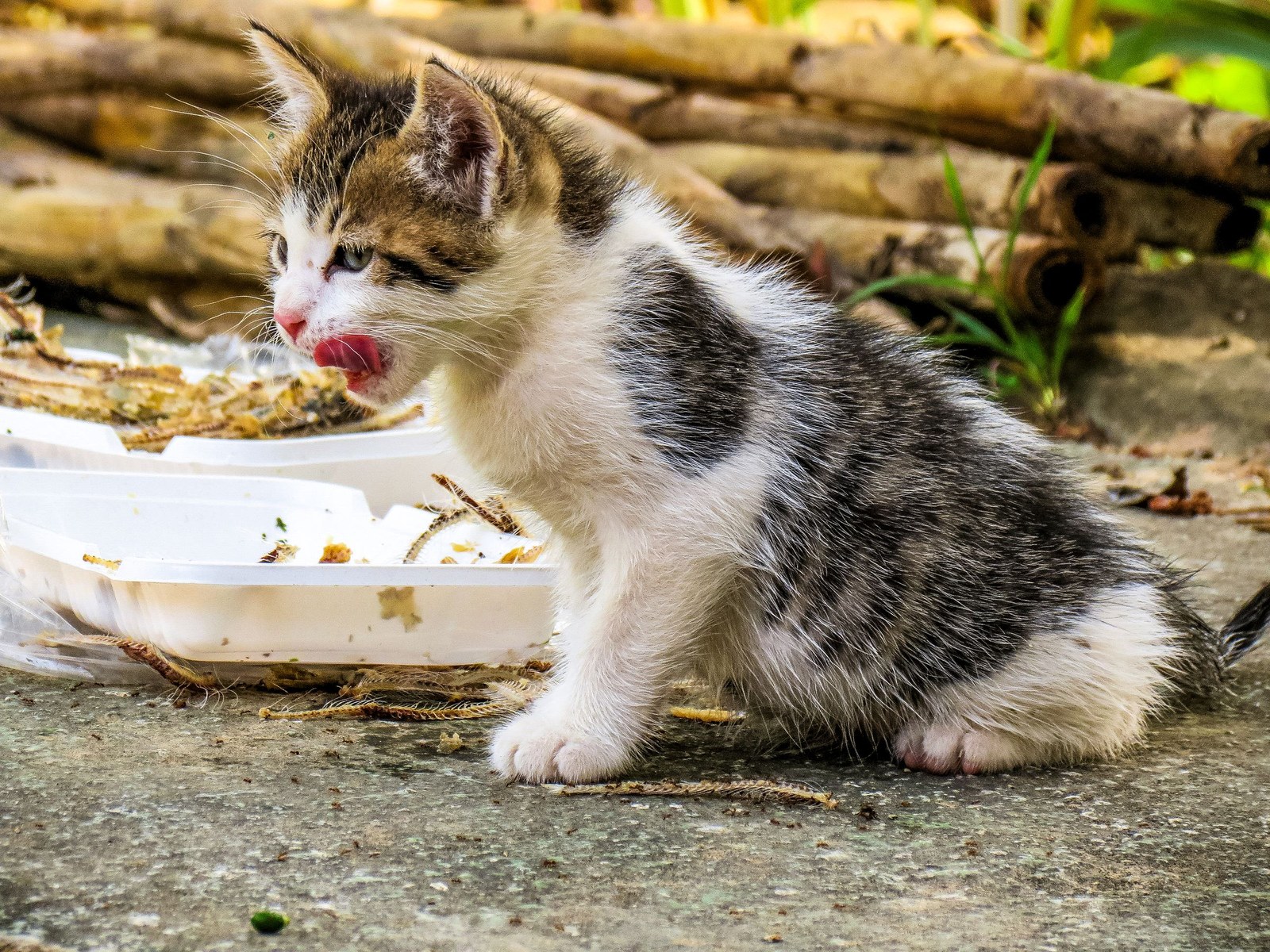
A kitten who is eating enough gains weight steadily week after week, feels rounded rather than bony when you run your hands gently over her ribs, and has plenty of energy for play between naps. Young kittens eat little and often, so the most reliable picture comes from combining three things: the scale, how she feels in your hands, and how she behaves across the day.
What 'enough' looks like in practice
Healthy growth is a trend, not a single number, because kittens vary by breed and size — a Maine Coon kitten and a petite domestic shorthair follow different curves. Weigh your kitten weekly, on the same scale, at roughly the same time of day, and write the number down. Kitchen scales work well for tiny kittens placed in a bowl; older kittens can be weighed by holding them while you stand on bathroom scales and subtracting your own weight.
Between weigh-ins, use your hands. Stroke down her sides: you should feel ribs under a light covering of flesh, not sharp bones, and her tummy should look softly rounded rather than sunken or, at the other extreme, tightly bloated. Her coat should look clean and full, her eyes bright, and her litter tray output regular. Kittens cycle intensely — play hard, eat, sleep deeply — and a kitten following that rhythm with gusto is usually a kitten fuelling herself properly.
How often kittens actually eat
Very young kittens have small stomachs and fast metabolisms, so they need frequent small meals spread across the day rather than one or two big ones. As they grow through their first months, meals gradually consolidate, but frequency early on is exactly why missed meals happen in busy households: everyone assumes someone else did the midday feed. That is an organisational problem, not an appetite problem, and it is very fixable with a shared schedule.
Offer food appropriate for kittens, since growth formulas are more energy- and protein-dense than adult food, and keep fresh water always available. During weaning, expect mess and experimentation — kittens walk through food, wear it, and eat in bursts. Appetite can also dip briefly after vaccinations or a house move; what matters is that it rebounds within a day or so.
When to call your veterinarian promptly
Do not wait and watch for long with a young kitten. Call your vet if your kitten:
- Stops gaining weight, or loses weight, over a day or two of checks
- Misses meals repeatedly or shows no interest in food she usually loves
- Seems weak, unusually sleepy, or cries persistently
- Has ongoing diarrhoea, vomiting, or a swollen, hard belly
- Looks bony, with ribs, spine, or hips becoming prominent
Small kittens have minimal reserves and can decline quickly, so early advice is always the right call. Your vet can check for parasites, illness, or feeding issues and tell you whether her growth is on track for her size and breed — this article can guide your observations, but it cannot replace that hands-on check.
Making sure no meal gets missed
When several people share kitten care, a visible feeding routine removes the guesswork. KinsLe's Care Teams let your household assign your kitten's feeding duties — along with walks, medication, and grooming tasks as she grows — and each person marks their task complete with a timestamp, so you can see at a glance that every meal actually happened. Written down as a shared schedule, those feeding assignments live in the Care Teams plan on KinsLe, where each completed feed gets logged by the person responsible.