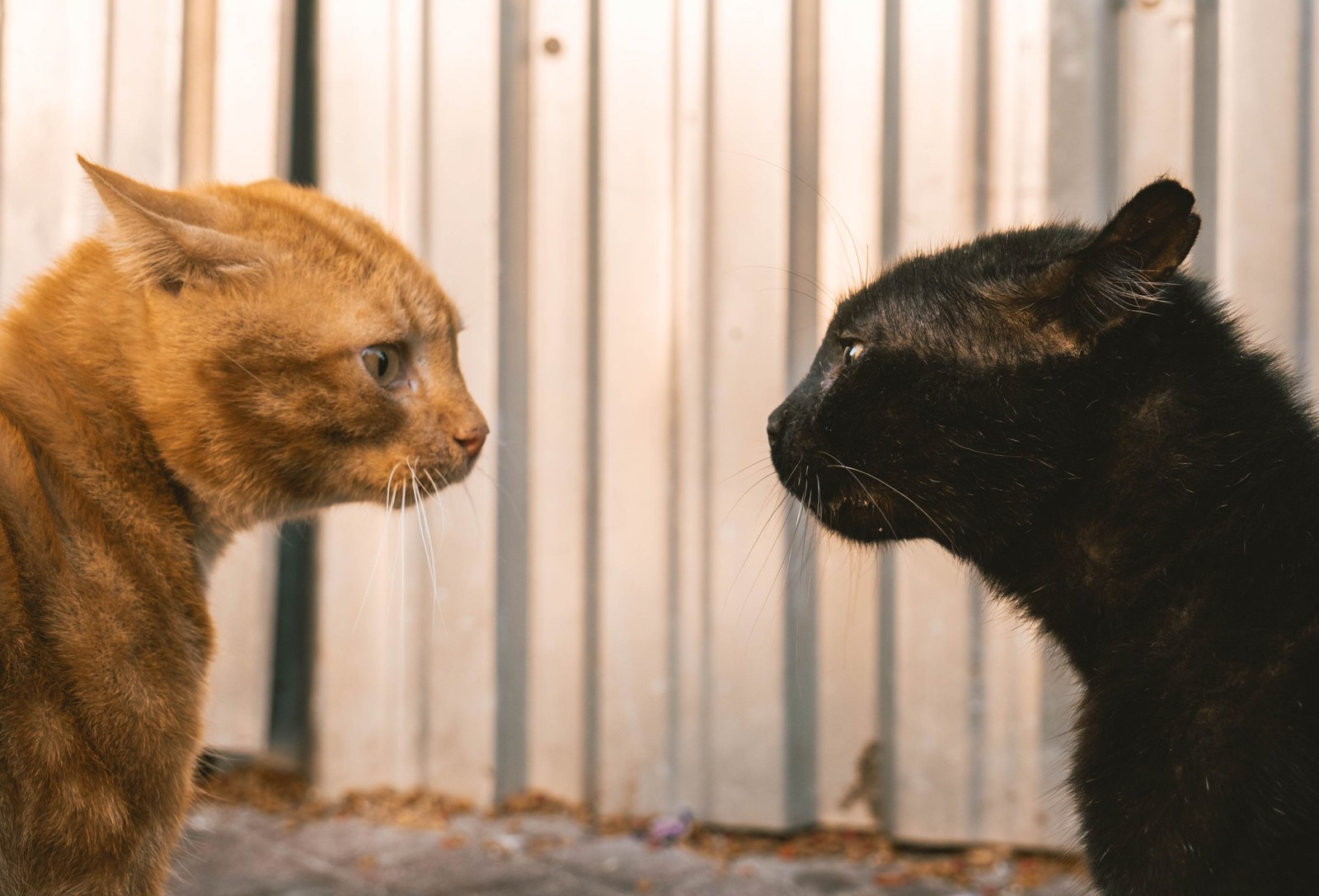
Play between cats looks loose, bouncy, and back-and-forth, while stress looks stiff, one-sided, and focused on control. If both cats take turns chasing, pause often, and walk away freely, that is usually play. If one cat stares hard, guards doorways, blocks the litter box, hisses, flattens her ears, or always ends up fleeing and hiding, that is tension — even if no one has been scratched yet.
Play Looks Loose and Reciprocal
In healthy play, bodies stay soft. Ears point forward or sit neutral, tails move loosely, and claws usually stay in. Cats swap roles: the chaser becomes the chased, the pouncer gets pounced on. You will see play bows in feline form — a crouch, a wiggle, then a short burst — followed by a break to groom, sniff, or look away. Vocalizing is minimal. A little chirping or silent wrestling is normal, especially in younger cats and bonded pairs who have played this way since kittenhood.
Breaks matter more than intensity. Even rowdy play should self-interrupt. If either cat can leave and chooses to come back, the interaction is likely consensual. Kittens and teenage cats can look dramatic, but the give-and-take is the tell.
Stress Looks Stiff, One-Sided, and Resource-Focused
Stress rarely announces itself with a full fight at first. Watch for fixed staring without blinking, slow stalking that does not end in a playful wiggle, dilated pupils in normal light, ears rotated back or flattened, and a tail lashing low and fast. One cat may start sleeping in odd places, avoid whole rooms, eat very quickly, or stop eating comfortably when the other cat is nearby.
Resource behavior is especially revealing. Does one cat sit in a hallway to control access to the bedroom? Lurk near the litter box or food bowls? Rush in when the other cat uses a scratcher or sunny window spot? That pattern of monitoring and blocking is not play, even if it never escalates to swatting. Hiding for hours, over-grooming, or litter box avoidance alongside these signs means the stress is already affecting daily life.
What to Watch Over Days, Not Minutes
A single hiss after a surprise does not mean your cats are enemies. Look for trends over three to seven days. Keep brief notes: who initiated, where it happened, what resource was nearby, and how each cat recovered. Did both cats relax in the same room later? Could they eat on opposite sides of the room without staring? Recovery time tells you a lot. Play partners recover in seconds. Stressed cats stay vigilant long after the other cat leaves.
Also consider recent changes — a vet visit, new schedule, or outdoor cat at windows can tilt a peaceful pair toward tension.
How to Lower Tension at Home
Start by multiplying resources so neither cat has to compete. A useful guideline is one litter box per cat, plus one extra, placed in different quiet areas — not lined up in a row. Separate food bowls by distance or room, provide multiple water stations, and add vertical options like shelves or cat trees so a cat can pass above rather than through a blocked doorway.
Feed and play in ways that build positive associations without forcing closeness. Parallel play with two wand toys and treats scattered for foraging help. Never punish hissing or growling; those are warnings you want to keep. If fights with biting or injuries occur, separate the cats, reintroduce gradually, and consider a veterinarian or behavior professional.
Keeping Routines Calm With KinsLe
In a busy household, stress often spikes when feeding is late, boxes are overdue for scooping, or routines shift from day to day. KinsLe Care Teams let your household assign feeding, litter, and grooming duties for each cat, with timestamped completions so everyone can see what has actually been done and what is still due. When resources stay plentiful and predictable, both cats have less to argue about. If you are tracking a tense week, you can also keep your observations consistent instead of relying on memory. Care Teams on KinsLe convert your tense-week notes into named feeding, scooping, and play assignments, each timestamped once finished.