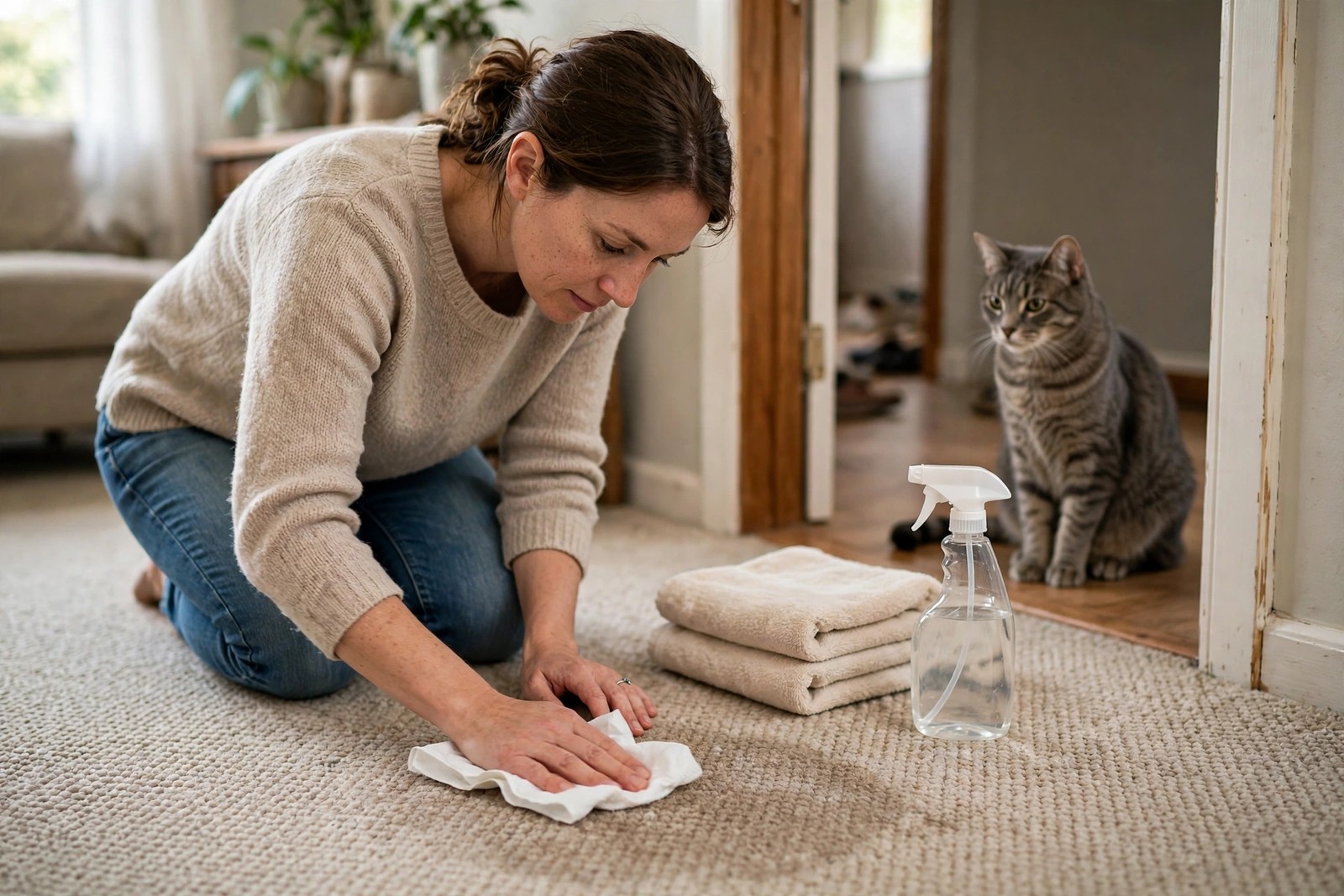
A spraying spot is not finished when it stops smelling to you. Your cat's nose reads urine at a level yours cannot, and a mark that seems clean to the household can still announce itself to the cat as an active marking post worth refreshing. That gap between two noses is why spots cleaned with ordinary soap get marked again within days. Neutralizing a spot properly means removing the specific chemistry the cat reads, in the right order, and then proving the job is done by checking the way the cat will check: by scent, after drying.
Blot First, and Never Rub
Catch the mark as fresh as you can. Press clean cloths or plain paper towels into it firmly and lift, repeating with fresh material until little more comes up. Never rub or scrub a fresh mark, because rubbing spreads the urine sideways and drives it deeper into carpet pile, upholstery weave, or grout. Work from the outside edge toward the center so the wet area shrinks instead of growing. On a vertical surface such as a wall or sofa back, blot downward in sections and protect the floor below, since spray runs before it soaks in.
Why an Enzymatic Cleaner Does What Soap Cannot
Ordinary cleaning removes color and most odor for human noses, but urine leaves behind proteins and crystals that survive soap and water, and those residues are exactly what a cat's nose reads as a previous mark. An enzymatic cleaner is the category built for this: its active agents break down those urine proteins into components that no longer carry the scent signal, which is why a properly treated spot stops advertising itself. Apply it generously enough to reach everything the urine reached, give it the full contact time its instructions state, and keep the cat away until the spot is dry. Avoid ammonia-based cleaners anywhere near a mark, because ammonia's smell reads urine-like to a cat and can point straight back to the spot you just cleaned.
Treat Through the Backing, Not Just the Surface
Urine soaks downward and outward, so the visible stain is often smaller than the real one. On carpet, the padding underneath can hold a wider patch than the surface shows, and treating only the pile leaves the deeper reservoir scenting upward. Lift the carpet edge where you reasonably can, treat the backing and the padding to the full extent of the dampness, or press treatment through with weight and time on thick pile. Hard floors need their own attention at seams, baseboard edges, and grout lines, where urine pools and hides. Upholstery may need repeated treatment through the cushion cover toward the foam, checked between applications.
Re-Check by Nose, Then Soften the Spot's Meaning
Once the spot is fully dry, get your nose close and check honestly; any surviving scent means another full treatment, not a spray of fragrance over the top, which only layers a temporary smell over a live signal. Then change what the cleaned place means to the cat while the marking habit breaks. Feeding near a cleaned spot, or playing there, can move it out of the marker category in the cat's map, because cats rarely mark where they eat and play. State the limit plainly to yourself as well: cleaning removes the invitation, and the reason the cat started marking is a separate question that cleaning alone cannot answer.
One Routine for Every Pair of Hands
A spot re-marked because one person cleaned it thoroughly and another wiped it with a scented spray has not failed; the routine has. Care Teams writes the household's single cleaning method down step by step, blot, wash, enzyme treatment with its full contact time, dry, nose check, and re-treat if scent survives, and assigns the re-check duty to a named person so it actually happens after drying rather than being assumed. Household consistency is what protects the work, and the written steps wait in KinsLe under the Care Teams cleaning assignment for whoever finds the next fresh mark.