
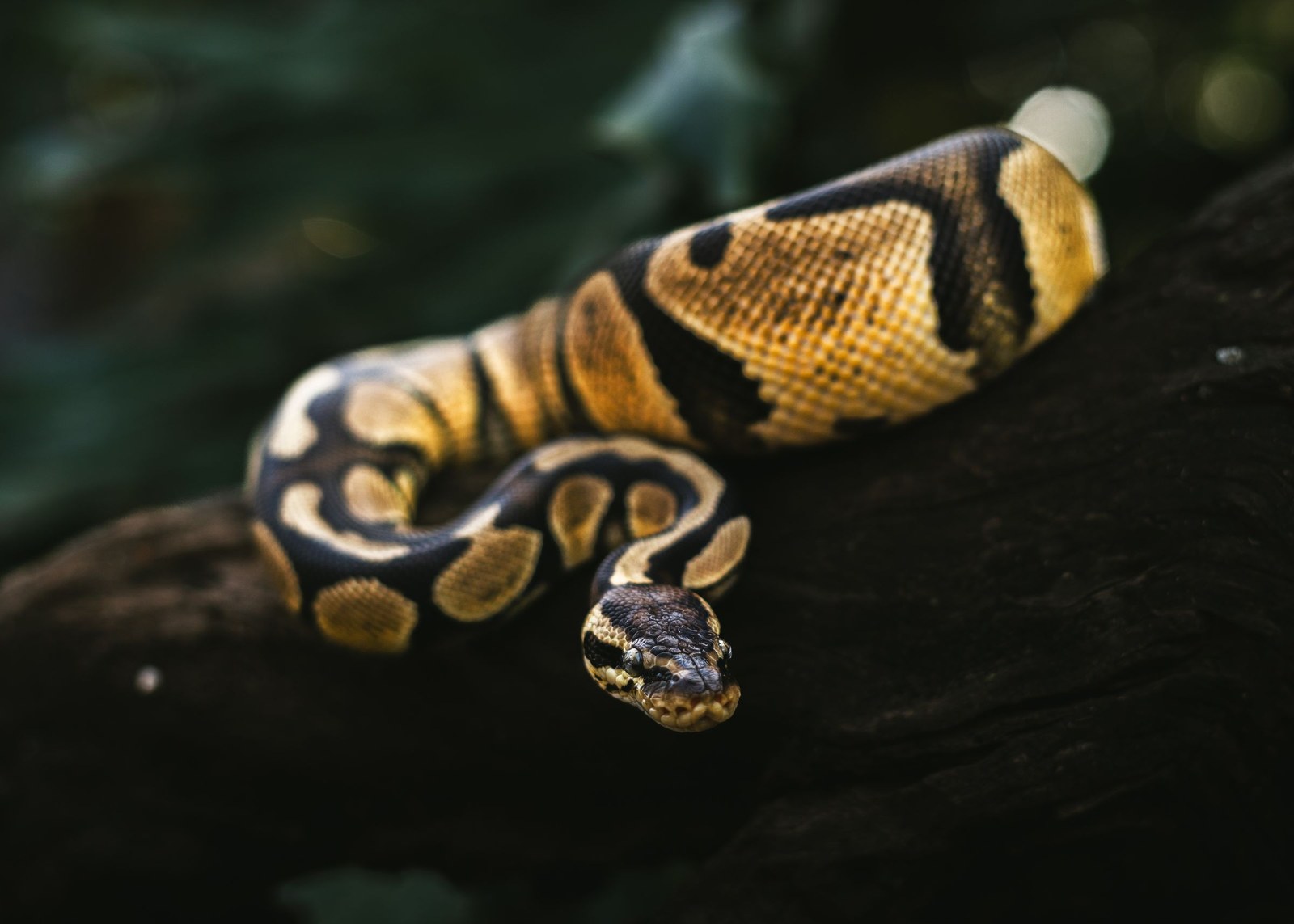
You can tell a snake is about to shed when its colors go dull and faded, its belly may look pinkish in some species, and its eyes turn cloudy blue-gray — a stage keepers call being "in blue." The eyes clear again a few days before the old skin actually comes off, so clear eyes after a cloudy phase do not mean the shed was skipped; they mean it is now very close.
The Shedding Timeline, Stage by Stage
A typical cycle looks like this:
- Dulling: Colors flatten and the skin looks dusty or faded, often about a week before the shed.
- In blue: The eyes cloud over blue-gray because fluid builds between the old and new skin layers, including over the eye caps. Vision is poor during this phase.
- Clearing: The eyes and skin briefly look almost normal again for a day or a few days.
- The shed: The snake rubs its nose on something rough to start the peel, then works the old skin off, ideally in one long piece, eye caps included.
Young, growing snakes shed far more often than adults — sometimes every few weeks — while healthy adults may shed only a few times a year, and often around breeding season or after an injury heals.
Normal Behavior During a Shed Cycle
Expect your snake to hide more and refuse food during this time, and do not panic over either. A snake with cloudy vision feels exposed, so it stays tucked away, may be grumpier if disturbed, and often has no interest in a meal it cannot see well. Offer water, keep the enclosure routine calm, and wait — appetite almost always returns within a day or two after the skin comes off.
This is also why handling should pause. A snake that cannot see you coming startles easily, and rough handling during the cycle can damage the new skin forming underneath.
How to Help a Good Shed Happen
Humidity is your main tool. Raise it within your species' safe range during the cycle, make sure a humid hide — a hide with damp moss or paper towel inside — is available, and provide rough surfaces like bark or a textured rock for the essential nose-rub that starts the peel. Check the water bowl is full and large enough for a soak if your snake likes one.
After the shed, do a quick inspection: check the shed skin for both eye caps, and look at your snake's tail tip, where retained skin most often hides. A complete, single-piece shed is the goal.
When a Shed Cycle Needs Attention
See the stuck-shed guidance — and a reptile vet if needed — when skin comes off in stubborn patches repeatedly, eye caps stay behind, or the tail tip looks pinched by old rings of skin. Repeated rough sheds usually point back to humidity or hydration, which is fixable once you spot the pattern. This is general information, not a diagnosis for your individual snake.
Letting KinsLe's Kimmy Nudge You at the Right Moment
The tricky part is remembering: you notice cloudy eyes on Tuesday, but the humidity bump and the no-handling window stretch across the following week. Kimmy, the built-in AI assistant in KinsLe, can send you a nudge to raise humidity and hold off handling when you log that a shed is starting, and remind you to check for eye caps and a clear tail tip afterward. Over several cycles, those logged dates also reveal your snake's personal rhythm. When the next cloudy-eyed week arrives, the Kimmy assistant inside KinsLe can field further questions on humid hides, shed timing, or safe handling, pulling each response from the library maintained by KinsLe Answers.