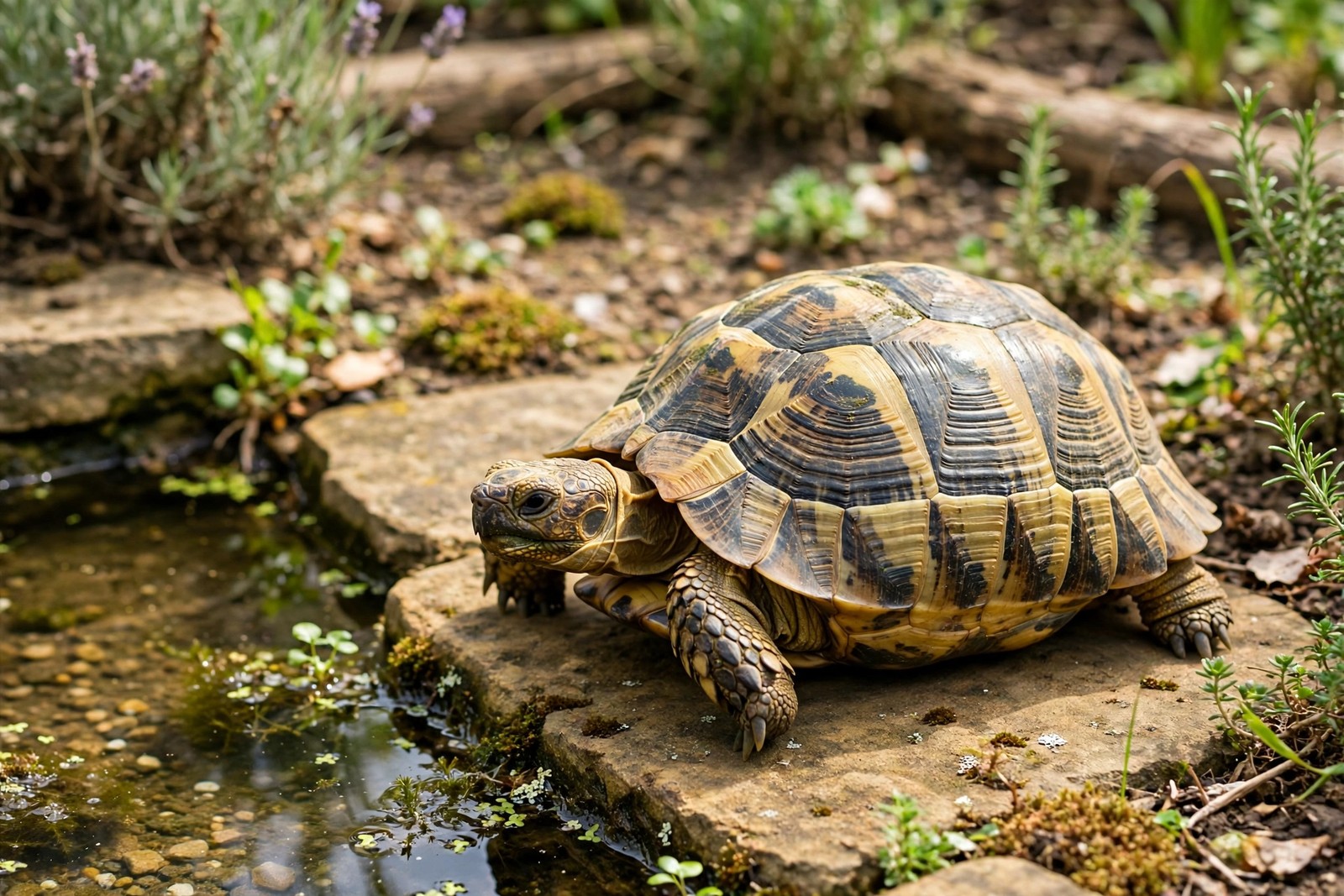
An elderly tortoise that is simply old moves through the day more slowly, yet the rest of the picture stays reassuring. An elderly tortoise that is ill changes in specific, observable ways. Your task is to separate a gradual, even slowing from a change with a cause, and the two tools that do that best are a regular weight record and a short list of red-flag signs you check whenever you handle your tortoise.
What Healthy Ageing Looks Like
Expect slower starts on cool mornings, longer basking before the first walk of the day, a slightly reduced appetite in the cooler parts of the year, and more resting between bouts of activity. Weight stays broadly steady across the active season, the eyes stay clear and fully open, the nostrils stay dry, breathing stays quiet, and the shell stays hard, including the underside. An old tortoise may graze less eagerly than it did at ten years old and still be entirely well at forty, because tortoises age on a long clock and a gentle decline spread over years is the normal pattern.
Season is the great confuser. A temperate tortoise in autumn slows down by design as day length and temperature fall, whether it will hibernate or overwinter awake indoors. Compare like with like: this autumn against last autumn tells you far more than this autumn against midsummer.
Red Flags That Mean a Vet Check
Book a prompt appointment with a veterinarian who treats reptiles if you see any of the following:
- Runny or bubbly discharge from the nose, or discharge around the eyes
- Swollen, puffy, or closed eyes
- Steady weight loss across regular weighings, or a sudden drop
- A shell that feels soft, spongy, or flexible, or new shell damage or pink areas underneath
- Open-mouth breathing, wheezing, or stretching the neck out to breathe
- Sores, lumps, a prolapse, or maggots around the tail area in warm weather
- A complete stop in eating that lasts beyond a brief cool spell, with warmth and light already correct
None of these is explained away by age. Discharge and breathing changes can signal respiratory infection, swollen eyes can reflect vitamin or husbandry problems, and a soft shell points to metabolic or dietary trouble.
Checks You Can Do at Home
Weigh your tortoise regularly during the active season, on the same scales, and write each weight down with its date. Run a gentle hand over the shell and limbs for lumps, cracks, or ticks, look at the eyes, nostrils, and beak each week, and watch one full basking and feeding session rather than glancing while you pass. Check that the basking lamp still reaches a suitable temperature and that ultraviolet lighting is within its working life, because an old tortoise in a cooling enclosure slows down for an equipment reason, not an age reason, and that cause is yours to fix today.
Support an ageing animal with easier living rather than with worry: shallow water it can enter and leave without climbing steeply, food spread on flat ground rather than in a deep dish, shelter that stays dry, and ground without steep drops.
When in Doubt, Weigh and Phone
If you cannot decide which picture you are seeing, let the weight record decide for you. Steady weight with clear eyes and a hard shell supports watchful waiting and a routine senior check. Falling weight, any discharge, or any breathing change ends the debate: phone the vet, describe the signs and the recent weights, and take the tortoise in. Bringing a year of weights and notes turns a vague worry into a focused examination, and it helps the vet judge how fast a change has really happened.
That record is easiest to keep and to hand over when it lives in one place, and KinsLe Pet Passport keeps your tortoise's weight log, species details, and vet notes together in one portable packet ready for every appointment.