
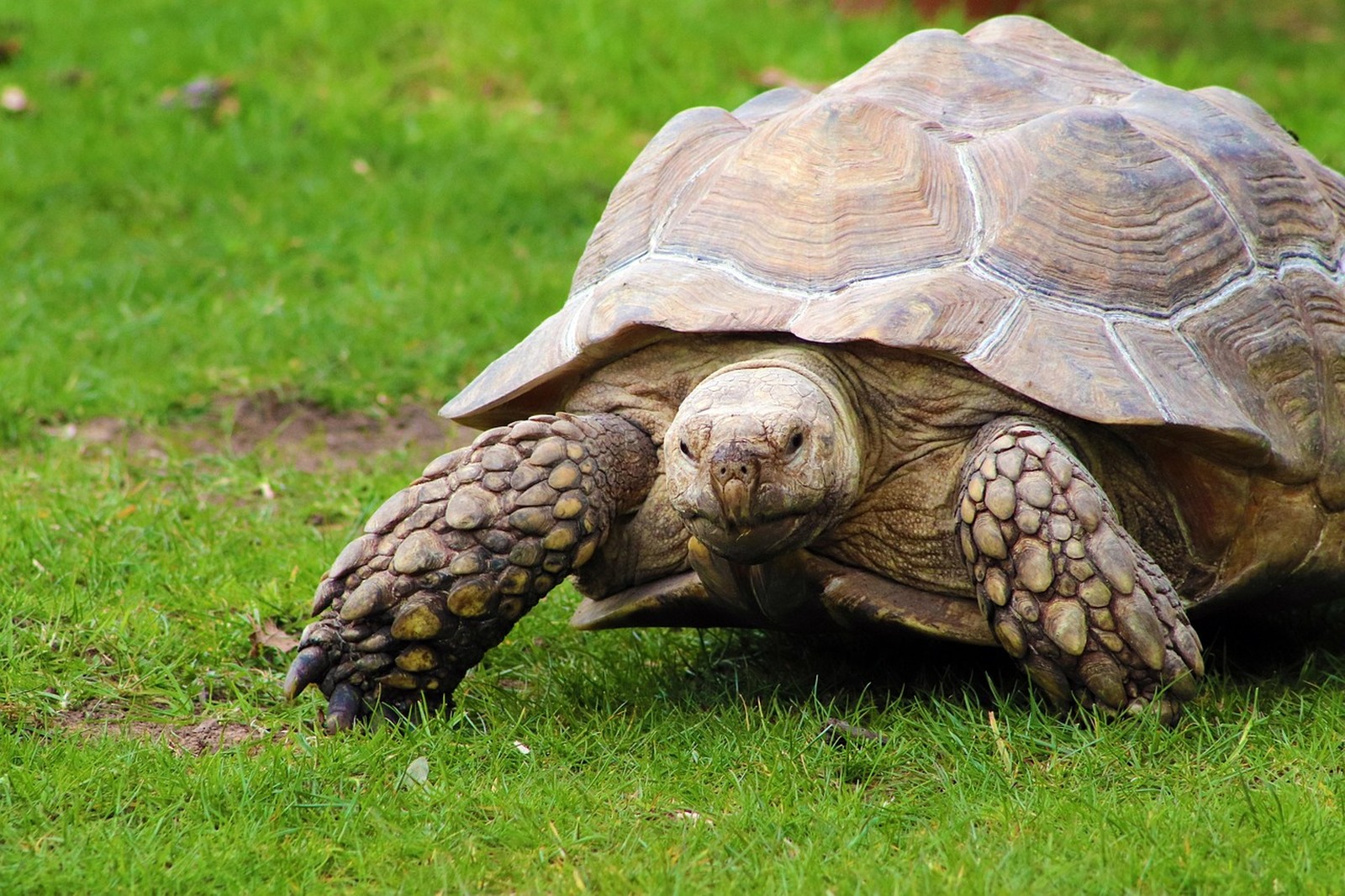
Tortoises age on a timescale that defeats casual observation. Many common pet species live for several decades, so an old tortoise does not go grey or stiffen in a season — it slows by small degrees across years, and owners often only notice when they compare this summer with several summers ago. Knowing which changes belong to that slow pattern, and which point to illness or a failing setup, is the whole skill of senior tortoise care.
The Gradual Signs That Fit Ageing
Reduced basking is usually the first change: an older tortoise may bask for shorter spells, choose the edge of the warm area rather than the hottest spot, and be slower to position itself under the lamp in the morning. Walking becomes more deliberate, with shorter outings around the enclosure or garden and longer rests between them. Appetite typically shrinks rather than vanishes — meals are finished less often, favourite foods are eaten first and the rest left, and some old tortoises graze little and often instead of tackling a full pile of weeds at once. Sleep lengthens at both ends of the day, exploration and interest in people fade a little, and growth, which is slow even in young adults, effectively stops. Shell edges and scutes can look more worn and the beak may need more attention to stay in shape, because an animal eating less fibrous food wears it down less.
What Is Not Simply Old Age
Brumation confuses the picture in autumn and winter, when many tortoises naturally eat less and sleep far more as temperatures and light fall. A brumating tortoise should still be a stable weight, rouse reasonably when warmed and handled, and show no discharge or breathing changes. Illness wears a different face and usually arrives faster: complete refusal of food in warm conditions, measurable weight loss, swollen or runny eyes, discharge from the nose, open-mouth breathing or wheezing, a soft or damaged shell, diarrhoea, or a tortoise too weak to right itself or pull its legs in. None of those should be filed under ageing. A reptile vet should see a tortoise showing any of them promptly, because tortoises decline quietly and late presentation is the main reason treatable problems become serious.
Adjusting Care for a Slower Tortoise
Small changes to the setup return a lot of comfort. Keep food, water, shelter, and the basking area close together so an old tortoise does not have to trek the length of the enclosure for each need, and make the water dish shallow with an easy ramped edge for a weaker animal to climb out of. Offer food when the tortoise is properly warmed up, chop fibrous weeds a little finer for a worn beak, and keep the temperature gradient and lighting exactly as the species needs — an old tortoise regulates no better than a young one, and a cold enclosure mimics decline. Weigh monthly and write it down alongside appetite notes, because a slow drift is reassuring while a sudden drop is your earliest illness warning. Those dated records are exactly what KinsLe's Pet Passport is designed to hold together, giving any vet your tortoise sees a portable packet of weights, notes, and past treatment instead of guesswork from memory.