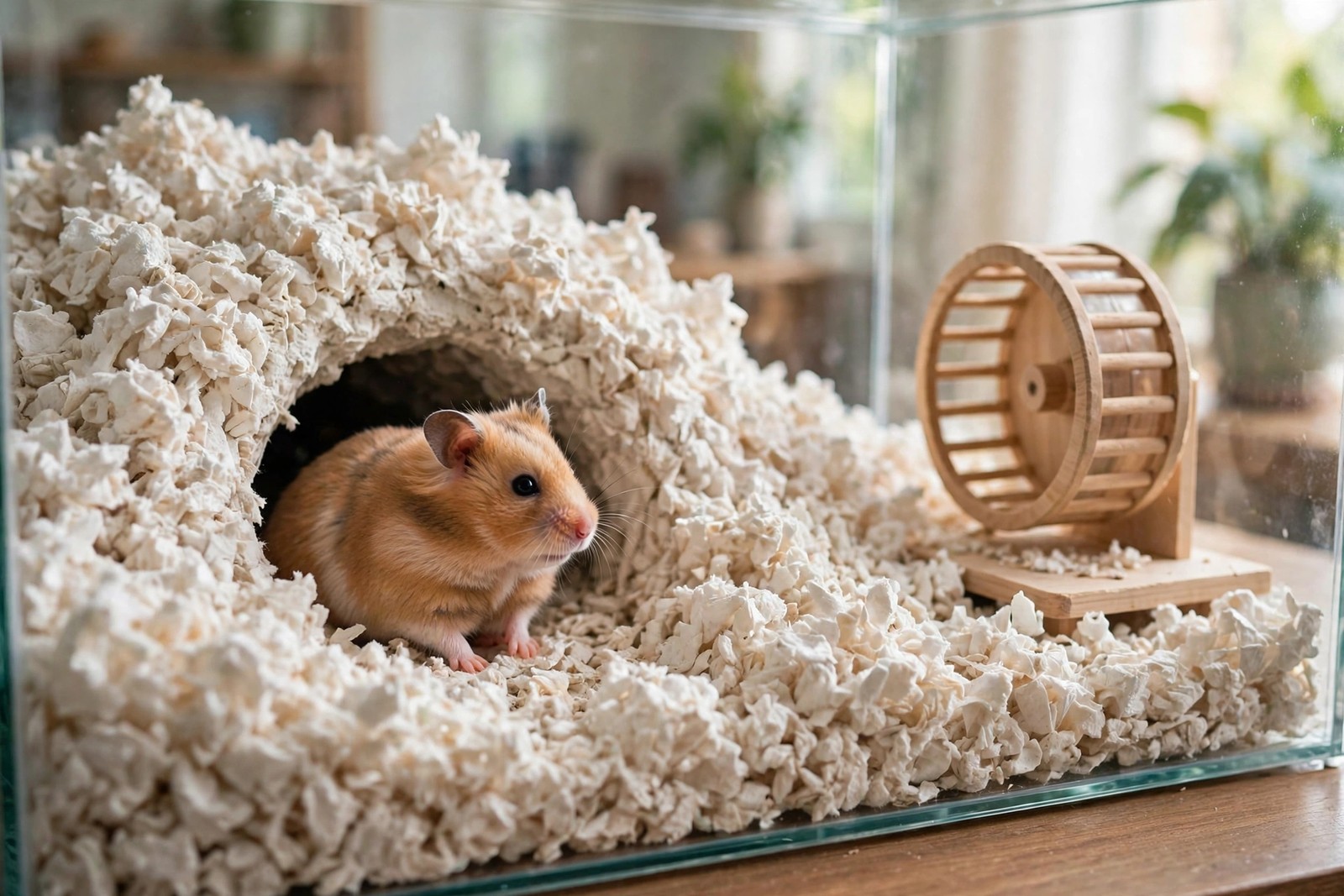
Hamsters are burrowing animals, and the bedding depth decides whether they can live that way or merely sit on top of their floor. Use at least 6 inches everywhere, and build one end of the enclosure up to 8 to 12 inches — roughly 20 to 30 centimetres. In that deep end a hamster digs sloping tunnels, hollows out a sleeping chamber, and stashes food in side pockets, exactly as wild hamsters do underground. A thin scattering of bedding over a cage floor gives a hamster nowhere to hide and is a common reason a new pet seems restless, bar-chews, or sleeps in a corner of the wheel instead of a nest.
Syrian and Dwarf Hamsters Both Need the Depth
A Syrian is the larger animal and uses the full depth happily, so give a Syrian the deepest end your enclosure allows — 10 to 12 inches if the walls permit it. Dwarf species, including Roborovski, Campbell's, and winter white hamsters, are smaller but no less committed to tunnelling; 6 to 8 inches is their working minimum and more is used readily. Do not scale the depth down just because the hamster is small. What changes with species is the enclosure around the bedding: dwarf hamsters squeeze through smaller gaps, so deep bedding must sit inside a tank-style enclosure or a cage with narrow bar spacing that a small body cannot slip through while climbing the bedding slope.
Building a Floor That Holds a Tunnel
Bedding only works at this depth if it holds its shape when dug. Soft paper-based bedding, sometimes layered with aspen shavings or a little hay worked through it, compacts into tunnel walls that stay standing instead of collapsing behind the hamster. Press each layer down firmly as you add it and measure the finished depth after pressing, because a loose 10 inches settles to far less within days. Avoid cedar bedding and strongly scented bedding, which are harsh on a hamster's airways in an enclosed burrow. Burying a bendy tunnel or a cardboard tube at an angle into the deep end gives a burrow starter that many hamsters adopt and extend. Keep the shallow end for the things that need a stable base: the wheel standing on the floor or a platform rather than on loose bedding, the sand bath, and the water bottle or dish, none of which should sink or tip as the hamster digs nearby.
Cleaning Without Destroying the Burrow System
Deep bedding is not dirty bedding; most of the volume stays clean for weeks because a hamster usually toilets in one area, often a corner or the sand bath. Spot-clean the wet patch and the toilet corner every few days, lift out soiled handfuls, and top the level back up. Resist replacing all the bedding at once: a full change wipes out the tunnel system and the scent map your hamster navigates by, and many hamsters are visibly unsettled for days afterwards. Changing a section at a time, and mixing a little of the old clean bedding into the fresh, preserves both. Wash reusable houses and wheels with warm water as they need it, and return them to the same spots.
If several people share hamster care, KinsLe's Care Teams lets you split the spot-cleaning, water checks, and top-ups between them, with each finished job marked off so the deep end gets its upkeep without anyone duplicating a clean.