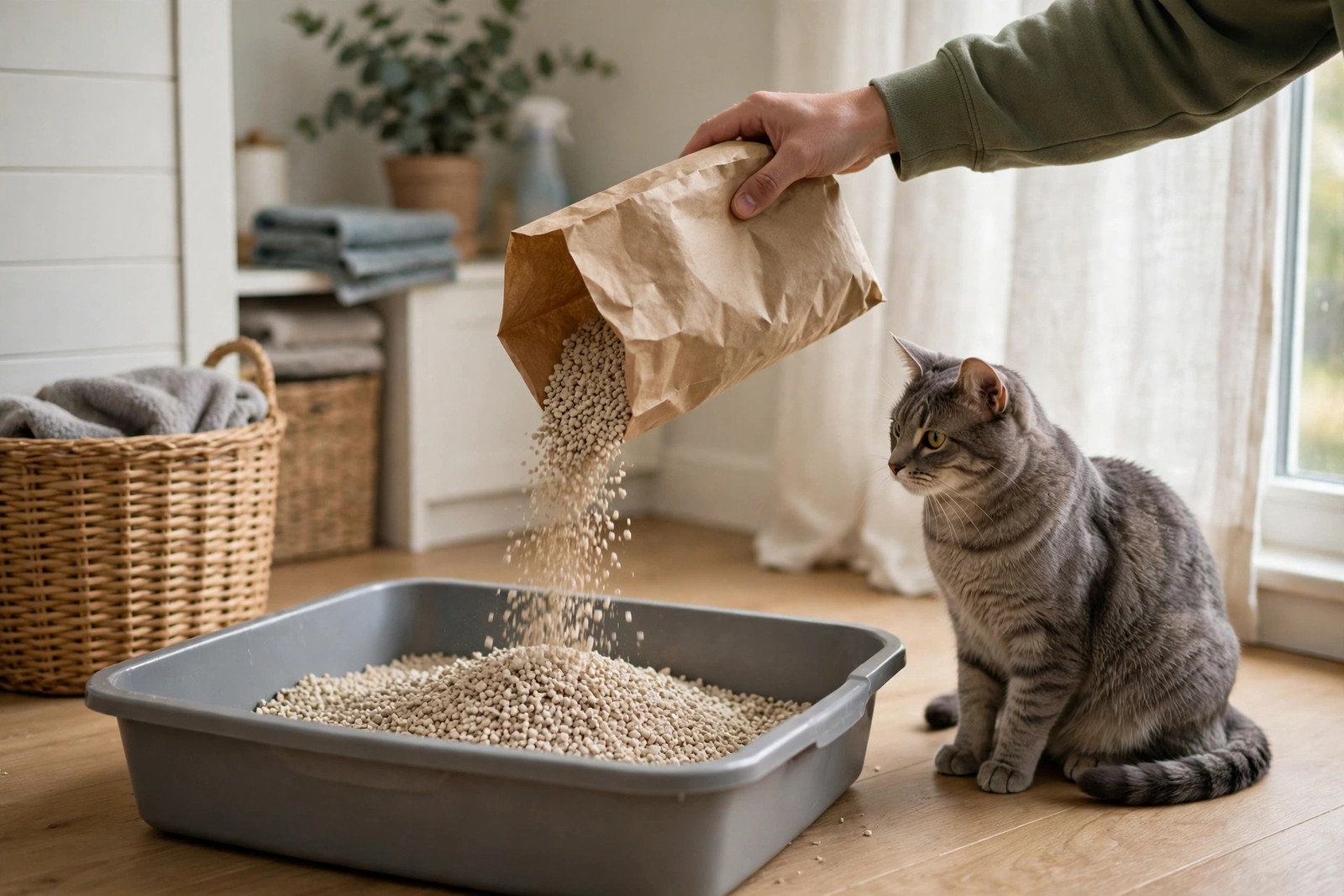
The short answer is 2 to 3 inches — about 5 to 8 centimetres — measured across the floor of the tray. It sounds like a small detail, but depth is the difference between a tray a cat uses willingly and one it abandons for the laundry pile. Cats are following an instinctive sequence — dig, eliminate, bury — and litter depth is what makes each step possible.
Why That Depth Works
At 2 to 3 inches, a cat can dig a proper hollow without its paws scraping bare plastic, which many cats find unpleasant enough to cut the routine short. Afterward there is enough loose material to cover waste completely, and that covering is what traps odour between scoops. Depth also keeps urine in a clump suspended in litter rather than letting it run to the tray floor, where it cements itself, smells worst, and makes cleaning a chiselling job. Most clumping litters are formulated assuming roughly this depth; go much shallower and the clump never forms properly.
Too Shallow and Too Deep
Under about an inch, expect uncovered waste, strong smell within hours, wet patches stuck to the base, and — the real cost — a cat that starts perching on the tray edge or going beside the tray rather than in it. At the other extreme, past roughly 4 inches, you pay in litter scattered across the room with every dig, clumps the size of grapefruit that waste litter, and a shifting, unstable surface that kittens, senior cats, and some anxious cats actively dislike. A few long-haired cats also track more litter out of a deep tray on their paws and belly fur.
Adjusting for Your Cat and Tray
Treat 2 to 3 inches as the starting point, then tune it: a vigorous digger may be happiest near the top of the range, while a cat that barely scratches may do fine at 2 inches. Kittens do better with the shallower end, since deep litter can overwhelm short legs, and any cat recovering from surgery or with mobility problems benefits from a lower fill in a low-sided tray. High-sided or covered trays tempt owners to overfill; measure the litter itself, not the gap to the rim. If you switch litter types, hold the same depth for the first weeks so depth is not the variable that changed if your cat objects.
Holding the Level
Scooping removes litter every day, so depth drifts down silently — check it with a quick glance or a marked scoop once a week, top up after scooping rather than on a separate schedule, and empty, wash, and refill to the measured depth on your regular full change. Writing the target depth on a note by the litter store stops every household member guessing differently.
That weekly depth check is an easy duty to share out: in KinsLe Care Teams it can sit alongside scooping and full clean-outs as an assigned task for your cat, so whoever scoops also restores the 2-to-3-inch level and the tray stays inviting.