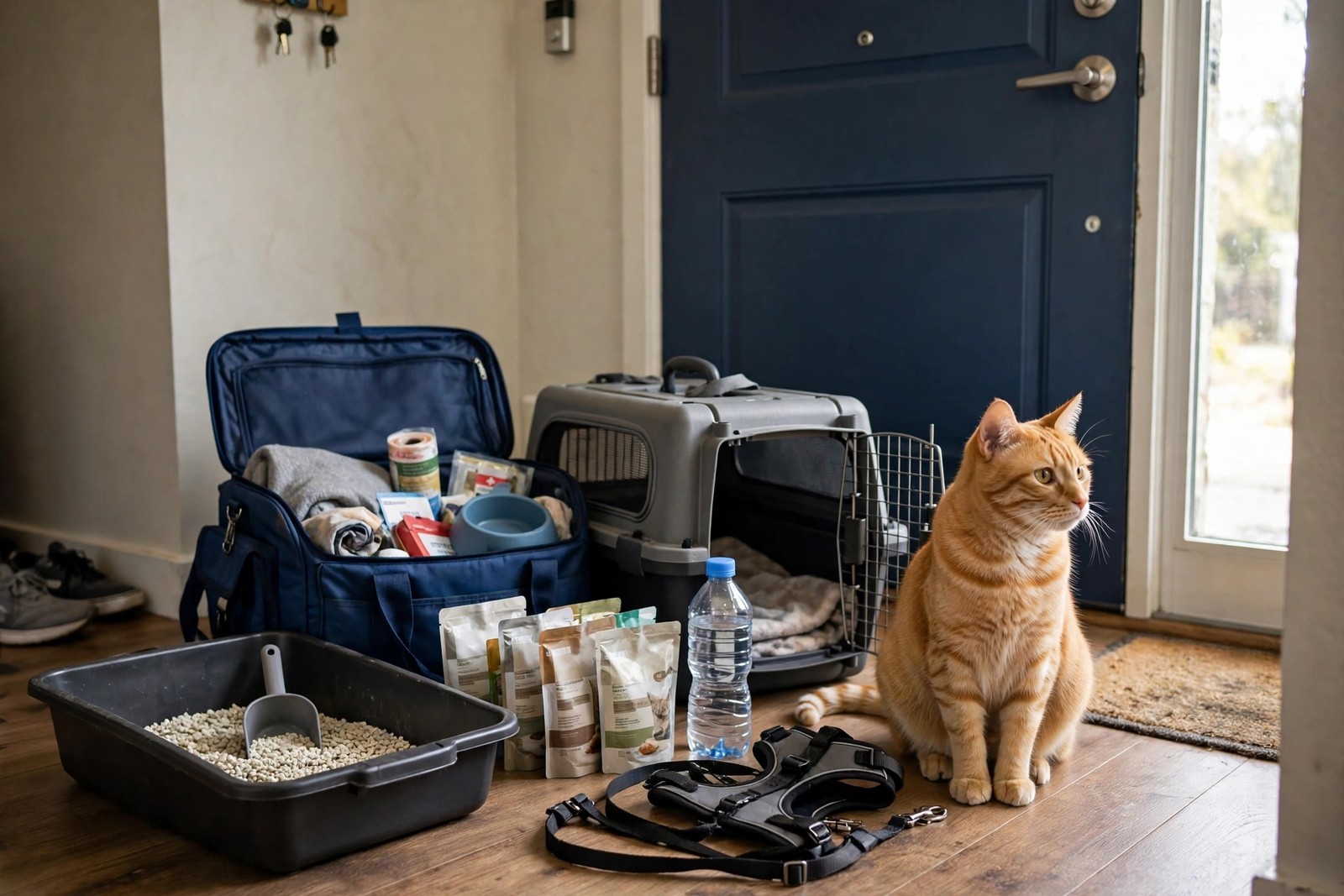
An evacuation kit for a cat in a small shared apartment succeeds or fails on one detail, whether it can be grabbed in under a minute by whichever student happens to be home. Two students sharing one cat means the plan cannot live in one person's head or one person's bedroom. The kit sits packed by the front door, the carrier lives beside it rather than in a storage cupboard, and both students know the whole routine well enough to run it alone. Build it once, restock it on a schedule, and the worst morning of the year becomes a rehearsed grab rather than a search.
What Goes in the Kit
Start with the carrier itself, sturdy, ventilated, and large enough for the cat to turn around in, with bedding that smells of home already inside so the carrier is not a strange box on the day it matters. Pack several days of the cat's usual food and a sealed supply of water as your planning choice, choosing food the cat already eats so an emergency does not come with a diet change attached. Add a copy of the veterinary records in a sealed pouch, covering vaccinations, any ongoing conditions, and the clinic's number, plus a current clear photo of the cat showing markings from both sides. Include a portable litter solution, a collapsible tray or a shallow disposable tray with a small bag of litter, along with waste bags and a scoop. A harness and leash sized to the cat complete the kit, giving you a way to let the cat out of the carrier safely at a rest stop without risking a bolt across a parking area.
Two Students, Two Grab Jobs
Divide the work before it is needed. One student's job is the cat: find the cat, load the carrier calmly, and carry it out. The other student's job is everything else: the kit bag, the records pouch, keys, and a final check that no door has been left open behind you. Write those assignments down and rehearse the sequence once, including the awkward parts, where the cat usually hides when alarms sound, and who coaxes rather than grabs. Rotate a restock check between the two of you so food and water get replaced before they expire, and update the photo and records copies whenever the cat visits the veterinarian. A kit built for a cat that has since changed food, medication, or appearance is a kit built for a different cat.
The Fallback If the Cat Gets Out
Even a good plan has a failure mode, and the common one is a frightened cat slipping a carrier door or darting past a leg in a stairwell. Prevent it first: carrier door checked twice, harness clipped before any stop, and the cat never carried loose in arms outside the apartment. If the cat does escape during an evacuation, treat getting word out as the next step after a careful immediate search of the stairwell, parking area, and nearby cover. That fallback is what the Lost Pet Alert System on KinsLe is there for, sending word to pet owners nearby while letting whoever finds the cat reach the owner directly rather than relying on posters after the fact. As a last resort after a genuine escape, use KinsLe to trigger the Lost Pet Alert System, which reaches neighboring owners quickly while giving anyone who finds the cat a direct message route to its students.