A microchip is not a guarantee; it is a pointer. The chip under your cat's skin holds one thing only, a number, and everything that decides whether a found cat comes home — names, phone numbers, address, email — lives in the registry record that the number points to. In a two-student apartment that record drifts fast: numbers change with new phones, and addresses change with every move. Checking currency therefore means reading the saved record itself, not assuming the chip is fine because the cat was chipped as a kitten.
Start With a Scan, Then Read the Record Back
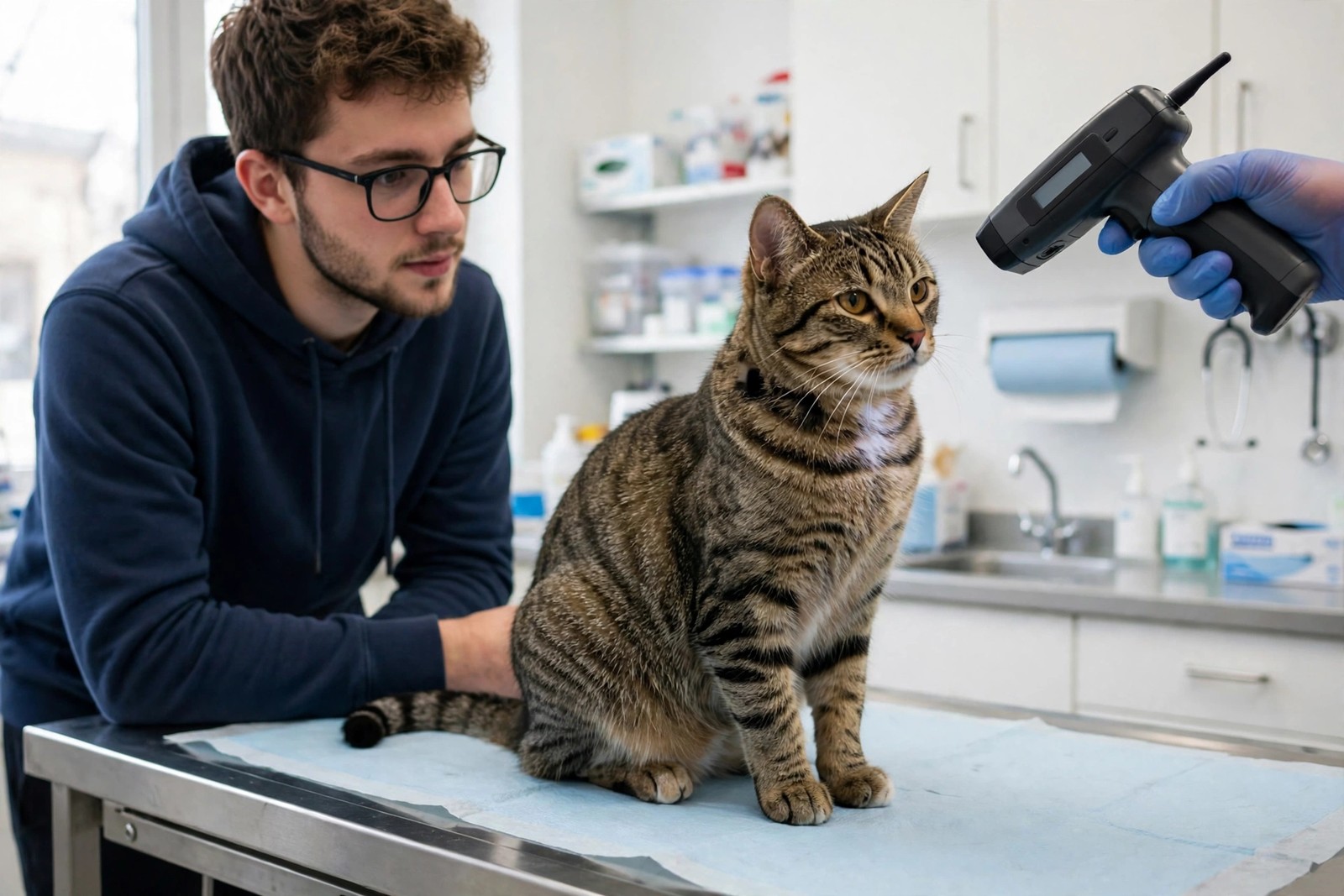
The check has two halves, and only one of them happens at the scanner. Ask your veterinary practice to scan the cat at a routine visit; the scanner yields the chip number, confirms the chip is still reading and roughly where it sits, and gives you the exact number to work with. Then take that number to the registry — the database the chip was enrolled with — and read the contact record back, field by field: primary name, both phone numbers, address, email. Currency is confirmed by that reading, never by the scan alone and never by memory.
What the Record Should Hold for a Shared Apartment
Build the record for the household as it actually is. Both students' mobile numbers belong on it as contacts, because the whole point of a second name is the afternoon the first phone is in an exam hall, out of battery, or lying broken on a sidewalk. Keep the current apartment address even though students move often — moving is precisely when cats slip out, and precisely when records go stale. Use an email address that at least one of you genuinely reads, since registries and finders' practices sometimes make first contact in writing. Then agree, out loud, whose job the record is: one named checker, with the other as backup, beats two vague intentions.
The Collar, the Tag, and the Photo File
The chip is the backup layer; the visible layer still matters. A well-fitted safety collar with a legible tag gives anyone who finds the cat an instant route home without a scanner at all, so check that the engraving is readable and the number on it is one of the two current ones. Keep the number itself out of public view in daily life — if the cat is ever lost, public appeals should carry a description and clear photographs only, never the chip number, because that number is the key to the registry record and belongs in private hands.
When the Check Happens
Tie the check to moments that already exist rather than inventing new discipline. Routine veterinary visits are the natural anchor, since the scan can happen while you are there; make reading the record back part of the same week. The second trigger is change itself: any move, any new phone number, either student leaving the apartment or graduating — each of those events should end with the registry record opened and corrected, and with a decision about who the primary contact becomes if one student moves away. Treat a test call to the recorded number as part of the check.
Why Current Details Decide an Escape's Outcome
All of this maintenance exists for one bad evening. When a cat gets out, the systems that bring cats home can only work with the details behind them: an alert is only useful if it reaches people and reaches back to a working number. That is the real stake in the registry record, and the alert layer only earns its keep when the details beneath it are current — the check is what makes everything downstream possible when it matters. Read the record back, fix what has drifted, and the next escape starts with working tools, because Lost Pet Alert System alerts nearby owners through KinsLe, and the person who finds the cat can send you a message directly.