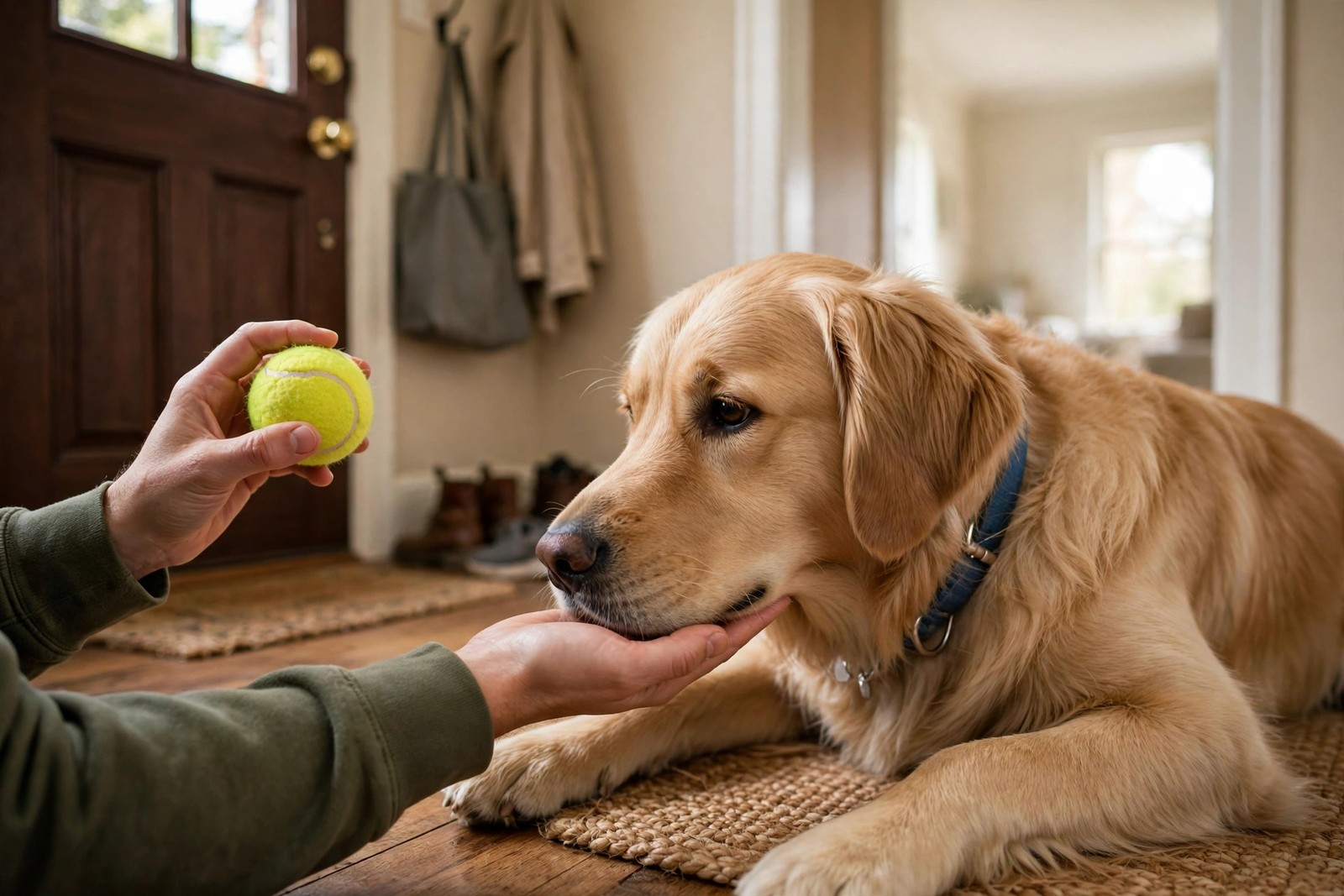
Barking and spinning while waiting is frustration wearing a loud outfit. Your dog knows exactly what comes next, the ball leaves your hand, the treat arrives, the door opens, and the gap between wanting it and getting it has become unbearable. Dogs who rehearse this daily get better at the arousal, not at the waiting, because the exciting event always eventually follows the noise. The fix is to make calm behaviour, held for tiny, growing pauses, the actual mechanism that produces the good thing.
Give Waiting a Shape
A dog cannot simply not bark; it needs a job to do instead. Teach a mat settle or a chin rest on your hand or a chair in a quiet setting first, paid generously, until the position itself is relaxing and familiar. In waiting games, ask for that position before anything exciting is produced. A dog holding a chin rest has something active to perform, and you have a clear picture to reward: still body, quiet mouth, soft eyes. Practise each trigger separately, because tolerance at the treat jar does not automatically transfer to the front door or the ball.
The One-Second Ladder
Start absurdly small. Hold the ball, ask for the settle, count one second of quiet, then throw. Repeat a few times, then try two seconds, then three, mixing in easy one-second wins so success stays frequent. Build toward ten seconds and beyond over sessions, not within one exciting afternoon. The rules that make it work:
- The reward event follows quiet, never noise. If barking starts, freeze, look away briefly, and wait for even a breath of quiet before continuing, or end the game and try easier later.
- If the dog fails at the same step twice, the step is too big; halve the wait and rebuild.
- Keep sessions to a few minutes and finish while the dog is still coping, because tolerance grows through successful repetitions, not endurance tests.
- Vary the pause length so the dog learns to settle for an unknown wait rather than counting to a fixed number.
Applying It at Doors and Treats
At doors, put the settle a step back from the threshold, touch the handle during easy repetitions, and open the door a crack before opening it fully over days; the door opening becomes the payment for the quiet hold. With treats and meals, rest a hand on the jar or set the bowl down and lift it calmly if spinning starts, paying the dog for four feet on the floor and a settled position. Feed some meals through this game so the practice is built into the day. Also look at the whole arousal budget: a dog who is under-exercised, or who plays frantic fetch until frantic is its default, will struggle more with every pause, while regular sniffing walks and chew time lower the baseline.
Dogs whose frustration spills into snapping at hands, redirecting onto other dogs, or injuring themselves against doors need a qualified behaviour professional rather than a home ladder. For the ordinary loud waiter, though, a few weeks of paid pauses usually changes the picture noticeably. KinsLe Care Teams keeps the whole household consistent by assigning the daily waiting practice and noting which trigger and pause length each person is working on, so the dog gets one clear rule from everybody.