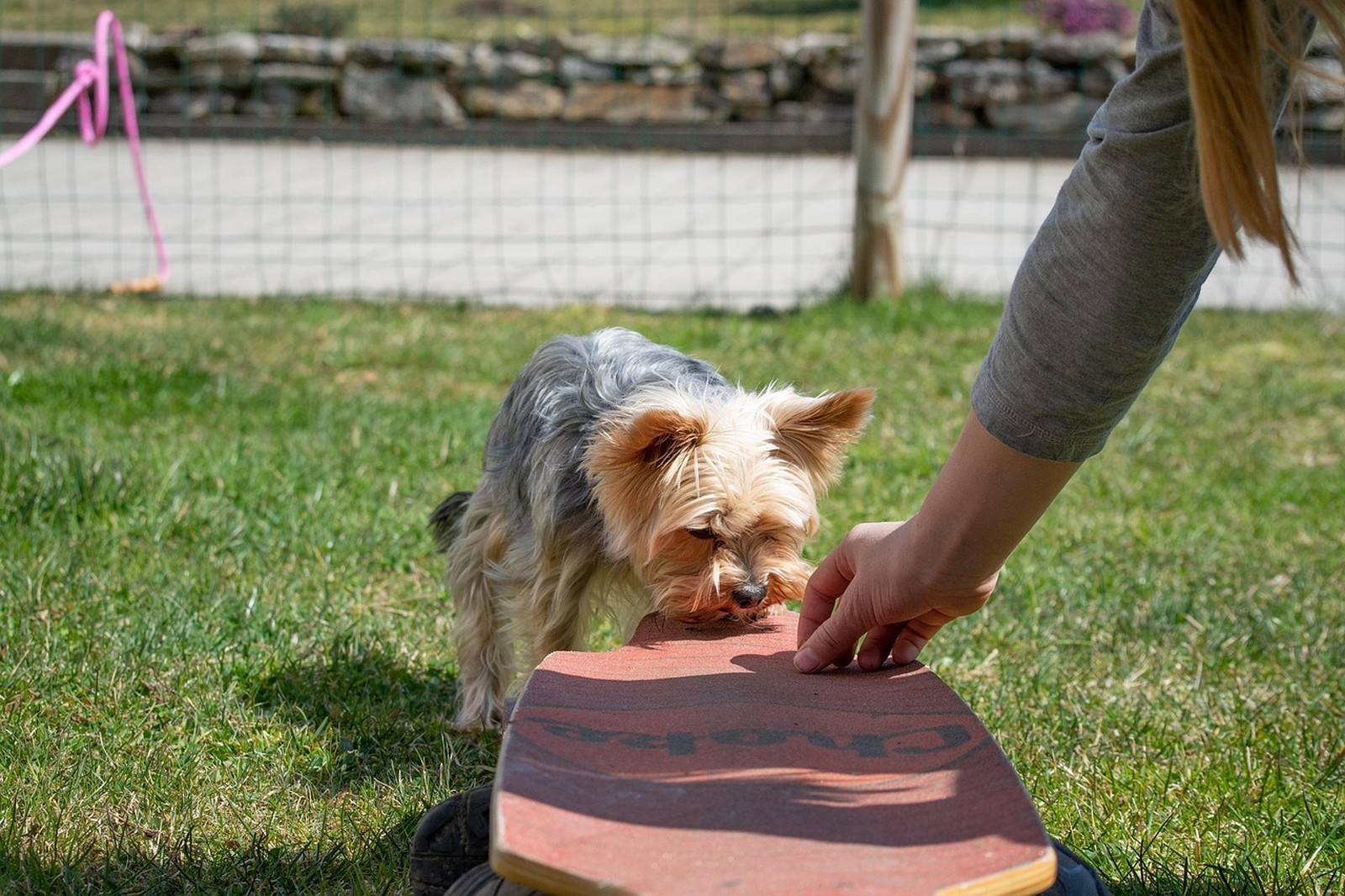
Pavement scavenging is beaten by two systems running at once. Management stops today's dog eating today's litter, and training slowly changes what the dog wants to do when litter appears. Owners who rely on training alone spend months saying leave it beside chicken bones their dog has already won, and owners who rely on management alone face a lifetime of wrestling the lead. Run both, and walks get calmer within weeks.
Manage Every Walk Like It Matters
Your eyes are the first tool. Scan about ten feet (3 metres) ahead, watch the gutter line, bus stops, takeaway fronts and park bins where food collects, and arc wide or cross the road before your dog reaches a find, not after the lead tightens. Keep the lead short enough near litter that your dog cannot lunge and grab, but loose elsewhere so normal sniffing still happens; a dog allowed no sniffing at all hunts harder for contraband.
For a dog who grabs first and listens second, condition a basket muzzle at home and use it on high-risk routes. Introduce it over several short sessions: muzzle shown, treat given; muzzle held to the nose, treat fed through it; then brief wearing with games indoors before any walk in it. Choose a style your dog can pant, drink and take treats through, and fit it so it stays on without rubbing. A muzzle is not a punishment or an admission of failure; it is the seatbelt that makes training near real litter safe.
Teach Leave It and Drop It Properly
Build leave it indoors with boring food first. Hold a treat in a closed fist, wait for the dog to back off or look at you, mark and pay with a better treat from your other hand, never with the treat that was left. Progress to food on the floor under your foot, then food on the floor uncovered, then low-value finds on a quiet pavement, then the real route. Each stage takes days, not minutes, and the payment must beat the pavement: small pieces of chicken, cheese or hot dog usually outrank kibble for this job.
Drop it is the backup for the item already in the mouth. Teach it as a trade at home, offering something excellent in exchange for a low-value toy or chew, and always give the original item back during early practice so trading never feels like theft. Outdoors, trade without scolding, and if your dog has taken cooked bones, anything mouldy, discarded gum, medication or a chemical item, or you do not know what was swallowed, contact your veterinarian promptly rather than waiting for symptoms.
Proof It Without Setting Traps
Do not plant dangerous items to test your dog. Proof the skill with safe staged finds, a tissue, a bread crust in a controlled spot, at a distance where your dog notices, chooses to look at you, and can still win the reward. Reward every voluntary look-away from ground finds for the first weeks, even when you gave no cue, because the habit you want is checking in, not obeying under pressure. If a route is hopeless, takeaway row on a Friday night, for example, walk a different route while training catches up; avoiding the exam you keep failing is good teaching, not cheating.
Progress is real when your dog glances at litter and turns to you before the lead tightens, and it usually arrives in stages street by street. In KinsLe, Care Teams helps every person who walks the dog use the same cues, the same payment and the same muzzle routine, and the timestamped walk notes show which streets are now safe and which still need distance.