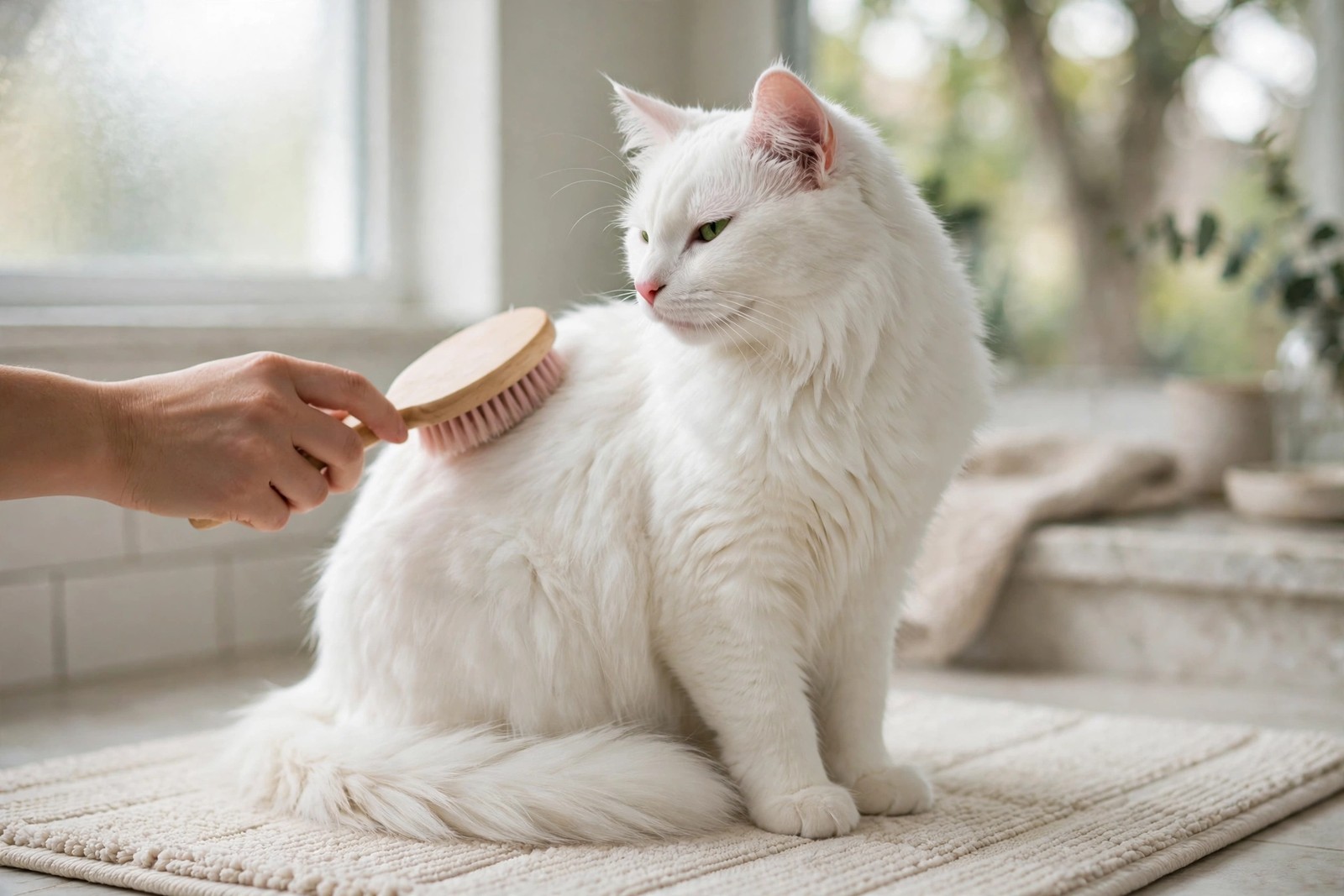
A white cat's coat stays bright the same way it stays healthy: regular brushing, an occasional gentle bath, daily attention to staining, and no harsh shortcuts. White fur shows everything — loose hair, dust, food traces, tear marks — which tempts owners toward whitening products and home remedies. Resist that direction entirely. The coat reads bright when it is clean, well-brushed, and undamaged, and every aggressive shortcut moves it the other way, toward dry, yellowed, irritated fur and skin.
Brushing Does Most of the Work
Regular brushing is the core routine, several times a week for a short-haired white cat and daily for a long-haired one. Brushing lifts out the loose, dull undercoat hair that makes white fur look gray and flat, spreads the skin's natural oils along the shafts so the coat reflects light, and clears the everyday dust and litter traces a white coat collects just by living in a house.
Use a brush suited to the coat length, keep strokes gentle, and stop before the cat's patience does. A calm five minutes done often beats a thorough wrestling match done rarely, and a cat who accepts brushing happily gets the full brightening effect week after week.
Baths Only When Needed, and Plain
Most white cats need a bath only when something specific has happened — a litter accident, something sticky or dirty worked into the coat, or a vet's advice for a skin issue. When a bath is needed, plain is the whole rule: lukewarm water, a plain cat shampoo used as directed, worked gently through the coat and rinsed until the water runs completely clear, because residue left in white fur dries dull and attracts dirt faster than the bath removed it.
Never use bleach in any form, and never use folk whiteners — lemon, baking soda pastes, peroxide tricks, or blue-tinted home mixtures passed around online. They can irritate or burn skin, damage the hair shaft so it stains more easily afterward, and a cat will lick whatever you put on its coat. If a stain truly will not lift with gentle care, that is a conversation for a vet or a professional groomer, not for a stronger chemical.
Staining: Wipe It Early, Daily
The two everyday stains are food around the mouth and tear traces below the eyes, and both obey the same law: fresh staining wipes away, settled staining soaks in. Keep a soft cloth by the feeding area and wipe the mouth and chin after meals with a plain damp cloth — water only. Do the same under the eyes once a day, gently, with a clean damp cloth, working away from the eye itself. A minute a day keeps white facial fur white; a weekly battle with built-up staining usually loses, and the rubbing it requires irritates the skin underneath.
If tear staining suddenly increases, treat it as a change worth a vet's look rather than a grooming problem to scrub at.
The White-Cat Extra: Sun-Sensitive Skin
White cats carry one specific vulnerability other colors do not: the pale, thinly furred skin of the ear tips and nose has little pigment protection and is genuinely sun-sensitive. Watch them the way you watch the coat — new redness, flaking or crusting on the ear edges, a sore on the nose that lingers or keeps returning — and route any such change to a vet promptly, because skin changes on sun-exposed pale skin deserve a professional eye early, not monitoring at home for months.
Grooming Duties, Shared and Written Down
Make the routine a household plan with names on it: one person owns brushing on set days, another does the daily face and eye wipe after the evening meal, and baths — rare as they are — get two people, one washing and one keeping the cat calm and warm afterward. Week by week, KinsLe keeps notes on shedding, staining, and sun-sensitive skin together, while Care Teams assigns grooming turns to the household members who handle them.