
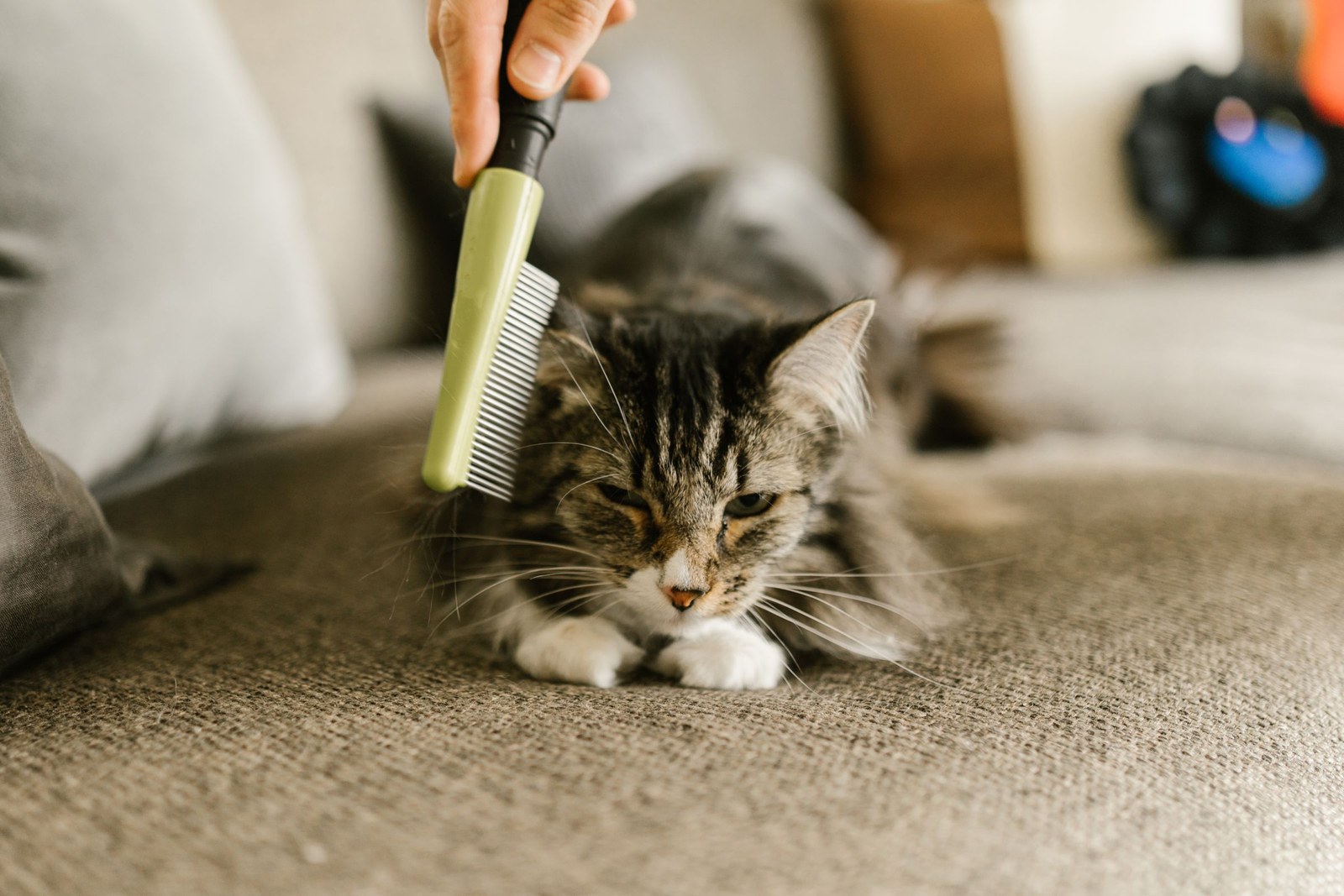
Yes, brushing genuinely reduces hairballs, because it removes the loose, dead hair from your cat's coat before her tongue can pull it off during grooming and send it to her stomach. It is not a folk remedy — it is simple math. Hair that ends up in your brush cannot end up in a hairball, and owners who brush consistently usually see noticeably fewer hairballs within a few weeks.
The Hair You Remove Is Hair She Never Swallows
Every time your cat grooms — and cats spend a large share of their waking hours doing it — her barbed tongue works like a fine comb, collecting shed fur. Most passes through, but some accumulates in the stomach until it comes back up. Regular brushing intercepts that loose layer first. Think of it as doing the first pass yourself, with a tool that puts the fur in the trash instead of in her digestive system.
This matters most for long-haired cats — Maine Coons, Persians, Ragdolls, and fluffy mixed breeds — and during spring and fall shedding peaks, when the loose undercoat comes out in handfuls. Short-haired cats benefit too; their fur is shorter, not absent.
A Routine That Actually Works
Frequency beats marathon sessions. Aim for:
- Long-haired cats: short daily sessions, even five minutes, with attention to the chest, belly, armpits, and behind the ears where fur tangles
- Short-haired cats: two to four sessions a week with a soft bristle brush or grooming mitt
- During heavy shedding: step up frequency for a couple of weeks rather than brushing harder
Start when your cat is relaxed, let her sniff the brush, and stop before she gets annoyed — a calm three minutes beats a wrestling match that makes her flee next time. A treat, a chin scratch, or a short play session right after teaches her that brush time ends well. Check the brush as you go; a full pad of fur is satisfying proof the system works.
Choosing Tools Without Overbuying
You do not need a drawer of gadgets. A slicker brush or stainless comb suits most long coats, a rubber grooming mitt or soft bristle brush suits short coats and brush-shy cats, and a de-shedding tool can help during seasonal blowouts if used gently and not overdone on one spot. Skip anything that pulls, scrapes skin, or stresses your cat — if she hates the tool, the routine dies, and the routine is the whole point.
When Brushing Is Not the Whole Answer
Brushing reduces hairballs; it does not explain every episode. If your cat retches frequently without producing anything, loses appetite, becomes lethargic, or produces hairballs far more often despite consistent grooming, talk to your veterinarian. Excessive grooming itself can be a clue worth mentioning, since a cat who licks one spot bald is telling you something a brush cannot fix.
Staying Consistent With a Little Help
The hard part is not technique — it is remembering, week after week. KinsLe's built-in AI assistant, Kimmy, can nudge you on grooming days so sessions happen on schedule instead of whenever someone remembers, and a quick note after each session builds a simple history you can reference if hairball frequency changes. Over a shedding season, that steady rhythm is what turns 'we should brush more' into visibly fewer hairballs on your floor. When shedding season raises doubts about brush choice or session frequency, Kimmy in KinsLe can take your follow-up questions and answer from the KinsLe Answers collection covering feline coat care.