
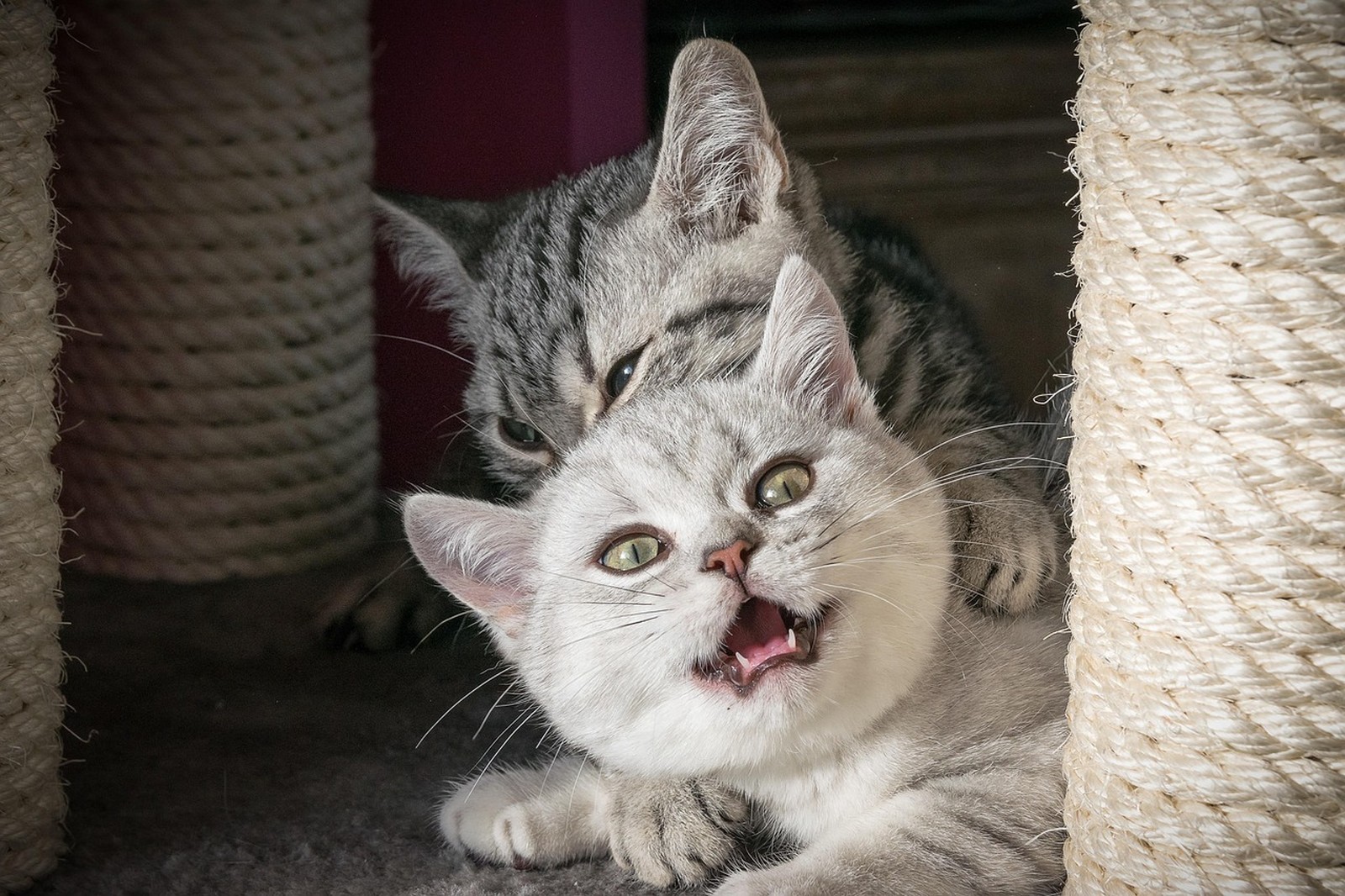
Two seconds on the sofa, once a week, is all this check asks for. Slide a thumb along her cheek and ease the corner of her mouth upward, first on one side and then the other, far enough to glimpse the large teeth at the back and the gum edge above them; a cat who objects to even that will often accept it mid-stroke, when her head is already resting in your hand. Pink, smooth gum tissue is what healthy looks like here, and the teeth themselves should carry no thick crust of yellow-brown tartar. What you are scanning for is change: a red line where gum meets tooth, a chipped or darkened tooth, an ulcer, a lump, or small pink-red notches eating into a tooth at its base — tooth resorption, a painful condition vets see often in adult cats.
Handling a Cat Who Objects
Most cats accept a brief lip lift far better than a forced mouth-opening, so build the check into strokes on the sofa rather than restraining her on a table. Watch for indirect signs between checks: bad breath, dropping kibbles, chewing on one side, eating wet food but refusing dry, pawing at the mouth, or a previously friendly cat becoming head-shy. Dental disease in cats is common and significantly under-detected because cats keep eating through pain. Never try to scrape tartar off at home — it risks damaging enamel and the gums, and the important disease is below the gum line, where only a vet dental assessment reaches.
What Your Notes Should Capture
For the check to help at the surgery, record the same few things each time: the date, which side looked worse, whether the gum line was pink or red, and any change in breath or eating since the week before. Photograph the cheek teeth when she lets you; a sequence of monthly photos shows tartar creeping or a gum line reddening far more clearly than memory does. Bring the sequence to the appointment, because it lets the vet judge speed of change, not just the state of the mouth on one day.
Book a vet dental check for tartar, red gums, any visible tooth defect, changed breath, or altered eating. If your cat has stopped eating altogether or is drooling and pawing at the mouth, that is a same-week — ideally same-day — call, not a home-monitoring situation.
File those dated notes and photographs in your Pet Passport on KinsLe, so the packet that travels with her to the vet, a boarder or a new home already holds her dental history in order.