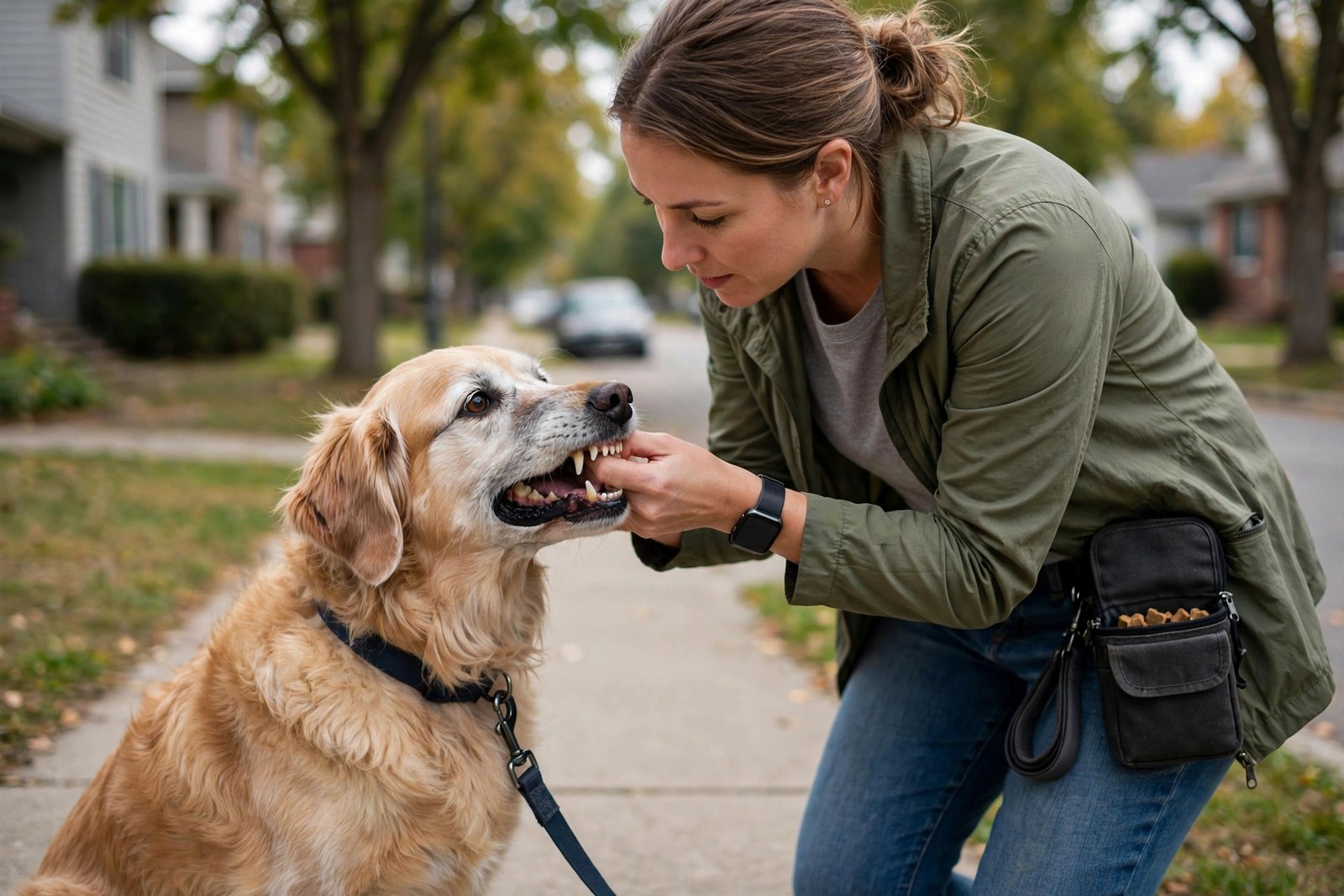
Professional cleanings reset a dog's mouth, and home checks guard the intervals between them. That guarding role grows more important with age. Older dogs accumulate tartar faster on some teeth, gums recede slowly, and a tooth that was sound at the last cleaning can trouble her months before the next one is due. A monthly home check, done gently and recorded briefly, is how those in-between changes get caught while they are still straightforward.
Setting Up a Monthly Mouth Check
Pick a calm moment, good light, and a position where she can sit or lie with her head at a comfortable height. Lift the lip on one side and look along the full row of teeth from front to back molars, then repeat on the other side, and finish with the front teeth. Keep the check brief and end it with praise. If she resists looking at one particular spot, note that resistance instead of insisting, since a dog guarding one area of the mouth is telling you something relevant.
What a Settled Mouth Looks Like
Gums in a healthy mouth sit smooth and pink, though many dogs carry natural dark pigment in patches, and those patches are normal for that dog. The gum edge should meet each tooth neatly without puffiness. Teeth should be free of thick brown tartar, particularly the heavy deposit that gathers on the large back chewing teeth and the long canines. Breath from a settled mouth is not sweet, yet it should not be foul either, and a change from her usual breath matters more than any absolute standard. Learn her normal across several checks early on, because every later judgment you make compares against that personal baseline rather than a textbook picture.
Ageing Changes Worth Recording
Some change arrives with age even in a well-kept mouth. Gumlines recede gradually, exposing more tooth, and older teeth wear at the tips. Tartar returns between cleanings, often where it built up before. Record what you see monthly in a line or two: which teeth carry new tartar, whether a gumline looks higher than last month, whether breath has shifted. Photograph the same angle in the same light when you can. A photographed gumline settles questions about recession that memory argues over, and a vet reviewing a year of monthly photos sees progression at a glance. Note also the date of her last professional cleaning at the top of the record, so home findings always sit in the context of how long the mouth has gone since its last full service.
Eating as Part of the Check
Watch her eat during the check week, because behaviour reports mouth comfort that a visual check can miss. Note food dropped from one side, chewing that favours one side, kibble left that she once crunched eagerly, or a new preference for soft food over hard. Pawing at the mouth, rubbing the face along furniture, new drooling, or reluctance to pick up toys she usually carries all belong in the same note. Dogs rarely stop eating over mouth pain until the problem is advanced, so these smaller signals carry the early warning, especially in a senior whose appetite otherwise stays strong.
When Home Checking Hands Over to the Vet
Book a dental visit for gums that bleed, look red and swollen, or pull away from a tooth, and for any tooth that is loose, broken, or discoloured compared with its neighbours. New bad breath that arrives with any of those signs, a lump on the gum, or the eating changes described above also warrant an appointment rather than another month of watching. Between cleanings, your role is detection, not treatment: no home scraping of tartar, since scraping without the polishing that follows in professional care leaves a roughened surface that gathers plaque faster, and a slip near a sore gum causes pain.
Her monthly mouth notes gain real value inside KinsLe's Pet Passport, where home checks, cleaning dates, and the vet's own dental findings build one continuous record of her mouth across her senior years.