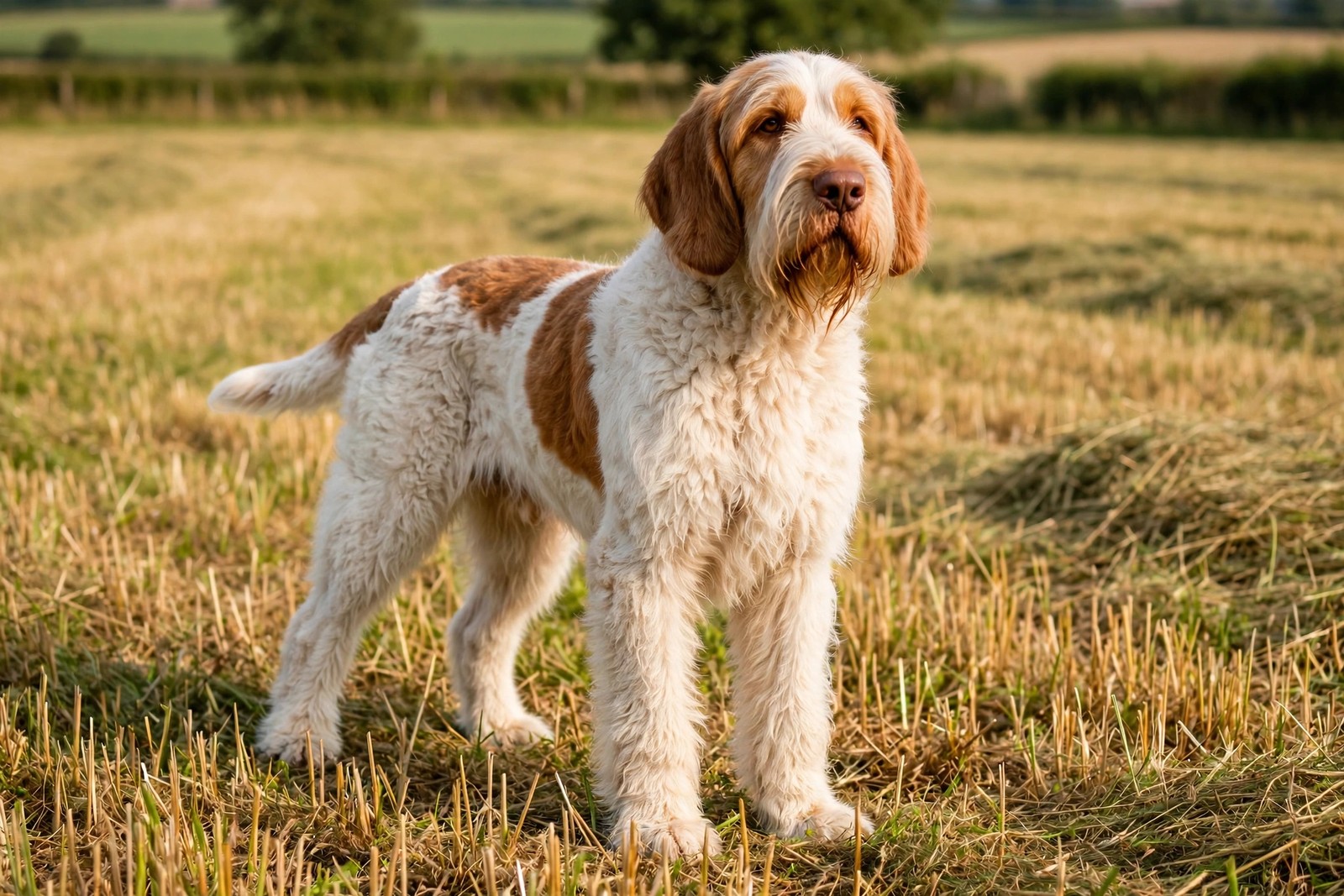
A Hardy Gundog With a Specific Puppy Concern
The Spinone Italiano has a reputation as a sturdy, slow-maturing working dog, but the breed carries one distinctive hereditary problem owners should know by name: cerebellar ataxia, sometimes called Spinone ataxia. It is caused by a known inherited variant affecting the cerebellum, the part of the brain that fine-tunes movement, and signs appear in puppies as they start to move around, an exaggerated, wobbly, high-stepping walk, poor balance, and difficulty coordinating the legs. A DNA test exists, so a breeder can state clearly whether a litter carries any risk, and this is a question to ask before choosing a puppy, not after. A wobbly puppy from any litter should be assessed by a veterinarian promptly, because early clarity shapes realistic expectations and care.
Hips, Chest, and the Working Body
Hip dysplasia is the breed's main orthopedic concern, as in many large sporting dogs. In a young Spinone it may look like bunny-hopping at a run or reluctance to rise after rest; in an older dog, stiffness after a day in the field, loss of muscle over the hindquarters, and shortened walks are the usual story. Keeping this big dog lean through the long growth period, avoiding repetitive jumping for young joints, and choosing puppies from hip-scored parents all shift the odds. The deep chest brings a bloat risk, so restlessness, drooling, and retching without vomit after a meal is an emergency trip, not a wait-and-see. Eyelids deserve a look too: entropion, where the lid rolls inward and lashes rub the eye, causes watering and squinting and should be raised at a checkup rather than endured.
Those Long Ears Need a Routine
The Spinone's long, low-hanging ears trap warm, damp air over the ear canal, and this is a dog who loves water and mud, which makes ear infections a recurring theme rather than bad luck. Learn the healthy baseline, pale, dry, and nearly odourless, then act when an ear turns red, waxy, smelly, or becomes a target for head-shaking and scratching. Dry ears thoroughly after swimming or a wet hunt, check under the flaps weekly, and let a veterinarian look down the canal when infections keep returning, because repeated episodes can involve deeper canal changes or an underlying skin sensitivity that home cleaning alone will not settle. A dog who tilts his head, cries when an ear is touched, or loses balance needs prompt attention, as those signs can mean the infection has moved deeper.
Day to Day With a Spinone
Most Spinone care is unglamorous consistency: weight kept honest, ears checked after every wet outing, exercise built up gradually in youngsters, and rest respected in a breed that matures slowly and stays boisterous longer than most. Ask breeders for hip scores and the ataxia test status in writing, and keep both. Book prompt care for a puppy whose gait looks drunken or exaggerated, an adult who retches without vomiting, an eye that waters and squints for more than a day, or lameness that keeps returning after field work. Filed in KinsLe's Pet Passport, a Spinone's hip score, DNA result, and ear treatment history form one packet that follows the dog from puppy classes to a referral clinic.